


What makes a door feel at home in a farmhouse?
Visible wood grain, simple panel divisions and X or Z patterns often create the association. Painted wood can feel just as appropriate as stained timber. The surrounding casing, flooring, handles and wall color determine whether the result looks rustic, simple or more decorative.
There is no single historical farmhouse palette or mandatory set of materials. Regional buildings used different resources and construction traditions. Contemporary farmhouse design borrows selected elements rather than reproducing every feature of a working farm.
The farmhouse decor guide can help coordinate the room. Start with one dominant material or pattern, then let the door support that choice instead of competing with every nearby surface.
For current sizes and finishes, browse sliding barn doors or Dutch doors. The examples below show how those choices change the look of a room.
Five door types to consider
| Type | Why it can work | Space or performance to resolve |
|---|---|---|
| Hinged | Familiar operation and a wide range of frame and seal options. | Swing direction, furniture and usable clear width. |
| Sliding | Exposed movement becomes part of the design. | Wall parking, structural track support and perimeter gaps. |
| Dutch | Top and bottom can operate separately. | Split seals, latching, swing and supervision when open. |
| Glazed | Shares light and views or softens them with decorative glass. | Actual privacy, glass specification and interior/exterior application. |
| Double | Creates a paired composition at a broad opening. | Meeting detail, active leaf, hardware and parking or swing on both sides. |
These categories overlap: a double door can be glazed, hinged or sliding. A pocket door is another sliding option, but its leaf disappears into a prepared wall cavity rather than parking on the wall face.
For bedrooms, bathrooms and offices, consider sound and privacy alongside appearance. A barn-door layout does not provide the same perimeter closure as a suitable sealed hinged assembly. A Dutch lower half is not a substitute for a child safety gate or secure animal enclosure.
Start with the swing
Check where the open door will sit. Include furniture, another door and the space needed to pass.
Measure the parking wall
The door needs a clear place to go. Include the handle, trim and anything mounted beside the opening.
Plan both halves
Choose the split latch, hinges and seals together. Check how each half opens and closes.
Traditional wood: three ways to use a brace pattern


1. Double X Interior Door: two X overlays divide the hinged face into upper and lower sections. It suits a pantry or office where a conventional swing works. Compare slab and prehung configurations and confirm the included hardware.
2. Z Barn Door: a single diagonal crosses the wood field. The simpler geometry works well beside busy shelving or patterned floors. Check the full wall-side clearance, including the chosen pull.
3. Corral Exterior Dutch Door: a split leaf with angled brace detailing on both sections. The current photograph shows a pair of inward-pointing brace patterns, instead of one X divided across the two halves. Plan the upper and lower hardware as a coordinated Dutch assembly.
Light and a broad entry: two glazed directions


4. Farmhouse French Full Glass Exterior Door: tall divided glass with a wide outer frame. The grid provides pattern while the glass you choose controls the view. Confirm the exterior frame, glass and weather seals before ordering.
5. Shoemaker Double Front Door: each leaf has an upper window and diagonal lower detailing that forms a larger pattern across the pair. Compare the meeting line and active leaf with the way people will enter when only one side is open.
Clear glass remains transparent between the divisions. For privacy, review a sample under realistic lighting; a farmhouse grid alone does not obscure the view.
Rustic, modern and geometric: three contrasting faces


6. Ranch Barn Door: vertical wood with three horizontal overlays. The current specification notes that the back does not repeat those overlays. Include the thicker front projection when checking clearance and nearby furniture.
7. Modern Cottage Exterior Door: a steel-framed glazed design with horizontal divisions. It can coordinate with contemporary windows while keeping a straightforward cottage proportion. Confirm the chosen glass and assembly performance for the site.
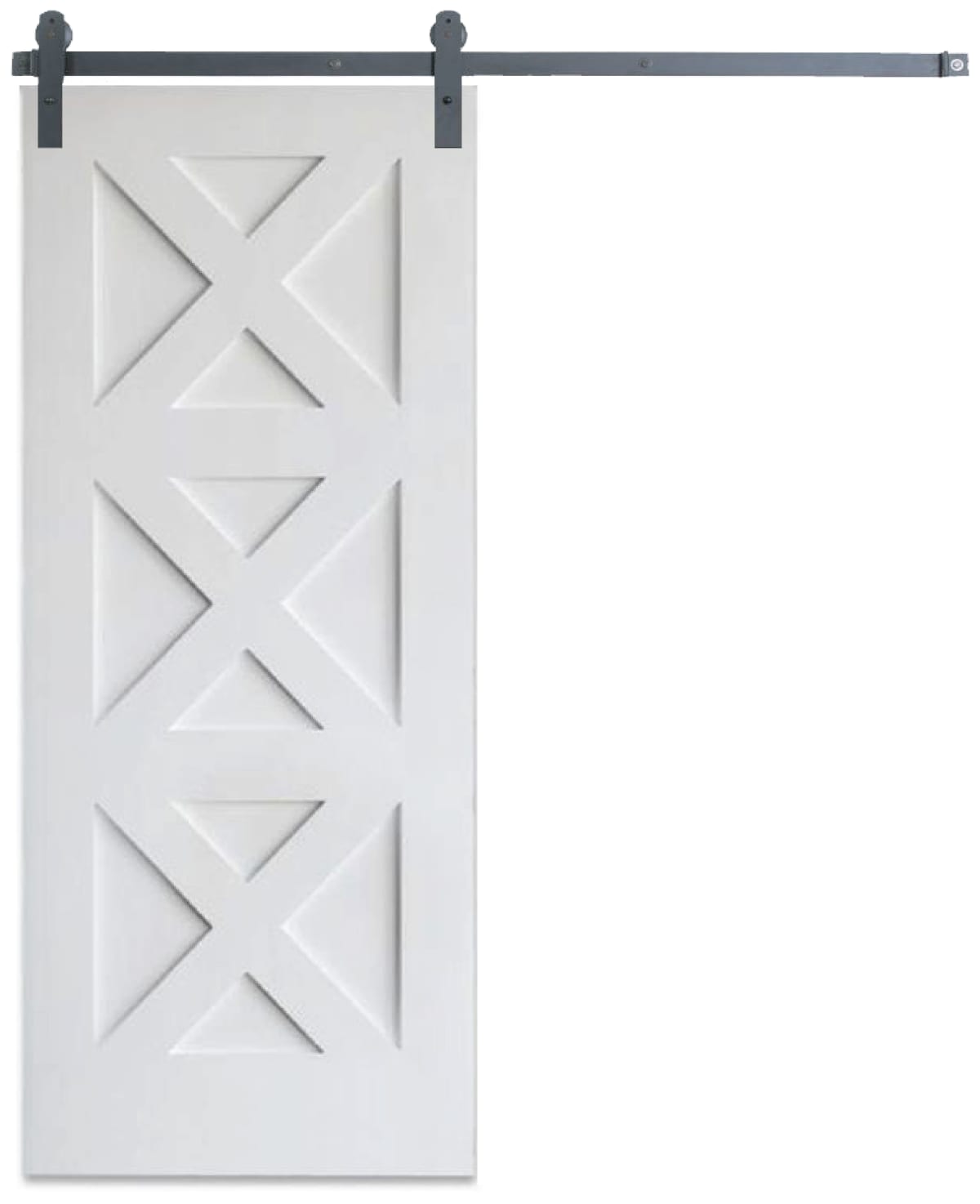
8. Contemporary Triple X Barn Door: three repeated X motifs over a smoother field. This design has an MDF solid core. Its wood-like pattern does not mean it is made from solid lumber. Confirm the selected material and finish.
Metal details: two ways to change the mood
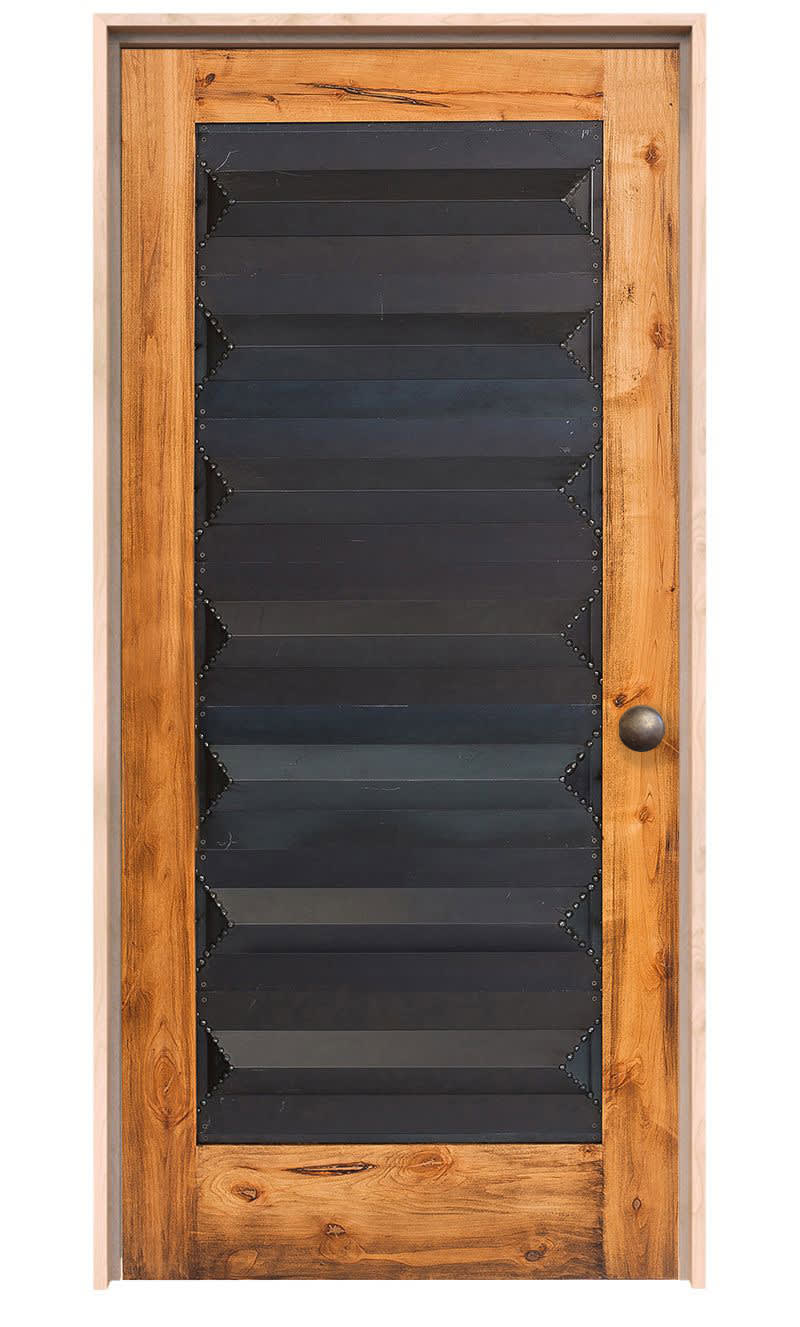

9. Helms Interior Door: a wood surround with a ridged steel center. It is a strong visual feature suited to a quieter surrounding wall. The reverse-side metal treatment is a selectable detail, so specify both faces if the door is prominent from two rooms.
10. Alley Vineyard Interior Door: a diamond grid over glass with a solid lower area. The diagonal pattern can connect to more decorative furnishings without adding another heavily carved wood surface. Confirm the hinged configuration, jamb and glass selection.
Build a consistent finish scheme
For a rustic room, compare a visible-grain door with the flooring before selecting the stain. Similar undertones can tie the materials together without requiring an exact match. In a lighter room, a painted door and a darker handle can provide enough contrast on their own.
A modern farmhouse scheme often benefits from fewer surface treatments: one wood tone, a restrained painted finish and a metal accent. A more collected interior can include worn furniture and decorative glass, but every new piece need not be artificially distressed.
If working with old paint, identify it before sanding or distressing. The distressed-door guide distinguishes decorative finishing from disturbing an unknown older coating.
What to measure before you order
Record whether the opening is interior or exterior, the finished size, the operation and the required frame or track. Then specify both faces, glass, material, finish, handle and locking hardware. A product’s farmhouse appearance does not establish its insulation, security or acoustic rating.
For an exterior order, compare the complete unit and its installation requirements. For a slider, measure the parking wall. For a pair, resolve the meeting detail. Those decisions make the chosen style work beyond the product photograph.
For a client project
Planning farmhouse doors for a client? Review Rustica’s contractor discount program before putting together the door schedule.