


Which barn door needs hinges?
A wood door with X braces can swing just like another hinged door. The same visual pattern can also appear on a sliding panel. If you want the panel to move along the wall, compare sliding barn door hardware; hinges will not perform that job.
For a swinging exterior design, start with exterior hinged doors. The slab, frame, hardware and weather details need to suit the intended use. A rustic appearance does not make an interior slab suitable for an exposed entrance.
Compare butt, strap and T-hinges
| Type | General form | What the shape does not tell you |
|---|---|---|
| Butt hinge | Two compact leaves connected along a barrel. | Door capacity, bearing type or required preparation. |
| Strap hinge | Long leaves extending across supporting surfaces. | Whether the item is structural or only decorative. |
| T-hinge | A long strap paired with a shorter mounting leaf. | Suitable door width, fasteners or exterior durability. |
A decorative dummy strap can add a traditional detail while separate working hinges carry the door. Keep those roles clear in the parts list. Do not count a decorative item toward the required hinge support.
Choose capacity by more than weight
Door width, weight and frequency of use affect hinge selection. Include attached hardware and other permanent additions in the load assessment. A wider leaf changes the demand on the hinge and frame, even when two doors weigh the same.
Reference: Hager commercial hinge selection guidance.
Also confirm door thickness, frame material, hinge dimensions, bearing type, exposure and required clearance. Use the door and hinge manufacturers’ schedule for the number and placement. A generic instruction to use three hinges at fixed distances is not appropriate for every opening.
Match the preparation and fasteners
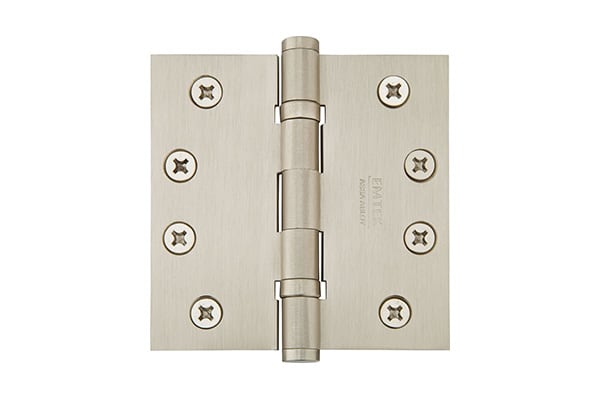
An existing mortise must match the hinge’s size, thickness and corner shape. For surface-mounted straps, the fixing pattern and supporting material matter. Confirm that both the door and frame can accept the chosen attachment before drilling.
Support the door securely during installation or removal. A heavy leaf should not hang from a partly removed hinge while you work on another. Follow the installation instructions and use appropriate help for the size and weight.
Clean the finish without damaging it
Begin with the hinge maker’s care instructions. Finish types differ, so steel wool, abrasives, paint stripper and metal polish are not universal cleaning methods. A product suited to bare metal can damage a plated or coated hinge.
For routine dust and dirt, use the approved gentle cleaning method and dry the surface. Use only the recommended lubricant in the specified locations. If a hinge squeaks, inspect alignment and loose fasteners as well as lubrication; oil does not correct a sagging door.
Keep the rest of the opening in the plan
Choose the latch, stop and handle with the hinge arrangement. For two leaves, see the double door hardware options guide. For a split leaf, compare Dutch doors and the hardware needed to control each half.
If you are still deciding between swinging and sliding, use the door type comparison to check the room layout. Measure the swing or parking area before choosing a look.
Planning a client project?
Choosing hardware for a client’s doors? Confirm the hinge schedule with the door package. Rustica’s contractor discount program explains professional eligibility and how to apply.