
Rustica Journal Inside Rustica
From pizza-box sketches to custom doors.
Rustica began with Kate and Paul Allen’s design ideas, a family garage and a small basement showroom. Their published account traces the business from a dream of a mountain cabin to a focus on doors and hardware.
A beginning told through a few defining moments
The early chapters
A beginning told through a few defining moments
An idea at home
A hoped-for mountain cabin inspired drawings for furnishings and decor.
2007
The family business opened with an 80-square-foot basement showroom.
A clearer direction
Demand for sliding doors and hardware helped shape the business.
Room to grow
The founders’ account describes moving into a first building and later a converted cement-factory showroom.
Before there was a showroom, there was something to draw on.
The origin story does not begin with a product launch. It begins with a place Kate and Paul wanted to make: a mountain cabin. While living in a family basement apartment, they sketched ideas for its furnishings and decor.
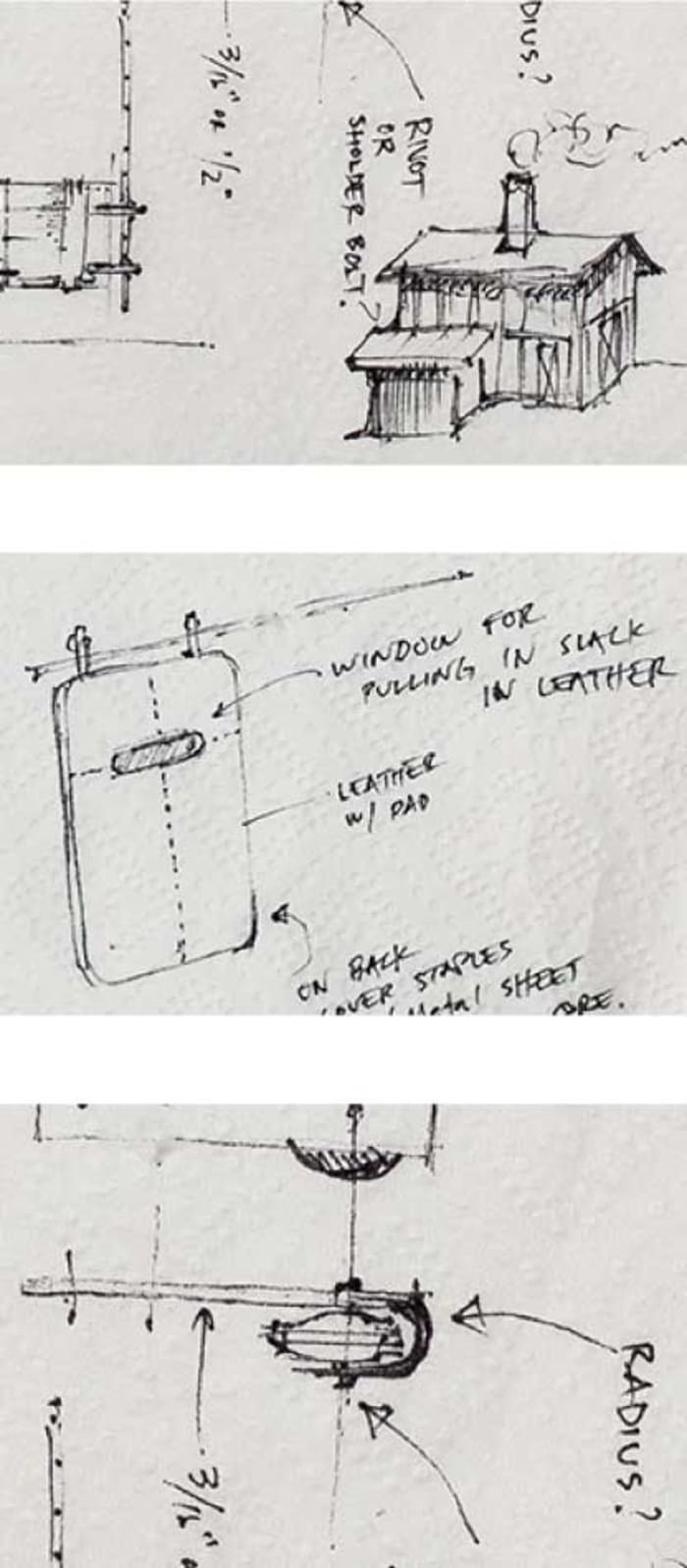
Paper was whatever was available. Their account remembers napkins and pizza boxes. Paul brought the sketches into a workshop in his grandmother’s garage; Kate looked for buyers and built an online catalog. The first connection between drawing, making and selling was personal and direct.
Eighty square feet was enough to start.
In 2007, with help from a friend, the family business opened an 80-square-foot basement showroom. Furnishings found buyers, and demand for sliding barn doors and hardware became an important signal.
That detail makes the story more interesting than a smooth timeline of inevitable growth. The founders were making things, showing them and learning what people wanted. The emphasis on doors and hardware emerged from that experience.
Their published recollection also gives family support a central place: a home, a garage, food, encouragement and the long hours of working together. The business was built with resources that were close at hand.
A set of keys made the next chapter tangible.
The founders describe driving past the building they hoped to buy and imagining what they would do with it. After receiving the keys, the family slept on the shop floor. It is a small, specific memory that says more about the milestone than a generic statement about expansion.
By the 2017 account, the business had also created a showroom from a cement factory dating to around 1938. That is the historical point described in the original story; the archive is not a complete record of every facility or milestone since then.
An idea becomes more interesting when it becomes an object.
The sketches connect the early story to the work a customer begins today. A drawing can hold a proportion, an unusual detail or an idea that is difficult to explain in words. Making it requires the next layer of decisions: dimensions, materials, movement and the way the pieces come together.
That is why a rough sketch can be a useful beginning for a custom project. It does not need to be a finished manufacturing drawing. It needs to show what matters to you, so the design conversation can become specific.
The founders’ account closes by treating inspiration as something available to everyone. That idea belongs naturally beside the archive: these were working sketches, made before anyone knew where the business would lead.
Bring your own starting point.
Your starting point might be a room that needs more separation, a view you want to keep, or a detail you have drawn several times without knowing how to build it. Begin with that. Then gather the opening information that makes the idea practical.
Explore the custom-order process or use the consultation checklist to prepare for the conversation. The useful thread from the early story is still simple: make the idea visible, then work through what it will take to make it real.
Read the full story at https://rustica.com/why-us/
Keep exploring
The next good question.
 Inside Rustica
From drawing to doorway.
Read story Make room
Read the room before you read the door catalog.
Read story See the difference