


If you already have an old door, assess it before replacing it
Check the door, joints, frame, hardware and glass together. Sticking may come from hinge wear or frame movement rather than a failed door. Water damage needs its source corrected before a surface repair or fresh paint will last.
The National Park Service recommends retaining historic solid and paneled wood doors and maintaining their finishes, caulking and weatherstripping as appropriate. A preservation specialist can help distinguish repairable deterioration from damage requiring replacement, particularly when the door contributes to a historic building’s character.
Reference: National Park Service: repairing and upgrading historic windows and doors.
For a salvaged door, record dimensions, thickness, squareness, swing preparation and earlier alterations before buying. An old exterior-looking leaf does not automatically fit a new frame or meet the performance needed at a new entry. To turn it into a sliding door, check that it can support the hangers and cover the opening with enough overlap.
Browse new front entry doors for current designs. If your project starts with an old door you already own, the repurposed door guide covers other ways to use it.
How a new door can suggest age without artificial damage
Start with the shape: tall panels, a modest arch, divided glazing or a substantial wood surround can relate to older architecture. Match the pattern to the building rather than treating every historic style as interchangeable.
Choose a finish that suits the design. A restrained stain may reveal grain, while a painted finish can connect the door to existing trim. Heavy distressing on every edge often competes with the actual design. Review a sample before deciding how much texture to add.
Hardware can be polished or subdued, depending on the period and the room. Brass and other shiny metal finishes can also suit historic interiors. Choose a suitable form and compatible preparation first, then select the finish.
| Option | Start by checking | Best next step |
|---|---|---|
| Repair an existing old door | Joints, frame, paint, hardware and water damage. | Ask a preservation specialist what can be kept and repaired. |
| Reuse a salvaged door | Size, thickness, squareness and earlier cuts or drilling. | Have the installer assess fit before you buy. |
| Order a new antique-style door | Panel pattern, glass, finish and the full opening requirements. | Compare a drawing and finish sample before ordering. |
1–5. Wood entries with distinct panel and glass details


1. Pump House Front Door: a substantial wood face with a large upper panel and a smaller lower panel. The gently shaped upper detail provides character without covering the door in ornament.
2. Stronghold Front Door: vertical planks, decorative clavos and a small speakeasy window. Coordinate the visible metal with the handle, and compare the selected window and locking arrangement rather than assuming decoration establishes a security rating.
3. Farmhouse French Half X Exterior Door: divided upper glazing with an X motif below. The two-part composition can relate to cottage or agricultural forms. Specify the complete exterior configuration and its glazing for the intended opening.
4. Woodsman Front Door: three upper lights above a broad wood field. The current photograph shows rectangular lights; confirm the ordered elevation rather than relying on an older description or the legacy URL’s reference to an arch.
5. Manor Front Door: decorative metal scrollwork across a large glazed area. Let the scrollwork be the main feature and keep nearby accessories simpler. It is ornament, not evidence of a tested forced-entry rating.
6–9. Pairs, a split leaf and an arched entry



6. Farmhouse French Half Exterior Double Door: paired leaves with glazed upper sections and wood below. Review the active leaf and meeting hardware along with the overall symmetrical composition.
7. Cathedral Double Front Door: diamond-patterned glazing above lower wood panels. The grid creates a strong visual rhythm, while the selected glass determines how much of the interior is visible.
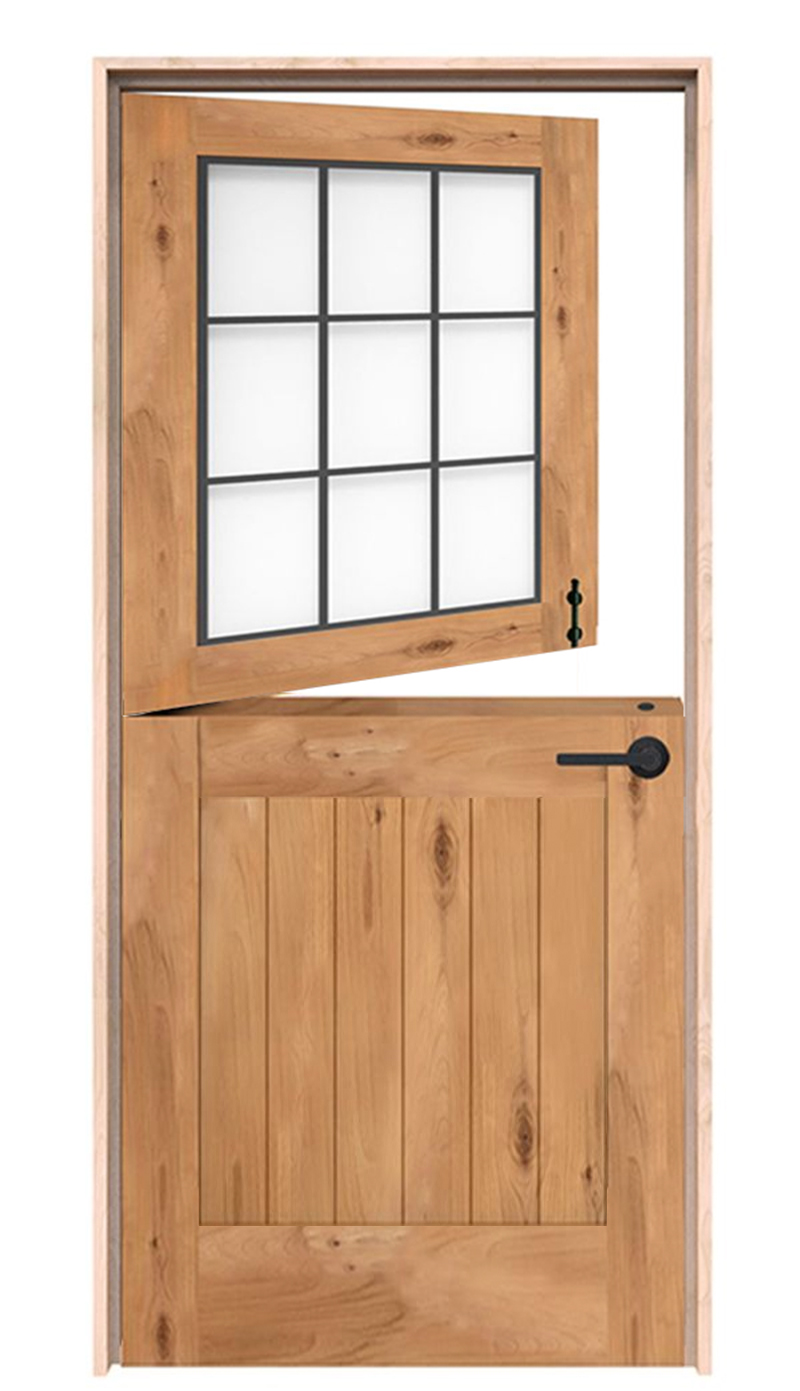
8. Farmhouse Exterior Dutch Door: a glazed upper half and plank-like lower half that can operate separately. Coordinate the split latch, seals and swing. An open upper half provides a connection to the outside but changes the enclosure’s privacy and security.
9. Tuscan Front Door: a curved door outline with substantial wood panels. It requires a matching arched opening and frame; it is not the same as a rectangular door with an arched decorative panel. The arched-door guide explains the measurement distinction.
10–12. Glass and metal inside the home
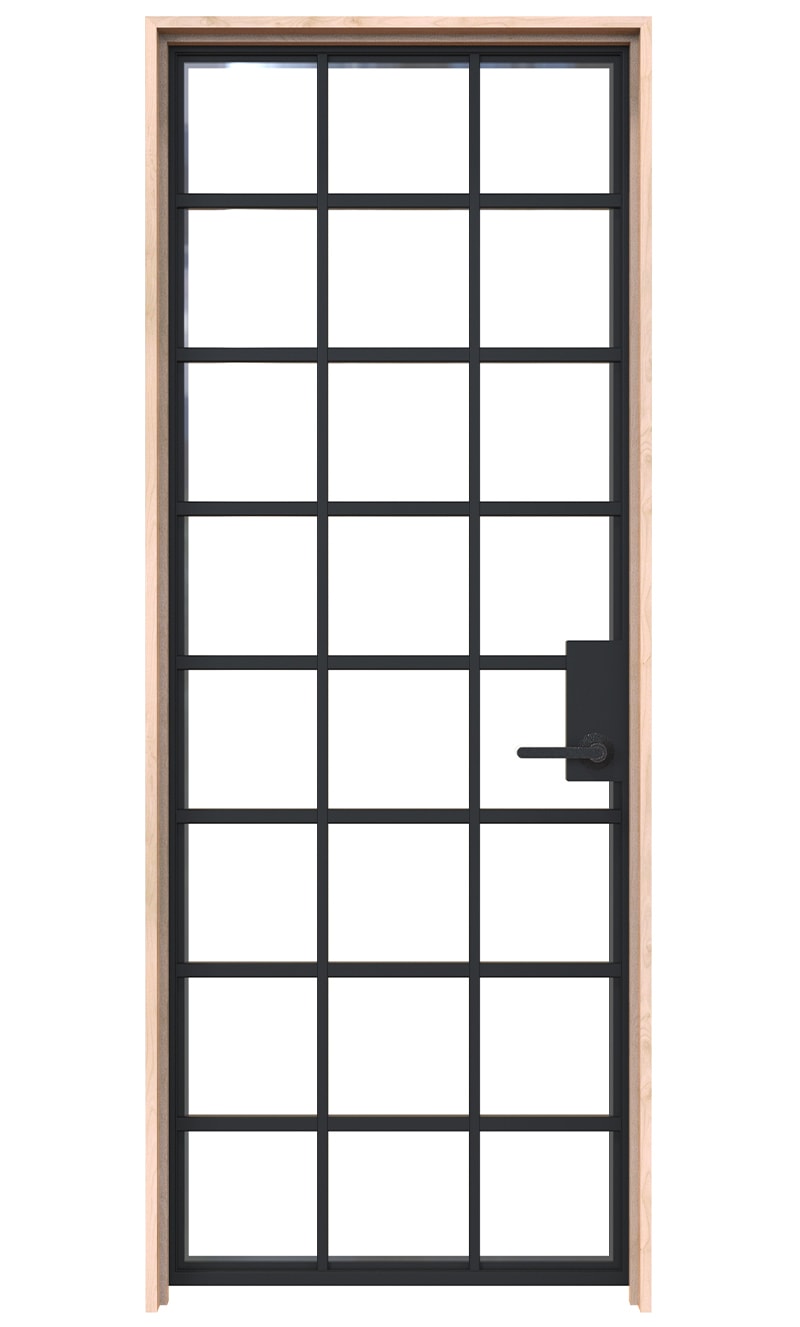


10. Tillage Interior Door: repeated rectangular divisions across a tall glazed face. Use the pattern to relate to nearby windows or cabinetry, and specify the intended interior operating configuration.
11. Alley Vineyard Interior Door: a diamond grid with a solid lower section. It can create a more decorative transition into an office or dining area while retaining views through clear glass.
12. Chateaux Double Converging Pocket Doors: a glazed pair with diamond overlays that opens into two prepared wall pockets. The current metal-door specification identifies preparation for Johnson Hardware 100PD components. Confirm the complete hardware, weight capacity and pocket framing for the selected size rather than treating preparation as proof that every part is included.
For all three, choose decorative glass from a sample if visual privacy is needed. A grid alone does not hide the room. Acoustic separation also depends on the complete assembly and its gaps.
13–14. Barn-door patterns for a different kind of opening
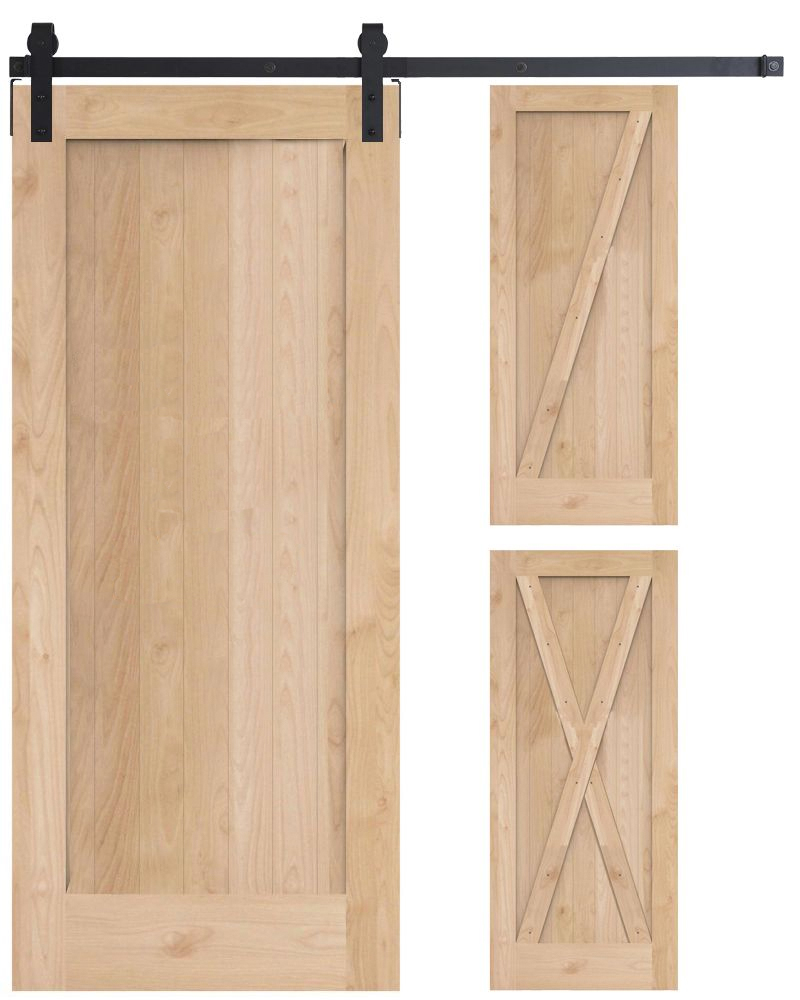

13. Rockwell 3 in 1 Barn Door: a base panel with overlays that can create a plain panel, full Z or full X direction. The current kit allows different patterns on the two faces. Review the finish supplied with the door and assembly instructions before planning decorative work.
14. Farmhouse French Full Corner Barn Door: leaves on separate tracks meet at a corner. The arrangement needs coordinated stopping positions, clear parking walls and a suitable corner meeting detail. It is intended for that opening geometry, not as a drop-in replacement for a conventional straight pair.
Treat old paint and original hardware with care
Before sanding, scraping or distressing an older painted door, determine whether lead-safe work is needed. Pre-1978 painted building components deserve particular attention. A decorative aging project should not begin by sanding an unknown historic coating.
Reference: U.S. EPA: lead-safe renovations for DIYers.
For a new, known finish, use the distressed-door guide to plan controlled wear. For an authentic old finish, document the surface and discuss conservation before stripping it. An aged surface may be part of the door’s value and character.
Identify hardware materials and coatings before polishing or lubricating. Aggressive cleaning can remove an intentional patina or damage plating. Lubricate working parts only as appropriate to their mechanism; annual removal and oiling of every piece is not a universal maintenance method.
Match the final specification to the building
Choose the door’s form, then resolve its size, operation, frame, glass and hardware. For an exterior opening, specify weather performance and installation details. For a historic property, consider the effect on the whole entrance and any applicable preservation requirements.
Keep the finish samples, approved door drawing and care instructions together. They give you and your installer a clear record of what to order and how to care for it.
For a client project
Sourcing new traditional doors for a client’s remodel? Rustica’s professional trade program covers eligibility for contractor and designer pricing.