

Start with the view you want to control
Stand at the distances people will actually use: close to a bathroom door, across a hallway or outside a sidelight. Test the sample with the brighter light on each side in turn. A small sample held against a blank wall tells you little about a person standing just behind a full-size pane.
Ask for the exact sample name and current availability for the door you are ordering. The examples below show decorative directions; the photographs do not establish a privacy rating or availability in every thickness and safety-glass configuration.
1. Citrus: a fine, pebbled texture
The small irregular marks create a quieter surface than a large geometric pattern. Consider it when you want texture to sit behind the door frame visually, then test whether it obscures enough detail for the intended room.

2. Crested: a pronounced rippled pattern
The larger undulating surface gives the glass a watery appearance. It can become a visible design feature even from across a room, especially when lit from behind.

3. Deep Freeze: an ice-like pattern
Broken, branching forms give this sample a stronger pattern. Look at the clearer paths within it as well as the more obscured areas when evaluating sightlines.

4. Fluted: repeated parallel lines
Flutes add a deliberate direction to a door. Confirm the orientation on the order drawing and compare the line spacing with nearby cabinet fronts or grille bars.

5. Frosted: an even, diffuse appearance
Frosted glass avoids a pronounced decorative motif. It can soften the view of stored items or a room beyond, but close objects and backlit silhouettes may remain visible.

6. Mirror: a reflective face
An ordinary mirror serves as a reflective surface rather than a light-transmitting privacy pane. Check the backing, opposite-face appearance and required safety construction when using it in a moving door.
7. Mirropane: lighting-dependent one-way vision
Mirropane is a coated one-way mirror product, not ordinary textured glass. Its privacy effect requires controlled lighting, with the observing side substantially darker than the observed side. Reversing those conditions can compromise privacy.
Do not choose it as an unconditional bedroom or bathroom privacy solution. Pilkington identifies specific lighting and installation requirements and calls for consultation on exterior applications.
8. Overcast: a rain-like surface
Fine irregular trails give this sample the impression of water on glass. Compare it at full viewing distance: the surface detail and the view beyond it compete differently up close and across a room.

9. Palm: a small repeated geometric pattern
This sample has an ordered, faceted appearance. It offers a more regular rhythm than the free-form watery patterns and can work alongside simple, ungridded frames.

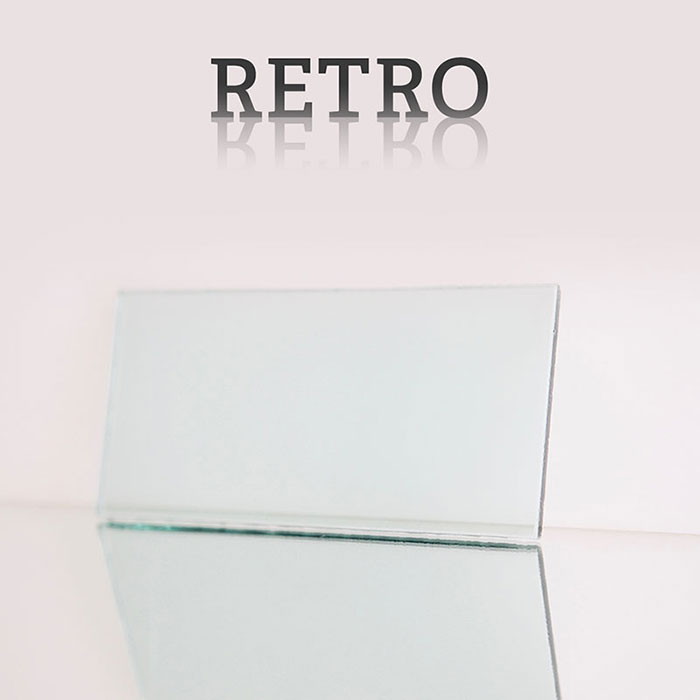
10. Retro: color without a strong surface pattern
Retro’s tinted appearance changes the color impression of the view. Treat it as a color choice and test the actual sample; a tint is not evidence that objects behind the glass will be obscured.
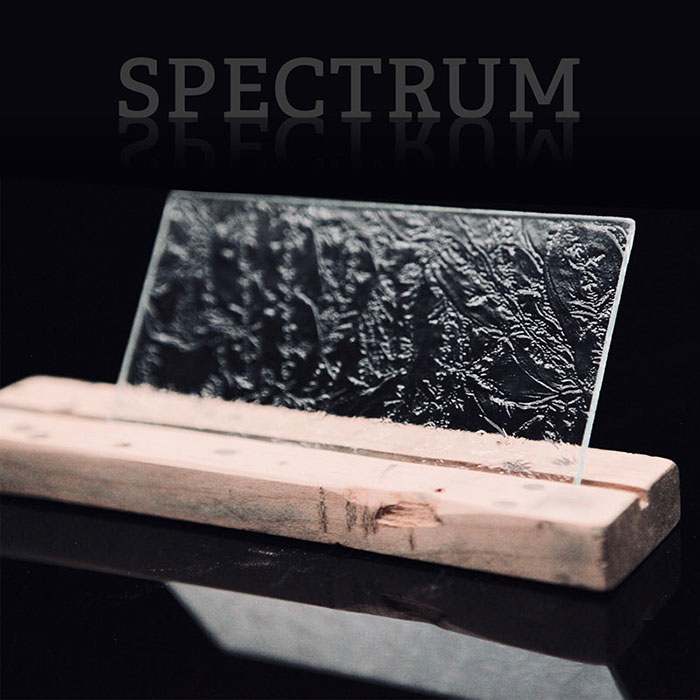
11. Spectrum: sweeping irregular marks
The sample has flowing, overlapping detail rather than straight flutes. Compare it beside the selected wood or metal finish to decide whether the combination feels calm or visually busy.
12. Tint: a darker view
A darker pane can alter brightness and appearance while leaving a recognizable view through it. Use the tinted-glass guide to separate color, solar performance and privacy instead of treating them as the same feature.

13. Vintage: irregular visual character
The waviness and small irregularities suggest older glass. Choose it for the character of the view rather than assuming that an antique appearance provides substantial screening.

Specify performance separately from the pattern
Ask whether the selected glass is available in the required safety-glass construction and, for exterior applications, the appropriate insulated assembly. Texture alone does not establish impact safety, UV protection, insulation or solar-heat control.
Keep the approved sample with the order, record the pattern orientation and identify the cleanable face. For a custom door, resolve these details before glazing dimensions and hardware are finalized.
Reference: Pilkington: Mirropane lighting and application requirements.
Updated .