

Rustica field guide · Entry door guide
Best Front Doors for Security: What to Compare Before You Buy
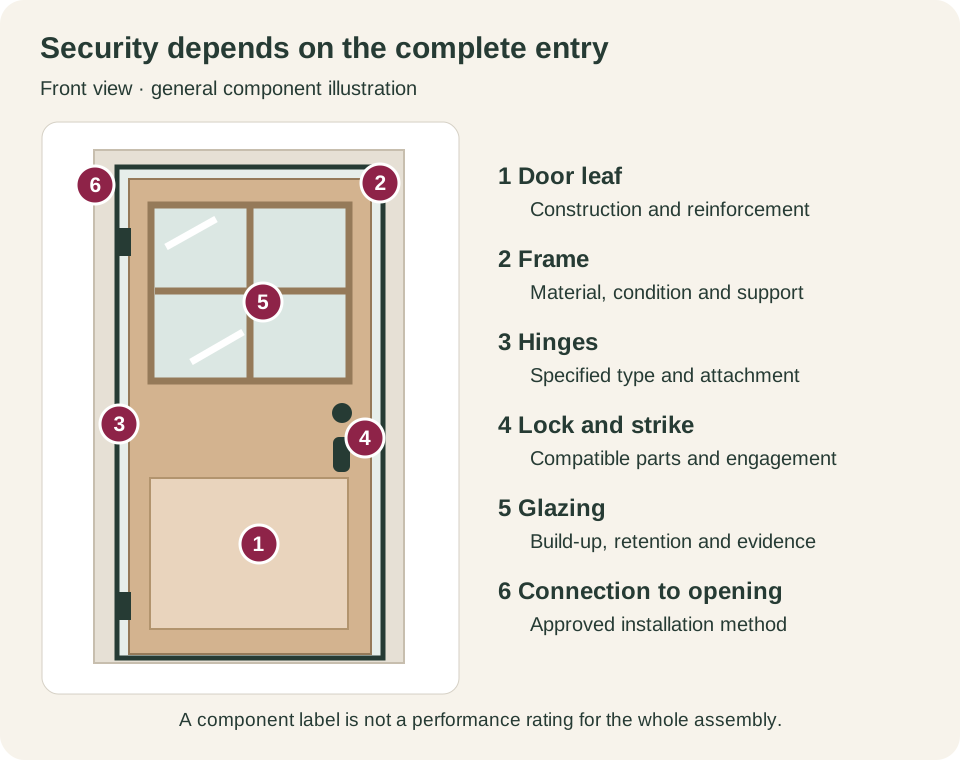
The best front door for security is a complete entry system suited to your home, with compatible construction, frame, lock, strike, hinges, glazing and installation. Wood, steel and fiberglass doors vary by product; the material name or the door’s weight does not establish a security rating. Compare the exact configurations and the evidence behind their claims. A strong slab cannot make up for an unsuitable frame or a lock that does not engage correctly.

Make it useful
Compare two entry-door quotes
Record what each supplier includes, then review the gaps. The worksheet compares your notes; it does not score security or verify test reports.
A useful comparison names the full door assembly, frame attachment, locks, glazing and installation. Leave a field blank when the quote does not say. For a solid door, write “solid door, no glazing” in the glass field.
Details to clarify
- Ask for: door and configuration.
- Ask for: frame and attachment.
- Ask for: locks, strikes and hinges.
- Ask for: glass and surrounding openings.
- Ask for: performance evidence.
- Ask for: installation and warranty.
- Ask for: price and included work.
- Ask for: door and configuration.
- Ask for: frame and attachment.
- Ask for: locks, strikes and hinges.
- Ask for: glass and surrounding openings.
- Ask for: performance evidence.
- Ask for: installation and warranty.
- Ask for: price and included work.
Missing test evidence means performance is unknown. It does not prove that a door is secure or insecure. Matching wording also does not prove that two assemblies perform alike.
Review or print the side-by-side notes
| Category | Quote A | Quote B |
|---|---|---|
| Door and configurationDetails missing | Not provided | Not provided |
| Frame and attachmentDetails missing | Not provided | Not provided |
| Locks, strikes and hingesDetails missing | Not provided | Not provided |
| Glass and surrounding openingsDetails missing | Not provided | Not provided |
| Performance evidenceDetails missing | Not provided | Not provided |
| Installation and warrantyDetails missing | Not provided | Not provided |
| Price and included workDetails missing | Not provided | Not provided |
A hardware rating applies to the named component and standard. For an assembly claim, request a document covering the quoted size, glazing, hardware and installation. BHMA explains residential hardware ratings; UL explains the components of a fire-rated door assembly. A fire rating is not a forced-entry rating.
Full guide and sources: https://rustica.com/the-best-front-doors-for-higher-home-security/
Start with the complete entry
A front door works as a system. The leaf carries the hardware, the lock engages the strike, the frame supports those parts and the installation connects the unit to the opening. Glass and double-door meeting edges add their own details.
Before comparing styles, write down the size of the opening, exposure to weather, preferred swing, amount of glass and any required performance. Then ask each supplier to quote the same scope. A slab-only price and an installed prehung entry cover different things.
If you are keeping the existing unit, start with our front door security improvement checklist. The comparison here is for choosing a replacement entry and understanding what the quote includes.
Compare wood, steel, fiberglass and composite construction
Material helps describe a door, but it does not describe the entire assembly. Two doors sold under the same material name can use different cores, edge construction, frames, glass and hardware preparation.
| Construction | What to compare | Evidence to request |
|---|---|---|
| Wood | Solid or engineered construction, panel and joint details, hardware preparation, frame and finish requirements. | Specifications for the exact unit, permitted exposure, care instructions and any applicable test results. |
| Steel | Door skin, core, edge details, reinforcement, frame and corrosion protection. | The construction specification and performance reports for the quoted configuration. |
| Fiberglass | Skin and core construction, lock and hinge reinforcement, frame, glazing and finish. | Product-specific test information, hardware requirements and installation instructions. |
| Wood-faced steel or another composite | The actual layers and connections behind the description, including exposed edges and hardware support. | A section drawing or construction specification, plus reports that apply to that assembly. |
Mahogany and other wood species can offer different appearances and care needs. Species, density and weight alone do not establish resistance to forced entry. A solid-looking door also needs suitable reinforcement and hardware.
Fiberglass belongs in the comparison. For example, Therma-Tru explains its fiberglass construction and a named comparison test on its safety and security page. That evidence concerns its stated products and test conditions; it should not be turned into a ranking of all fiberglass, steel or wood doors.
Compare front entry door designs and metal front entry doors by their complete specifications. Choose a look you like, then resolve the details that the photograph cannot show.
Give the frame and its attachment the same attention as the slab
Ask what frame is supplied, how the hinge and strike areas are supported, and which installation method applies to the opening. A new slab in an existing frame needs a different assessment from replacing the whole unit.
For a replacement, have the installer inspect the existing jambs and surrounding opening for damage, movement and unsuitable previous repairs. The quote should say whether frame replacement, preparation or repair is included.
Do not choose hinge or strike screws by length alone. Their type, diameter, location and engagement must suit the hardware, frame and supporting construction. Longer is not automatically correct, and there is no single four-inch screw prescription for every entry. Use the manufacturer’s fastening requirements and confirm the condition of the material receiving the fastener.
The door jamb guide explains the frame parts, while our front door installation guide helps organize the work that must be resolved before the old unit is removed.
Compare the lock, strike and hinges as a matched set
Ask for the actual lock model
Secure hardware should be identified by manufacturer, model and documented performance, not just a description such as heavy duty. Confirm that it fits the door’s thickness and preparation and provides the intended function from both sides.
The BHMA residential certification program evaluates hardware in security, durability and finish. Check each part of the label. Other ANSI/BHMA standards use numeric grades, so compare products under the applicable standard rather than assuming every grade label means the same thing. A certified lock is still one component of the entry.
Check the strike and engagement
The latch or deadbolt needs to enter its matching strike as intended with the door closed normally. A door that has to be lifted, pushed hard or pulled into place needs assessment. The strike plate and its support deserve as much attention as the visible handleset.
Confirm hinge and locking-system compatibility
Hinge selection, attachment and any required security features depend on the door and swing. A multipoint lock also needs the matching door preparation, frame or strike arrangement and adjustment instructions. Counting locking points is not a substitute for comparing the documented system.
Separate smart features from mechanical performance
Keypads, remote access and access codes describe how a lock is used. They do not, by themselves, establish the strength of the lock, frame or door. Check mechanical certification, emergency access and the manufacturer’s maintenance requirements as well as the features you want.
Can a secure front entry include glass?
Glass can be part of an entry, but its appearance does not tell you its security performance. Ask for the complete glazing specification and how the panel is held in the door or frame.
Tempered and laminated describe different glass constructions. Safety glazing intended to reduce injury is not automatically a forced-entry-resistant product. A laminated panel’s performance also depends on its glass layers, interlayer, dimensions, retention and the test being claimed.
Compare the location and size of glazing as part of the whole design, including sidelights. If a supplier claims resistance to forced entry, ask which tested configuration supports that statement and whether it matches the glass, size and frame in your quote.
Our guide to glass types for doors explains the construction choices. For a wider entry, review doors with sidelights and transoms as complete assemblies.
What changes with double front doors?
A pair adds a meeting joint and a second leaf to secure. Identify which leaf is used for everyday entry and how the other one is held closed. Confirm the astragal, seals, bolts, strikes and the required opening and closing sequence.
The door astragal may cover the joint and carry parts of the locking or sealing system. Its exact function depends on the design. An overlap alone does not give the pair a security rating.
When comparing double exterior doors, ask whether a performance report covers the pair as quoted. Evidence for a single door should not be assumed to apply to a wider double-door assembly.
Know what a rating actually covers
| Claim or document | What it addresses | What to confirm |
|---|---|---|
| Hardware certification | Performance of the identified lock, hinge or other hardware under its applicable standard. | Exact model, standard and grade. It is not a grade for every component in the entry. |
| Safety-glazing documentation | The stated safety requirements for the glazing product. | Markings, glass construction and permitted application. Do not read this as a burglary rating. |
| Forced-entry test report | Resistance of the tested product or assembly under a stated test method. | Test scope, size, components, mounting and result for the configuration being supplied. |
| Wind or debris-impact approval | The specified performance under the identified wind or impact requirements. | Approved configuration, installation and applicable limits. It does not establish general burglary resistance. |
| Fire-door listing | Fire performance of the specified assembly and components. | Labels, rating and compatible construction. A steel skin alone does not make a fire-rated door. |
UL’s fire-door assembly guide treats the door, frame, glazing and hardware as parts of the rated opening. Its fire guidance does not establish burglary protection.
Storm-shelter use is a separate, specialized requirement. FEMA explains that a safe-room door assembly must be tested and certified in its installed configuration. Ordinary steel construction is not proof that a front door is suitable for a tornado shelter.
Keep a copy of any report or approval with the quote. Ask the supplier to identify the relevant page and explain how the ordered size, glazing and hardware match it.
Treat a security screen as an additional system
A security screen serves a different role from the main entry door. It can provide an additional barrier while allowing ventilation, but its frame, mesh retention, hinges, lock and installation must be considered together.
Do not assume that any metal mesh or insect screen provides tested security performance. If comparing a Meshtec system, for example, use the tests and configuration described in its current product brochure. A statement about mesh material alone does not describe the complete installed screen.
Confirm compatibility with the main door’s swing and handles, the available opening, normal access and emergency exit. Hinged and sliding screen systems have different fitting requirements. Include their installation and maintenance in the total project scope.
Put two quotes side by side
Ask both suppliers for the same information. A missing specification is a question to resolve before ordering, not a reason to assume the products are equivalent.
| Item | Record this for each option |
|---|---|
| Door and configuration | Manufacturer, model, size, swing, single or double, slab or prehung. |
| Construction | Door, core, edges, frame and reinforcement details. |
| Glazing | Glass build-up, size, retention and any applicable documentation. |
| Hardware | Lock, strike and hinge models, certification, finish and included parts. |
| Performance | Relevant report or approval, tested configuration and stated limitations. |
| Installation | Removal, frame or opening work, approved fastening, sealing and final adjustment. |
| Care and warranty | Exposure limits, required maintenance, coverage and exclusions. |
| Complete cost | Product, options, hardware, finishing, delivery, installation and disposal as applicable. |
At handover, have the installer demonstrate normal closing, latching and locking from both sides, including operation of the second leaf on a pair. Keep the product identification, instructions and any supplied performance documents with the home’s records.
For a professional project, this comparison can become part of the door schedule. Apply to Rustica’s trade program for contractors and designers when sourcing the entry, and keep the selected configuration attached to the quote through ordering and installation.
Common questions before choosing a front door
Does a heavier door mean a more secure door?
Weight describes one physical property. It does not tell you how the door, hardware, frame and installation perform together. Compare the construction and relevant evidence for the exact assembly.
Should I replace the frame as well as the door?
Have the existing frame assessed for condition, fit, attachment and compatibility with the new leaf and hardware. A slab replacement may be suitable in one opening, while another needs a complete prehung unit or repairs to the surrounding construction.
Is a wood front door automatically less secure than a steel door?
No material label establishes the answer. Compare the actual door construction, reinforcement, frame, hardware, glass and installation. A performance claim should identify the product and the test behind it.
Can I keep the style I want?
Start with the entry designs that suit your home, then ask which configurations meet your project’s requirements. Panel pattern, finish and glass arrangement can be considered alongside the technical details. The decision should leave you with both a clear specification and a door you want to use every day.
Keep planning your project
Sources and product documents
- Therma-Tru: named door-system components and comparison-test scope
- BHMA: residential hardware certification categories
- UL Solutions: fire-door assemblies and component compatibility
- FEMA: safe-room door assembly testing and installation
- Meshtec: screen-system components and identified tests
Bring your measurements to the next conversation.
Explore the contractor discount program