
Rustica field guide · Hardware guide
8 Types of Barn Door Latches: Compare Fit and Function
A barn door latch holds a sliding door closed. The right choice depends on where the hardware mounts, how the door moves, and who needs to open it. Hook-and-eye and teardrop latches offer simple closure; privacy locks add a locking function; self-latching systems catch as the door closes. For a bathroom, check the outside release. For an exterior entry, evaluate the complete door and lock assembly rather than choosing by latch shape.
Make it useful
Compare latch mechanisms
Explore how each type works and what needs checking. These filters organize mechanisms; they do not confirm a fit or assign a security rating.
8 of 8 mechanism types shown.
Hook and eye
Drop the hook into its keeper.
Check: Measure the reach and confirm access from the opposite side.
See the Rustica cabin hookSelf-latching system
The mechanism catches as the door reaches its closing position.
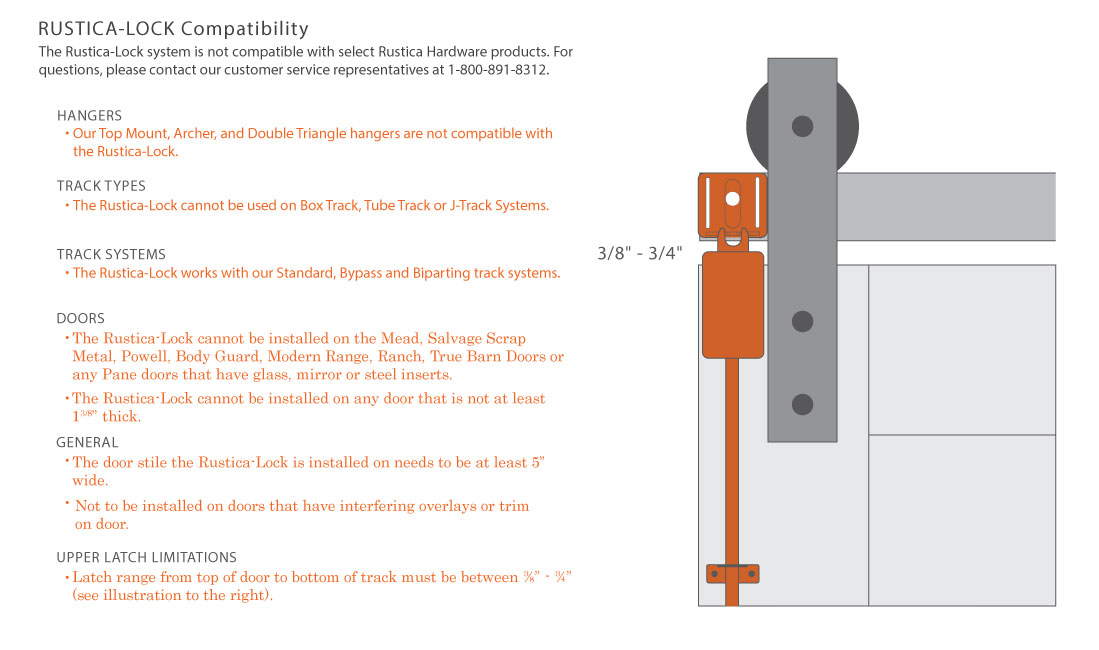
Check: Rustica’s model requires a compatible wood door, track and hangers. It is for interior light-duty use.
See Rustica Latch + LockTeardrop latch
Rotate the plate into its keeper.
Check: Check keeper alignment and whether the exact model includes an outside release.
See the Rustica teardrop latchMortised privacy lock
Operate a lock fitted partly into a prepared recess.
Check: Use the exact template for the material, thickness and outside-release preparation.
Plan the lock preparationSurface-mounted privacy lock
Operate a lock body mounted on the surface.
Check: Check its projection, strike preparation and documented outside-release method.
Check the mounting detailsCane floor bolt
Lower a bolt into a floor receiver.
Check: Plan the receiver and panel operation. It does not provide an outside release by default.
Review the door arrangementHasp and padlock
Close the plate over a staple and secure the padlock.
Check: Resolve inside opening before use on an occupied space. Check the approved application.
Compare outside locking functionsBarrel slide bolt
Slide a bolt into a separate keeper.
Check: Keyed operation and outside access vary by model; neither is automatic.
Check the required lock functionA lock may combine features from more than one category. For a bedroom or bathroom, confirm the exact outside-release function before ordering. A key or substantial-looking bolt does not establish forced-entry performance.
Full guide and sources: https://rustica.com/types-barn-door-latches/
Compare the eight latch types
Start with the job the latch needs to do. A pantry may need a simple catch, while a bathroom needs a considered privacy function. The names below describe mechanisms or mounting methods, so some features can overlap. A surface-mounted lock, for example, may also have an emergency release.
| Type | How it holds the door | What to check |
|---|---|---|
| Hook and eye | A hook drops into a small eye or keeper. | Reach across the gap, mounting surface and access from the opposite side. |
| Self-latching system | A mechanism catches when the door reaches its closing point. | Exact track, hanger, door and lock-function compatibility. |
| Teardrop latch | A pivoting plate engages a keeper. | Keeper alignment, clearances and whether an outside release is provided. |
| Mortised privacy lock | Part of the mechanism fits into a prepared pocket or bore. | Door or jamb preparation, thickness and the specified release method. |
| Surface-mounted privacy lock | The lock body fastens to a visible surface. | Mounting location, projection and any preparation needed for the strike or release. |
| Cane floor bolt | A vertical bolt enters a receiver at the floor. | Floor construction, receiver placement and which panel needs to move. |
| Hasp and padlock | A hinged plate fits over a staple secured by a padlock. | Approved application, mounting strength and access needed by anyone inside. |
| Barrel slide bolt | A bolt slides into a separate keeper. | Bolt travel, alignment and the exact model’s locking function. |
Browse barn door locks and latches when you are ready to compare available hardware. For a step-by-step selection process, use our guide to locking a sliding barn door.
Privacy, latching and security are different jobs
A latch can keep a door from sliding open without providing a keyed lock. A privacy lock lets someone control entry while using a room. A security lock is part of an assembly intended to resist unwanted entry. These functions are related, but one does not prove the others.
The slab, frame or supporting wall, track, guides, fasteners and lock all affect how an installation works. A substantial-looking bolt alone does not establish a forced-entry rating. A keyed option also does not automatically make an interior product suitable for an exterior entrance.
For example, Rustica Latch + Lock is specified for interior residential, light-duty use and is not intended as a security solution. Use that stated purpose when comparing it with other hardware.
1–3. Hook, self-latching and teardrop mechanisms
1. Hook and eye
A hook-and-eye latch has few parts and an easy-to-understand action. One piece holds the hook; the other receives it. It can suit a cabinet or other simple enclosure when the mounting surfaces line up and the hardware is approved for that application.
Rustica’s Stainless Steel Cabin Hook is listed as four inches long. That product length is not a promise that it will bridge a four-inch gap. Check the actual reach and mounting locations. Do not assume a person on the other side can release a basic hook.
2. Self-latching system
A self-latching mechanism catches as the door closes, reducing the need to engage a separate hook each time. The catch and the lock function are separate things to check: ask how it latches, how it locks, and how it opens from each side.
Rustica’s system uses a handle and vertical rail to operate a latch near the track. That arrangement makes track and hanger compatibility especially important. Match the complete system, not just the finish.
3. Teardrop latch
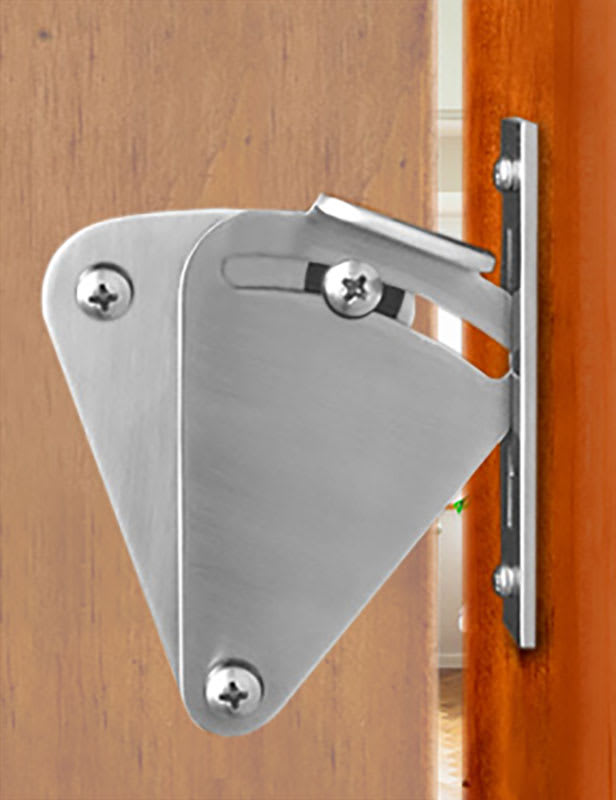
The Barn Door Tear Drop Latch uses a pivoting piece and a keeper. Rustica lists mounting on the door or jamb; the supplied instructions determine the arrangement for the installation. Check that the pieces engage without forcing the slab toward the wall.
This compact design can blend into the hardware around it. For a bedroom or bathroom, confirm how the exact model can be opened from outside before choosing it for privacy. An ordinary pivoting latch should not be assumed to include a release.
4–5. Mortised and surface-mounted privacy locks
4. Mortised privacy lock
A mortised lock fits partly into a prepared recess. Depending on the design, preparation may be in the door, the jamb or both. That can produce a clean appearance, but it makes the drilling and cutting template central to the choice.
Compare required door thickness, available solid material, edge distances and strike location. A thin stile, glass panel or hollow section may prevent the required preparation. Do not substitute a generic door-thickness rule for the selected lock’s drawing.
5. Surface-mounted privacy lock
A surface-mounted lock leaves more of its body visible. It may reduce the size of a mortise, but it can still need holes or recesses for a strike and outside release. Its projection must also clear adjacent trim and any door that slides past it.
As one documented example, Emtek’s rectangular barn door privacy lock includes an emergency-release tool and does not require handing. Its installation drawing shows preparation for that release. Those are features of that model, not of every surface-mounted lock.
6–8. Floor bolts, hasps and slide bolts
6. Cane floor bolt
A cane bolt moves vertically into a receiver. On some paired-door assemblies, a floor bolt holds one panel while the other is used. The layout must leave the active panel usable and keep the receiver out of an unwanted trip or obstruction location.
Confirm how the bolt is retained when raised, how the floor receiver is installed, and whether the door is allowed to move with the bolt engaged. Floor material and the complete door arrangement matter.
7. Hasp and padlock
A hasp closes over a staple, which receives a padlock. It is often associated with storage and utility enclosures. Choose hardware intended for the exposure and substrate, with fastening details appropriate to the assembly.
An outside padlock can prevent a person inside from opening the door. Do not select it for an occupied room without resolving the required inside opening function and applicable exit requirements.
8. Barrel slide bolt
A barrel bolt slides into a keeper mounted on another surface. Some models include a keyed or padlockable function; many are simple one-sided bolts. The name alone tells you neither how it opens from outside nor its security performance.
Look for enough bolt engagement, a sound mounting surface and alignment throughout normal door movement. If the bolt only engages when someone lifts or pushes the slab, correct the underlying fit before relying on it.
Match the latch to the way the doors move
A single sliding barn door closes at one end of its travel. Its latch may engage a keeper on a jamb, wall or a compatible track system. Leave clearance for the handle, lock and keeper through the full opening motion.
Bi-parting barn doors move away from each other and meet near the center when closed. Decide whether the selected lock joins the panels or secures them through another documented arrangement. Bypass barn doors pass in front of one another on separate planes, which makes projecting hardware and panel offsets important.
Pocket and folding doors need hardware designed for their different travel and mounting details. For a door that disappears into the wall, compare pocket door lock functions instead of assuming a barn-door latch will fit.
Measure these details before ordering
- Identify the track, hanger and door models. Keep the product drawings with your measurements.
- Measure door thickness at the planned mounting area and note whether that area is solid wood, metal, glass or another construction.
- Measure the available flat mounting area and the gap between the surfaces that the lock must connect.
- Check handle and lock projection with the door closed, fully open and passing another panel.
- Choose the operating function on each side, including any needed emergency release.
- Use the exact template to check preparation before drilling.
Some dimensions are particular to the mechanism. Rustica’s Latch + Lock compatibility drawing calls for a stile at least five inches wide and a specific clearance at the top latch. It also excludes particular hangers, tracks and door styles. A general “fits barn doors” description is not enough to make that decision.
Which latch works for a bathroom?
Choose a privacy function that is easy to operate from inside and has a documented way to gain access from outside when needed. Check the release location after installation: trim, panel overlap or another door must not hide it. Keep any release tool where another household member can reach it.
A lock controls entry; it does not close a sightline gap or soundproof the opening. The bathroom barn door guide covers the larger room decision. If a side gap is the concern, the privacy-sweep measurement guide explains what to inspect.
For a door serving a required exit, a public space or a rated assembly, have the applicable requirements checked before selecting or altering hardware. A useful privacy feature is not proof of compliance.
Keep the latch working smoothly
Use the installation sheet supplied with the selected lock. Align its components with the door in its normal closed position, then verify that the door travels freely and that the lock operates from every intended side. Test a privacy release with the door open first and without anyone confined.
If a latch becomes hard to engage, check for loose mounting, a shifted guide or a change in door alignment. Use the barn door hardware care guide for cleaning questions, and follow the finish maker’s instructions. Avoid treating household oils or abrasive cleaners as universal hardware care.
A soft-close accessory controls part of the closing movement; it does not replace a lock. Check both products’ compatibility when planning to use them together.
Choose hardware for the whole project
Compare available barn door latches and locks with your measurements in hand. If you are specifying doors for a client, bring the door schedule and desired lock functions to the discussion. Register for Rustica’s contractor discount program to plan trade purchases with the team.
Keep planning your project
Sources and product documents
- Rustica Latch + Lock specifications
- Rustica lock compatibility drawing
- Rustica Tear Drop Latch
- Rustica Stainless Steel Cabin Hook
- Emtek rectangular privacy lock
- Emtek privacy-lock installation drawing
Bring your measurements to the next conversation.
Explore the contractor discount program