

Start with four simple steps
Identify the finish
Find the finish name and care instructions.
Lift away dust
Use a clean, soft cloth; avoid grinding in grit.
Clean as directed
Use only a method approved for that surface.
Dry and inspect
Check the finish and the door’s operation.
A single door may have painted steel hardware, a stained wood panel, glass and a leather pull. One bottle is unlikely to be the right choice for all of them. Keep the order record and finish names so you can check the correct care guidance later.
Use a clean, soft cloth and work on a small area at a time. A cloth carrying grit can scratch a surface even when the cleaner is suitable. Set the panel in a stable position and keep fingers away from wheels and closing edges while working.
Clean pulls and handles first
Remove loose dust, then follow the handle maker’s instructions for fingerprints and grime. When a damp cloth is approved, control the amount of moisture and wipe away residue. Avoid spraying cleaner into a lock, joint or moving mechanism.
Emtek’s hardware care guidance, for example, calls for a soft cloth and a mild, non-abrasive detergent solution. It warns against abrasive pads, certain strong cleaners and spraying solution directly on the hardware. That guidance applies to Emtek products; check the instructions for the actual maker and finish on your door.
Reference: Emtek hardware cleaning guidance.
When replacing a damaged handle, compare barn door handles and pulls with the existing hole locations and rear clearance in hand. Cleaning will not repair a loose or broken attachment.
Match the method to the material
| Surface | Start with | Avoid assuming |
|---|---|---|
| Painted or powder-coated metal | The coating maker’s approved cleaner and a soft cloth. | That an acid, metal polish or solvent is safe for the coating. |
| Plated or lacquered hardware | The hardware maker’s instructions for that finish. | That a brass-colored surface is bare brass. |
| Unlacquered or intentionally aged metal | Guidance for the intended patina. | That every color change should be polished away. |
| Leather pull | Instructions for the particular leather and treatment. | That furniture spray, cooking oil or soap is compatible. |
| Finished wood | The coating’s care instructions and controlled moisture. | That all stained wood needs oil soap or furniture polish. |
| Glass | A cleaner and cloth approved for that glass and any coating. | That the glass cleaner is also safe on the adjoining frame. |
Vinegar is acidic, and “natural” is not a finish-compatibility test. Cooking oil, furniture polish, bleach and all-purpose sprays should not be used across the assembly without approval for the specific surface. Test only an approved method in a discreet area as directed.
Inspect the exposed rail and rollers
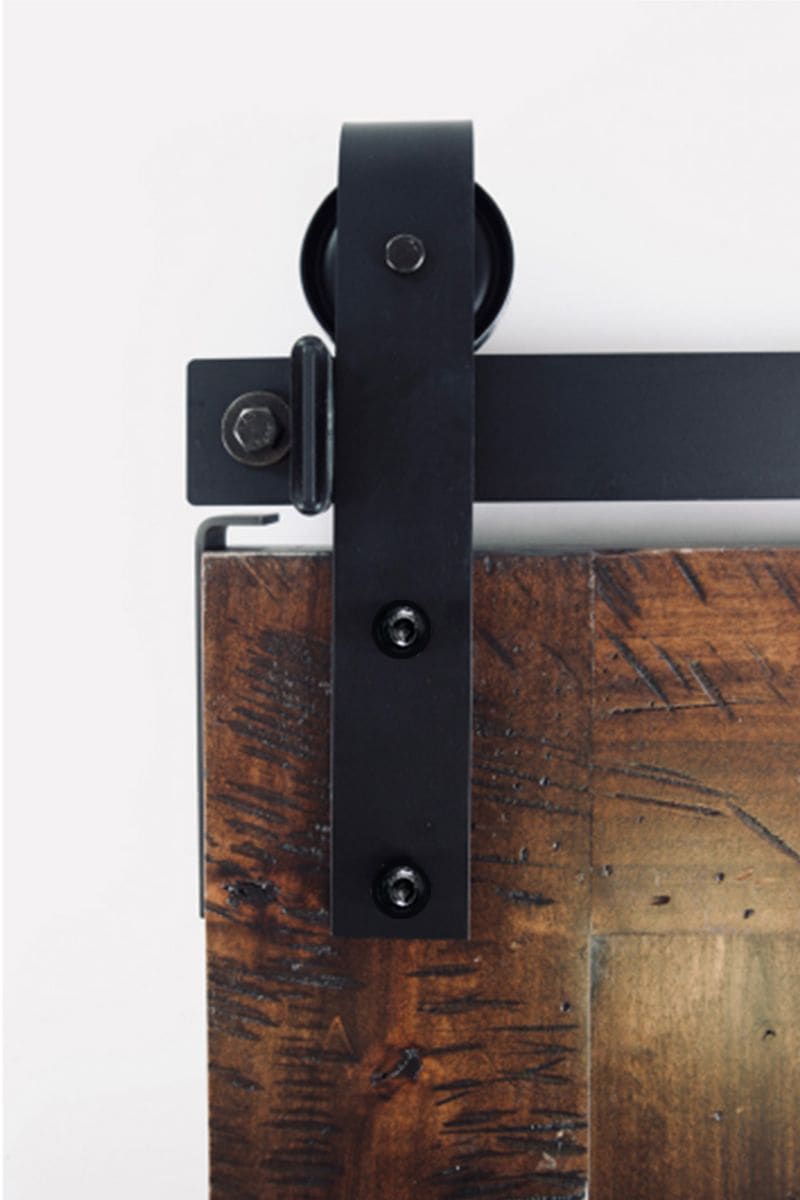
With the panel still, lift away accessible dust and debris using the approved method. Do not reach into a moving wheel or remove a stop to get at a dirty spot. Clean only the parts you can access while the assembly stays properly supported.
Cleaning does not mean every roller or bearing needs oil. Some components have their own lubrication requirements or are not intended for user lubrication. Follow the selected kit’s instructions; extra lubricant can leave residue where it is not wanted.
The barn door hardware parts guide helps identify the hangers, stops and guides before you inspect them.
Clear debris around the floor guide
Look for dust, hair or other loose material around the guide and the bottom of the panel. Remove accessible debris gently while keeping the door still. Do not change the guide’s position or cut a deeper groove as part of routine cleaning.
After cleaning, move the panel slowly through its allowed travel. The guide should remain engaged as specified. If the door wobbles, scrapes or catches, investigate alignment and attachment rather than pushing it harder.
Use the barn door guide comparison to understand the component, and the barn door alignment guide for movement problems.
Clean the door face without soaking the edges
Work from the upper areas downward so loosened dust does not settle on a finished section. Include recessed panels and the top edge where accessible. For wood, use the finish maker’s method and keep excess water out of joints and cutouts.
For glass, keep the approved cleaning solution away from adjoining finishes that may need a different method. Do not use blades or abrasive pads unless the glass maker specifically permits them for that surface.
If the door has a powder-coated steel face, the powder-coated steel door care guide covers coating inspection and gentle cleaning in more detail.
Know when the mark needs a repair
| What you see | Next step |
|---|---|
| Loose dust or fingerprints | Use the approved routine care method. |
| A changing patina | Check whether the finish is intended to age. |
| A scratch through a coating | Ask for the compatible touch-up procedure. |
| Spreading corrosion or lifted coating | Have the damaged finish and underlying metal assessed. |
| Loose hardware, grinding or an unstable panel | Stop using the door until the support and movement issue is checked. |
Take a clear photo before working on an unfamiliar mark. Send it with the finish name and order details to the supplier. A stronger cleaner is not a repair plan for corrosion, damaged plating or a failing coating.
Set a routine that matches the location
Clean high-touch areas as needed and inspect the rest of the assembly during normal household care. Dust, humidity and outdoor exposure can change how much attention is needed. Follow the product instructions instead of applying one monthly or yearly interval to every installation.
For the wider inspection routine, use Rustica’s product care and installation instructions. Keep a note of the finish and approved products so the next cleaning starts with the right information.
Planning a client project?
Handing over a finished project to a client? Include the door and hardware care instructions with the finish schedule. Rustica’s contractor discount program explains professional eligibility and how to apply.