



What each hardware part does
| Part | Purpose | What to confirm |
|---|---|---|
| Track and carriers | Support and guide the panel’s movement above the opening. | Door weight, size, thickness and the complete frame system. |
| Face pull | Provides a grip on the flat side of the door. | Recess depth, projection and clearance inside the pocket. |
| Edge pull | Helps draw the panel out of the pocket. | Reach when fully open and the required edge preparation. |
| Latch or lock | Holds the door closed or provides the selected locking function. | Matching strike, function and door preparation. |
| Guides and stops | Control alignment and the allowed travel. | The parts and positions specified for the selected system. |
Some products combine a face pull, edge pull and lock in one set. Others are separate. Check the package contents before ordering duplicate parts or leaving out the strike.
Passage, privacy, keyed and dummy are different functions
| Function | Typical purpose | Question to ask |
|---|---|---|
| Passage | A door that does not need to lock, such as a pantry. | Does the set include a latch, an edge pull or both? |
| Privacy | Temporary privacy in a bathroom or bedroom. | How does it release from inside and how does emergency access work? |
| Keyed | Controlled access using a key or cylinder. | Which side is keyed, and what is the intended security level? |
| Dummy | Nonoperating trim or an inactive part of a paired-door set. | Does it include a receiving strike or other parts for the active leaf? |
Function names describe a product family, but the contents can vary. Passage does not mean every pocket-door set has the same latch. A dummy set for a pair may do more than provide a decorative handle.
For a bathroom, check how the privacy lock releases from inside and how emergency access works. Make sure everyone using the room can operate the selected hardware.
Mortise and tubular describe the preparation
A mortise lock uses a lock body fitted into a recess in the door edge. A tubular design uses its own bored preparation and latch arrangement. The cutouts are different, so the shape of the face plate alone does not tell you whether one can replace the other.
Emtek’s current Classic Pocket Door Mortise family offers keyed, privacy, passage and dummy functions. Its Square Pocket Door Tubular family has a different design and preparation. Those are examples of why the exact model and function belong on the order, not proof that all manufacturers offer the same choices.
Reference: Emtek Classic Pocket Door Mortise specifications.
Reference: Emtek Square Pocket Door Tubular specifications.
A mortise body is not, by itself, a security rating. A keyed pocket door also depends on the panel, frame, strike and installation. Confirm those requirements if the room needs more than everyday privacy.
Make sure you can retrieve the fully open door
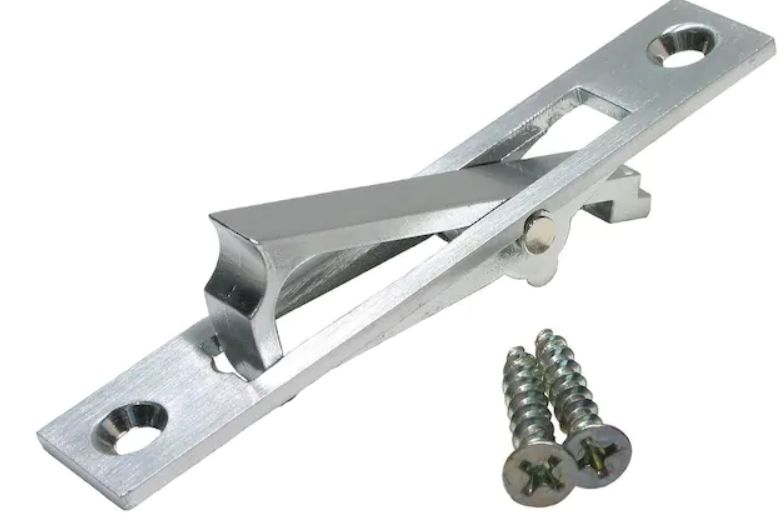
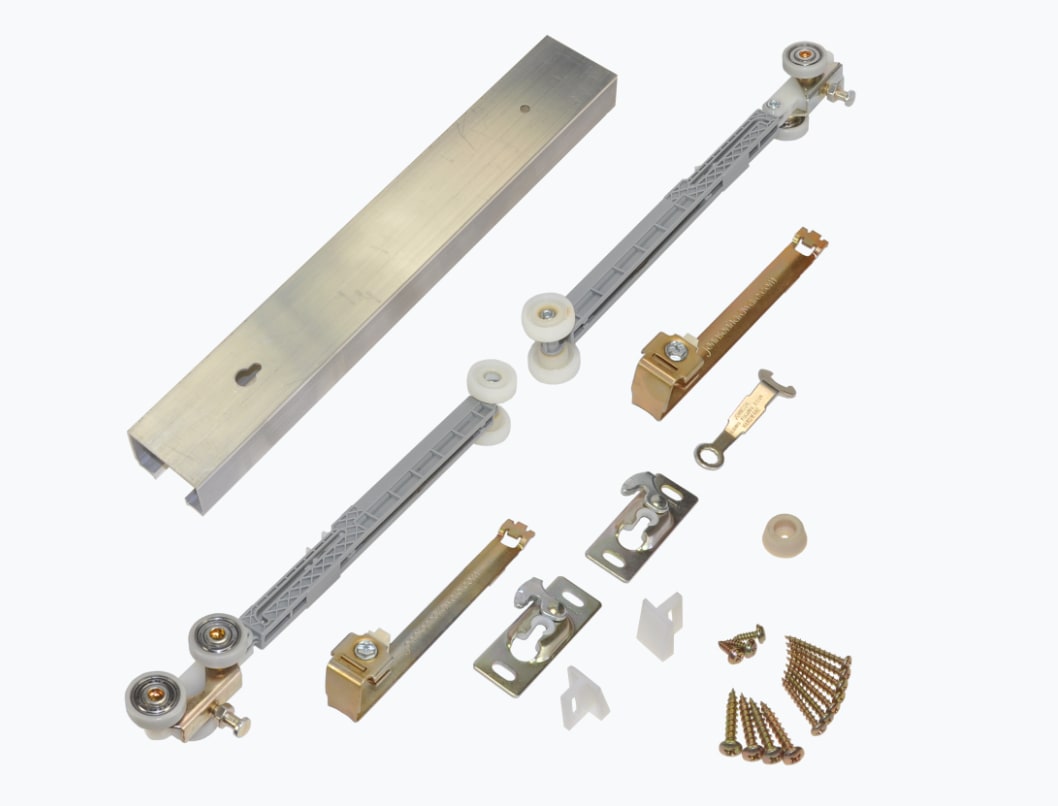
When the panel disappears into the wall, its face pull may be hidden. An edge pull or another specified retrieval method must remain usable. Check the intended open position, stop setting and the user’s grip before finalizing the layout.
Compare pocket door handle ideas once the function is clear. A projecting handle that looks comfortable in a photo may prevent the panel from entering its pocket.
Record the door details before ordering
- Door thickness and construction, including any metal frame or narrow stile.
- Existing holes or mortises, if reusing a panel.
- The required backset and complete template for the selected set.
- Strike location and the active leaf if using a pair.
- Track model, complete panel weight and any soft-close requirements.
- The way the door will be opened from both sides and from its parked position.
Use Rustica’s pocket door measuring instructions for the selected system. Measurements for an ordinary swinging door do not automatically describe the pocket frame, finished opening or hardware height.
Use the template that comes with the hardware
Confirm compatibility before cutting the door. Transfer the manufacturer’s preparation accurately and check the allowed material around the cutout. Do not enlarge a metal frame or narrow wood stile simply to fit a lock chosen afterward.
After installation, move the door through its full travel and test the latch, lock, edge pull and any soft close. The panel should not rub the pocket, and the hardware should remain accessible as designed.
Start with pocket doors for a new project or contact Rustica with the existing door details when selecting replacement hardware.
Planning a client project?
Preparing pocket doors for a client’s home? Put the lock function and approved preparation on the door schedule before fabrication. Rustica’s contractor discount program explains professional eligibility and how to apply.