

Read the house before selecting a door
Look at the roofline, window spacing, porch posts and nearby siding. A long, low facade can work well with repeated horizontal details. An entry set to one side of the house may already have the asymmetry you want, allowing the door itself to stay simple.
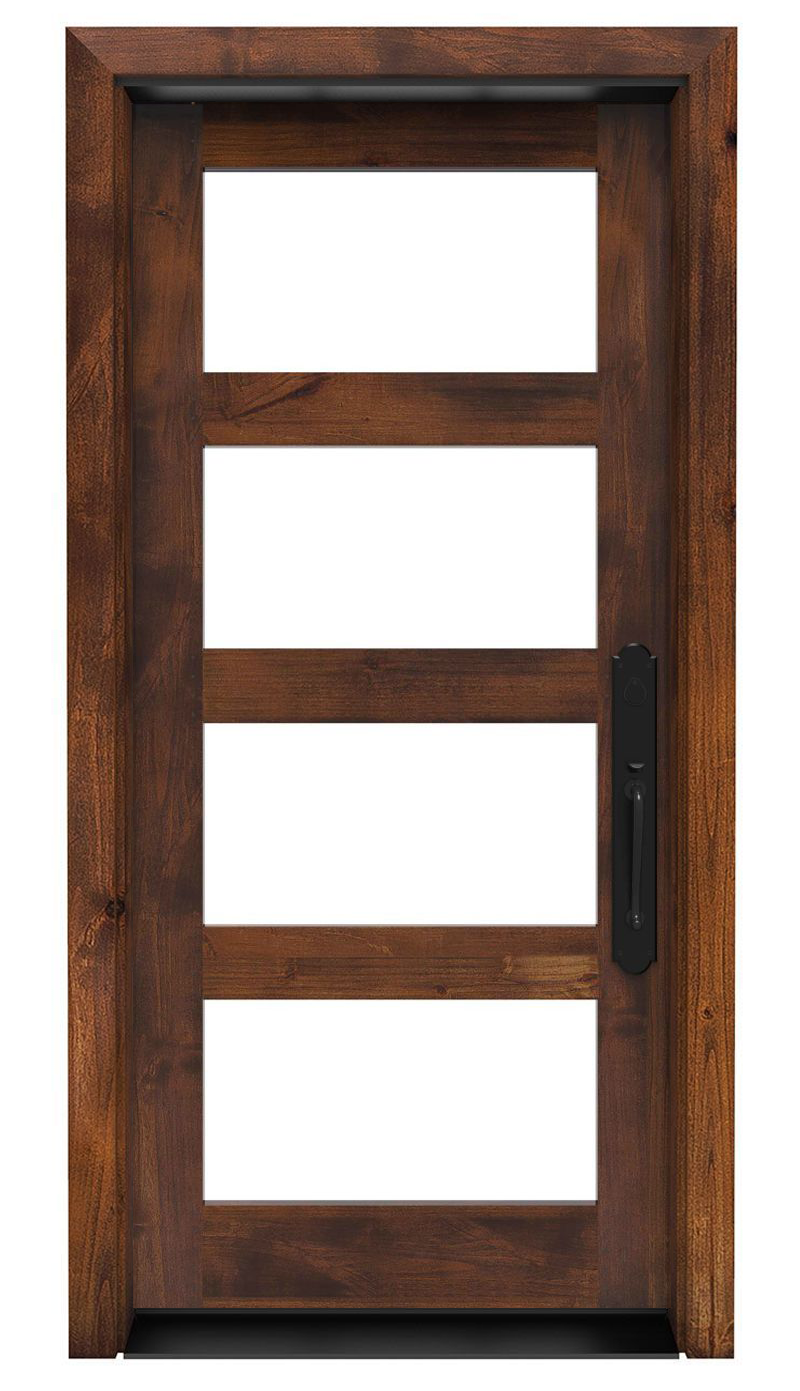
Take a straight-on photograph of the entrance and sketch several glass patterns over the same door outline. Keep the opening size constant so you are comparing composition rather than being distracted by differently sized product photographs.
| Composition | Visual effect | Practical decision |
|---|---|---|
| Stacked horizontal lights | Creates a repeated rhythm across the leaf. | Choose the amount of exposed glazing and assess privacy from the approach. |
| An off-center vertical light | Adds asymmetry without filling the door with glass. | Check hardware placement and sightlines through the tall glass strip. |
| Solid door with a sidelight | Separates the door’s surface from the daylight opening. | Confirm total frame width, the glazed side and the view from inside. |
Choose natural wood or a color accent
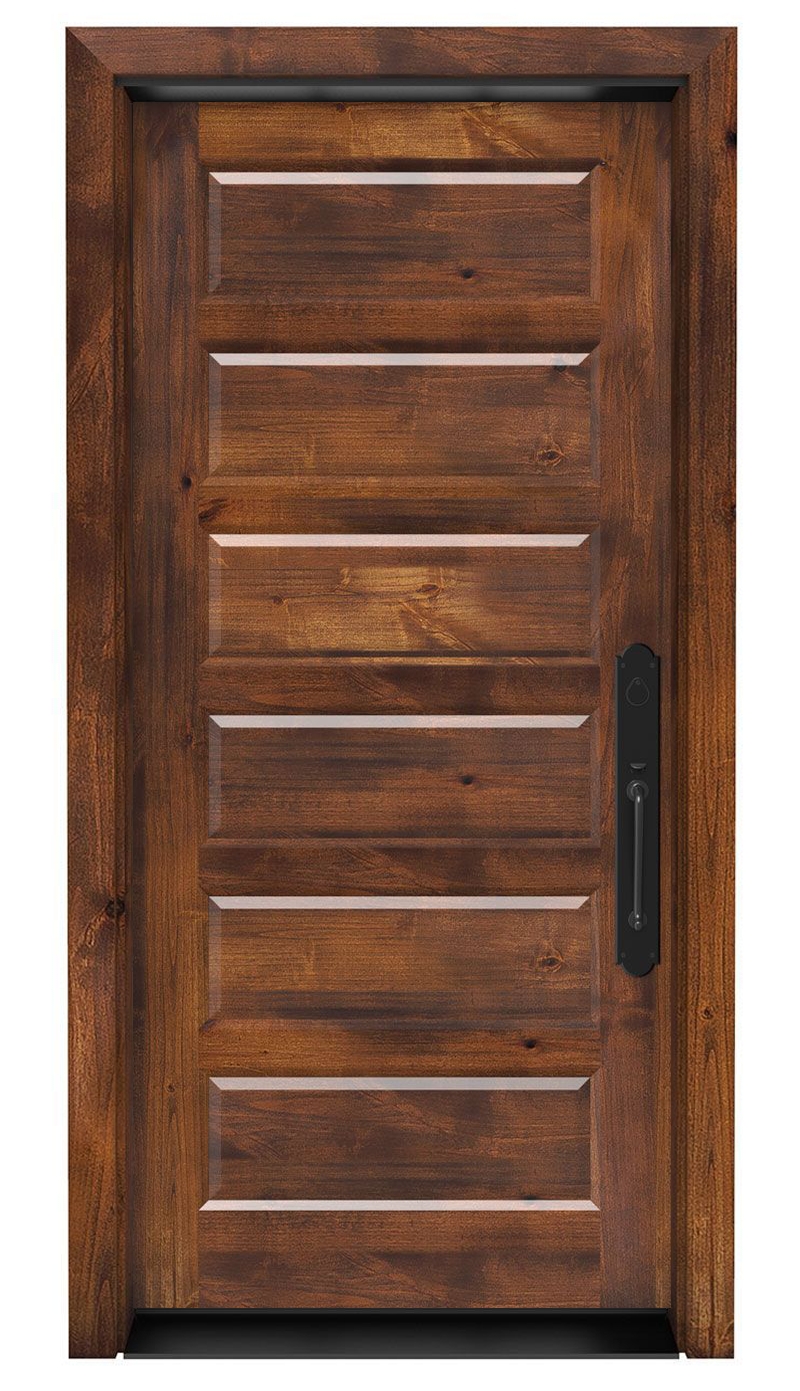
Natural wood brings grain and warmth into a spare elevation. A painted door can give a neutral facade one clear accent. Try a sample beside the actual brick, stone or siding, in sunlight and shade, before choosing from a small screen swatch.
Repeat the accent sparingly—in a planter or another small detail—if the entry needs a stronger connection to the surrounding space. When the facade already has a strong material pattern, a quieter door finish may read more clearly.
Specify glass for the way the entry is used
Clear glass gives the most direct view; textured glass changes that view rather than guaranteeing complete privacy. Review a sample under the lighting conditions that matter, including after dark when the interior is illuminated.
Glazing size and placement also affect the view of a visitor, the light falling inside and the visible relationship to the handle. Ask for the correct safety glazing and documented performance for the selected exterior assembly.
A pivot is an operating choice
A pivot door may suit a contemporary interpretation, but it is not required to achieve the style. Consider the swing on both sides of the pivot, clear passage, threshold and floor conditions, and the manufacturer’s installation requirements.
A well-proportioned hinged door can be the better fit for an existing opening. Choose the mechanism for the project, then carry the mid-century character through the face, glazing and hardware.
Bring a complete elevation to the design conversation
Include the door, any sidelights, the frame and nearby exterior finishes. Confirm the configured size, handing, material, glass, hardware preparation and exposure requirements together. A coherent entrance is the objective, not a checklist of every possible mid-century feature.
Updated .