

What gives a door its Craftsman character?
The American Craftsman tradition grew from the Arts and Crafts movement, with an emphasis on materials and the visible work of making. Gustav Stickley helped bring those ideas into homes and furnishings. Today’s Craftsman-inspired doors borrow that sense of directness through strong rails, clear panel divisions and wood grain that remains part of the design.
A stained finish is one approach, not a historical rule for every house. Painted doors can also work when the panel proportions suit the architecture. Likewise, a diagonal pattern may be a contemporary companion to a Craftsman room rather than a reproduction of an early twentieth-century door.
Reference: Stickley Museum: Craftsman Farms and Gustav Stickley.
Two interior interpretations
These first two designs share a band of vertical lites above a larger wood field. Their lower panels create quite different effects. Confirm the selected interior configuration, glass and preparation with the order.
1. Craftsman Interior Door
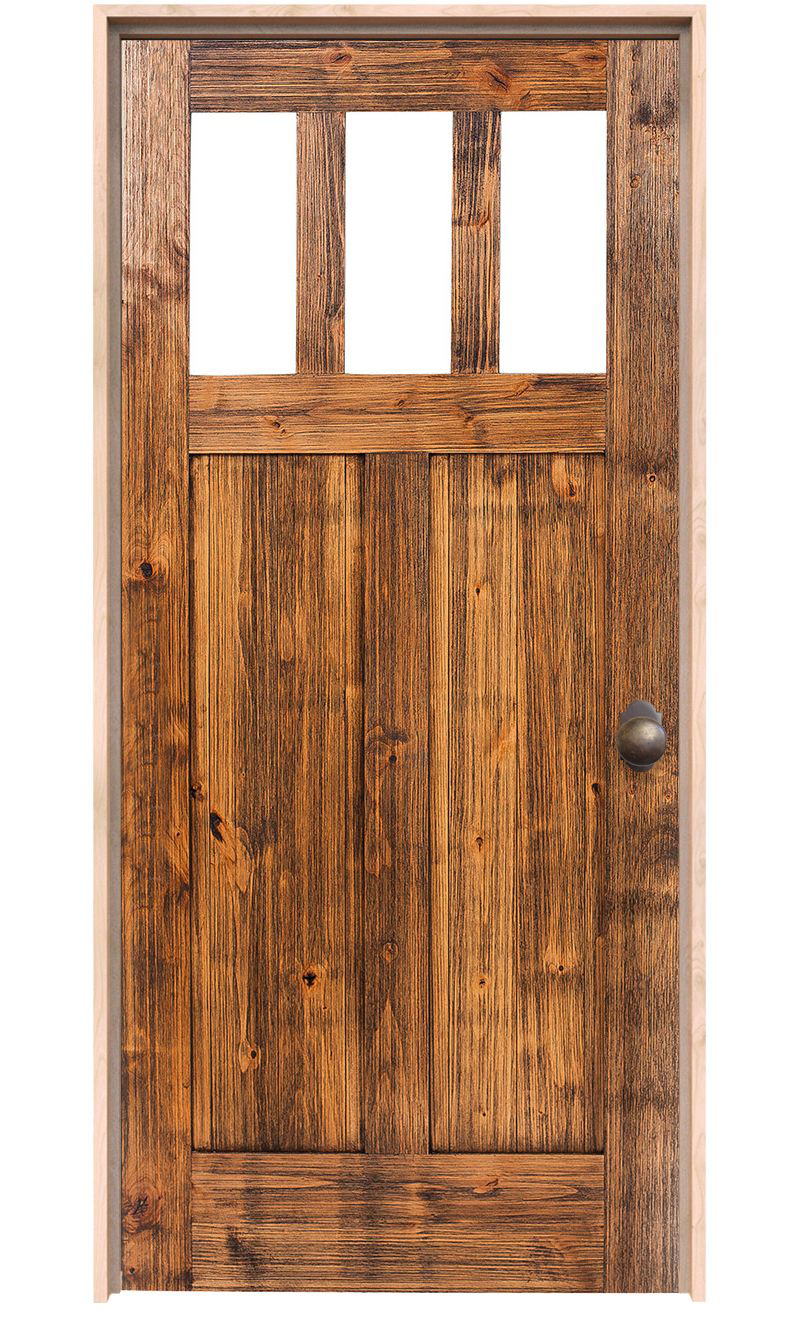
The Craftsman Interior Door has three narrow upper lites and a vertically divided lower wood panel. Its straight lines make it an easy starting point when the room already has substantial trim, cabinetry or exposed wood. Choose the glass for the sightline through the room, especially if this is an office or bedroom.
2. Chevron Interior Door
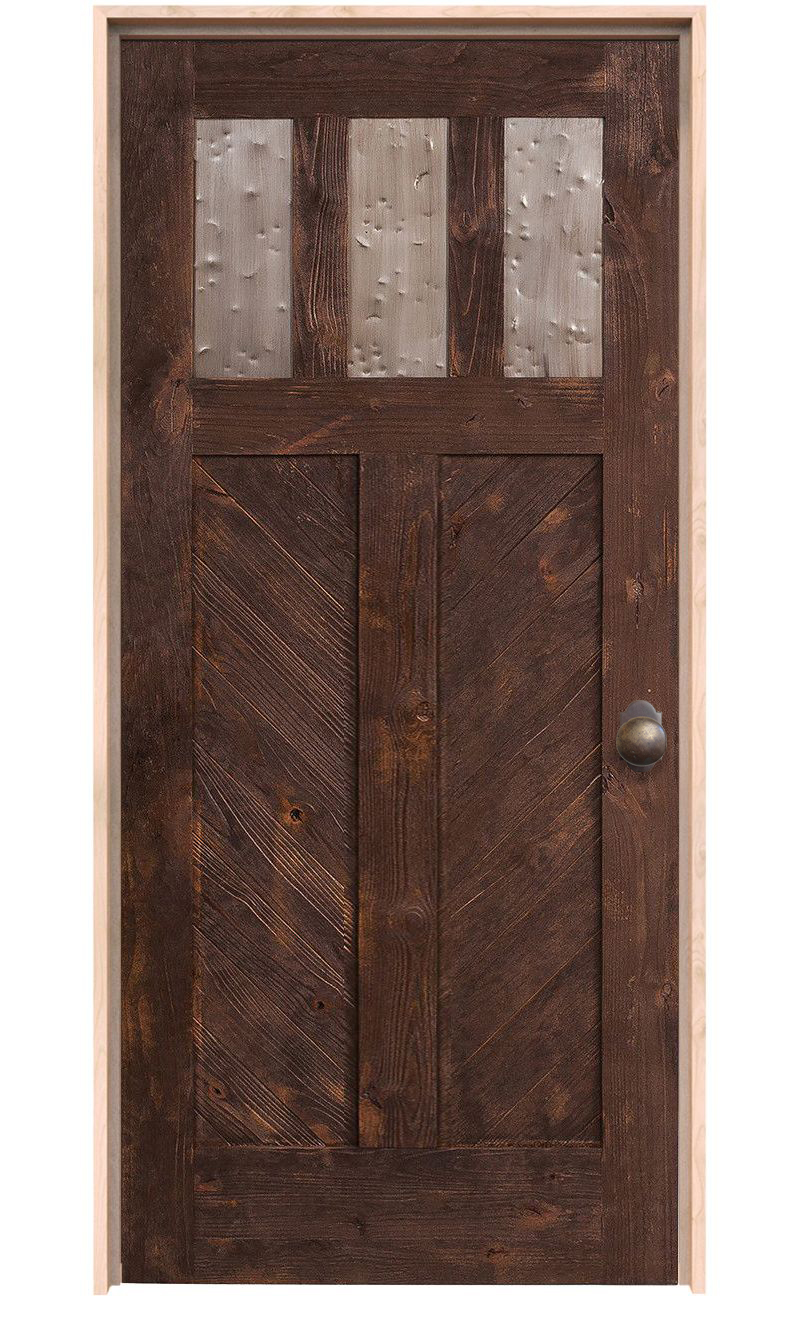
The Chevron Interior Door keeps the three-lite upper arrangement but introduces diagonal boards below. That pattern gives the door a more active surface. It can connect a traditional wood interior with a more contemporary room, provided nearby flooring or wallpaper does not compete with the diagonals.
Four single front-door directions
Compare the upper glass pattern from the distance at which people approach your house. A small difference in the grille layout can be more noticeable from the porch than a subtle finish change.
3. Riverstone Front Door
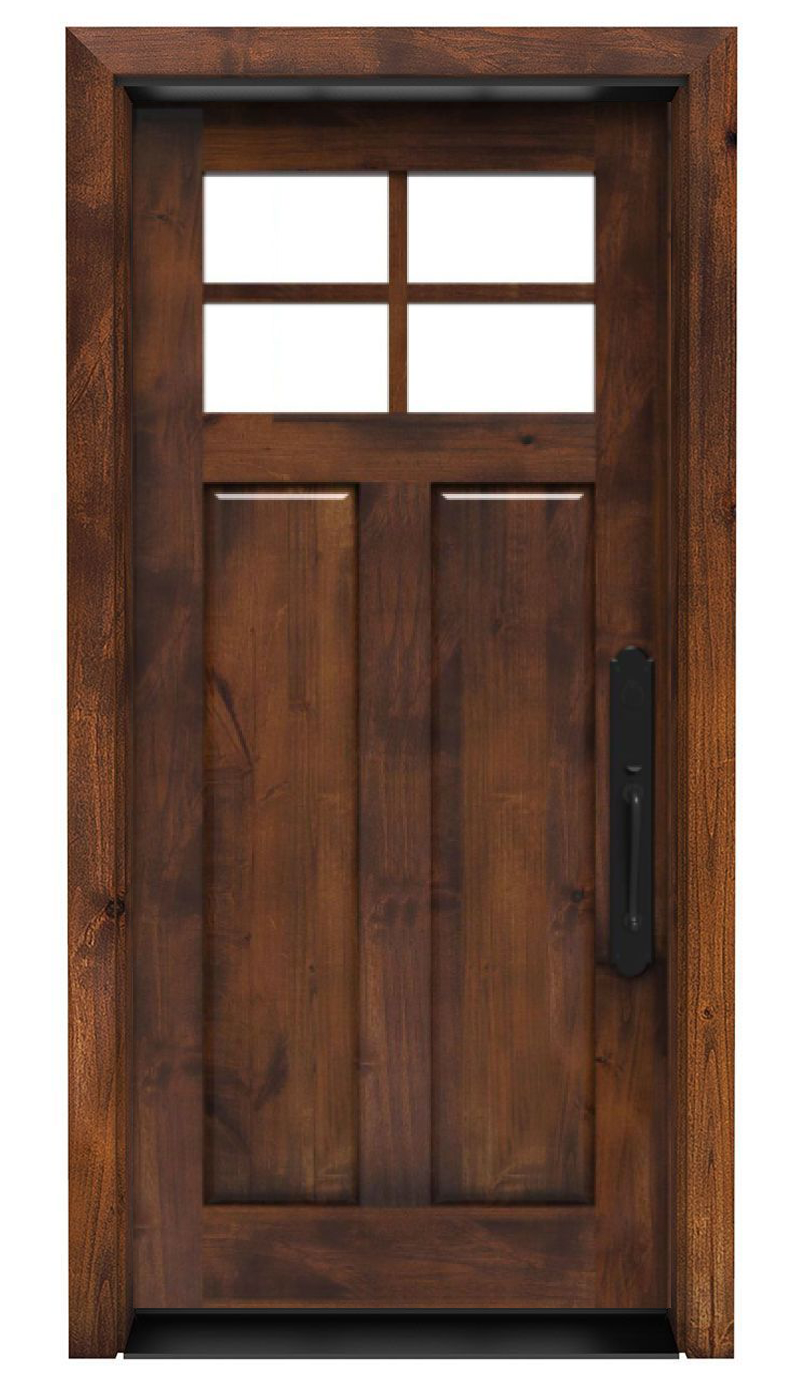
The Riverstone Front Door pairs a four-lite upper window with two lower panels. The horizontal division in the glazing adds a compact grid, while the two vertical panels carry the eye downward. It is a useful reference when you want a balanced, framed composition without a projecting shelf.
4. Overland Front Door
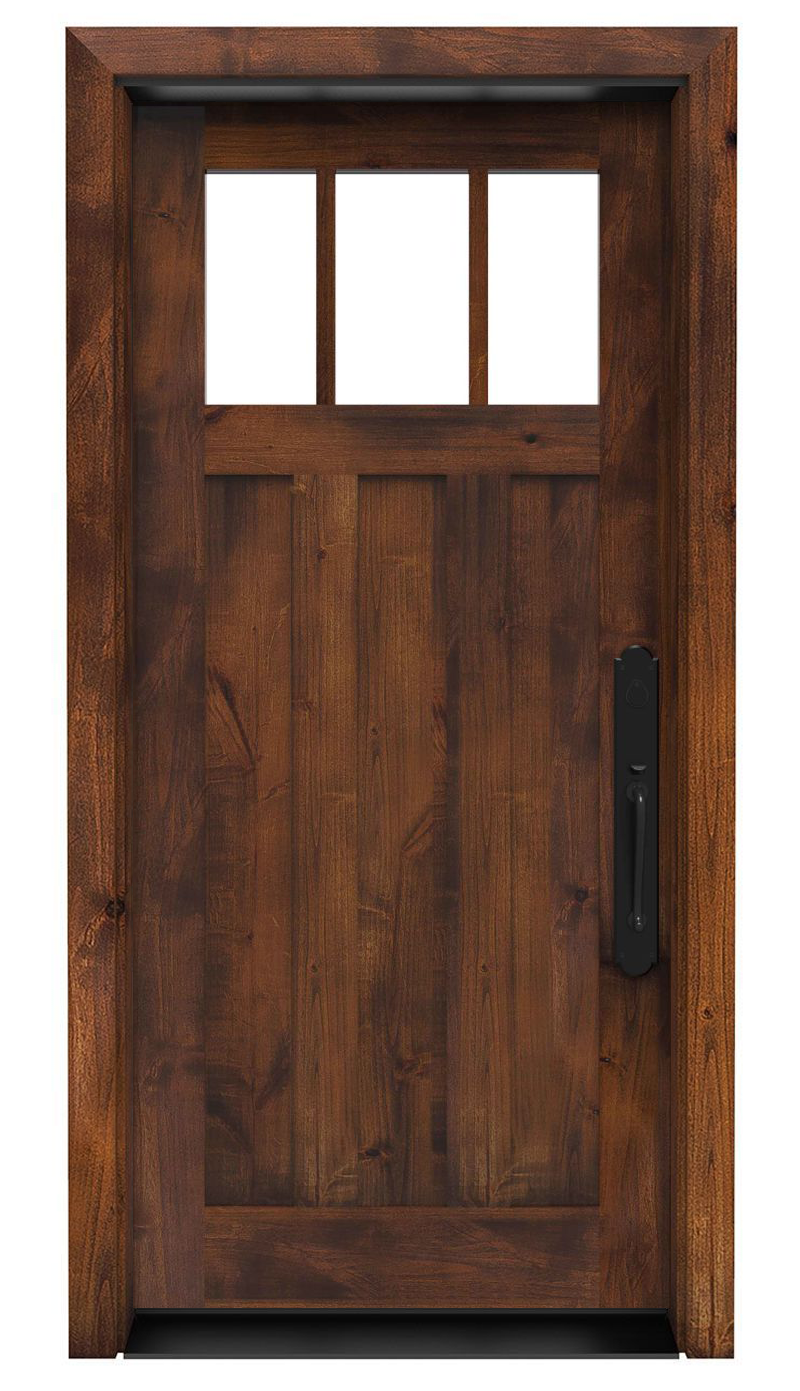
The Overland Front Door uses three tall upper lites over a broad lower wood field. The glazing emphasizes vertical lines, so compare it with nearby porch posts and window divisions. The current product name is Overland, although the URL retains its older Mission-style wording.
5. Woodsman Front Door
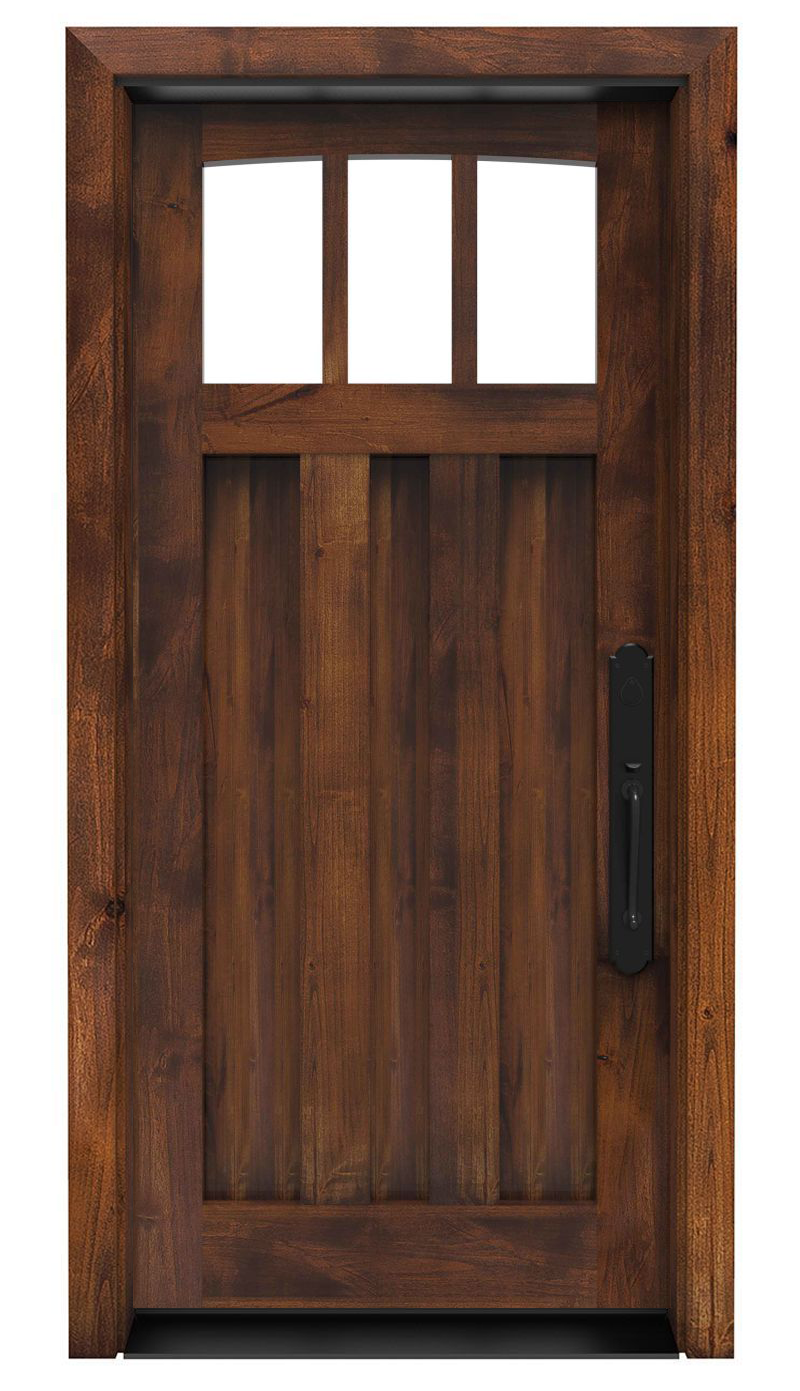
The Woodsman Front Door presents three upper lites above three narrow lower panels in the current product image. That repeated vertical rhythm gives it a more divided face than the Overland. The older URL mentions an arched window; use the current elevation and approved order drawing to establish the actual design.
6. Left Fork Front Door With Shelf
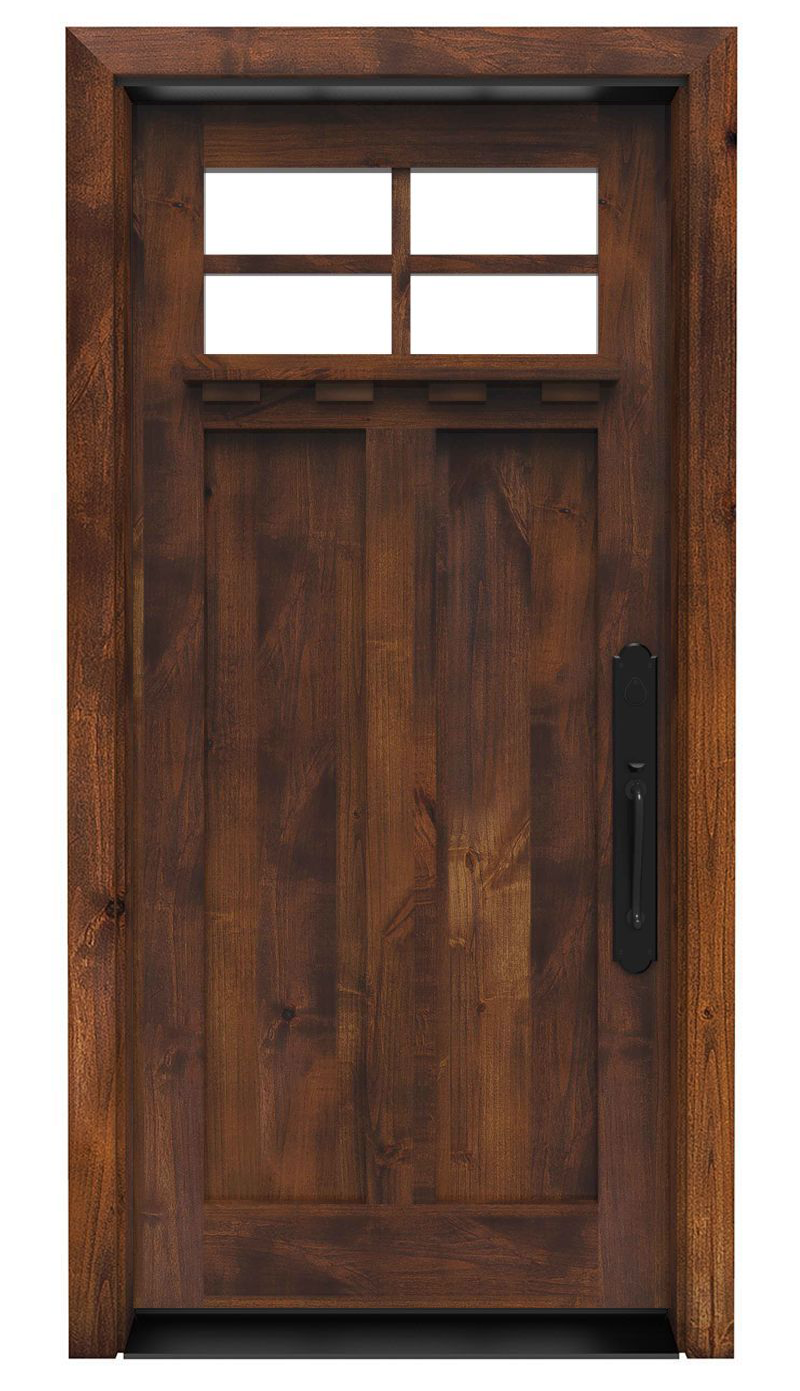
The Left Fork Front Door With Shelf has a four-lite upper grid and a shelf beneath it. The shelf creates a stronger horizontal shadow line, which can help the upper glass band read clearly from outside. Check the projection if a storm door, screen door or other hardware will sit in front of it.
Four double doors for a wider entry
A pair repeats every design feature, so a pattern that looks restrained on one leaf can feel much stronger across two. Compare the complete pair with the entry surround, and identify the active leaf and the way the second leaf will secure.
7. Apprentice Double Front Door With Shelf
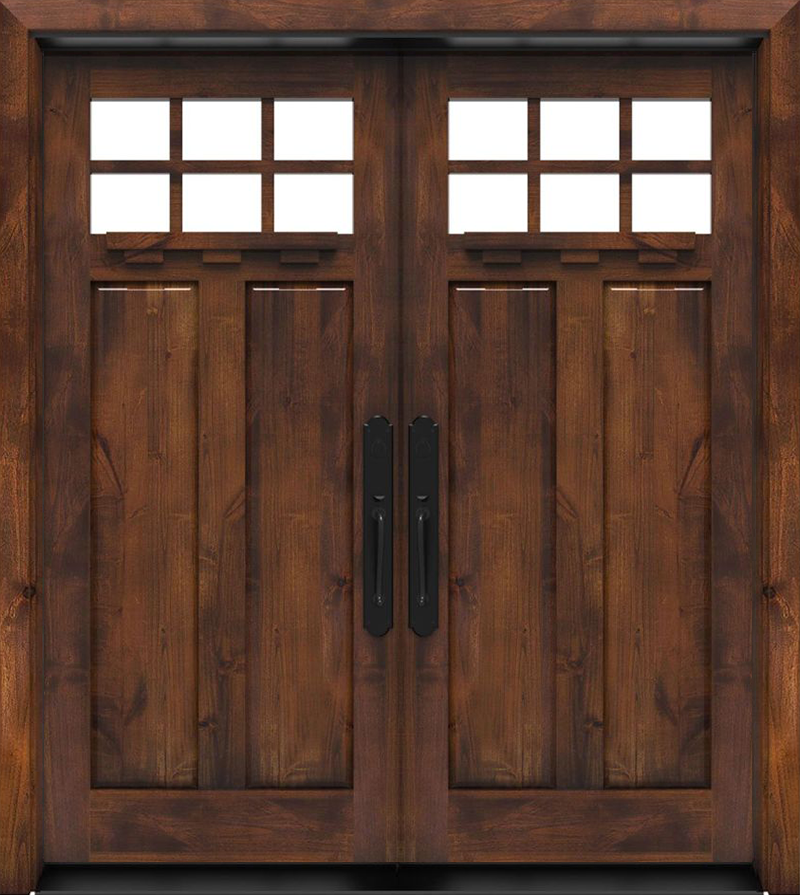
The Apprentice Double Front Door With Shelf uses six small upper lites on each leaf above a long lower panel. The denser glass grid suits an entry where you want the upper portion to carry much of the detail. A shelf below that grid adds another horizontal accent.
8. Skyline Double Front Door With Shelf
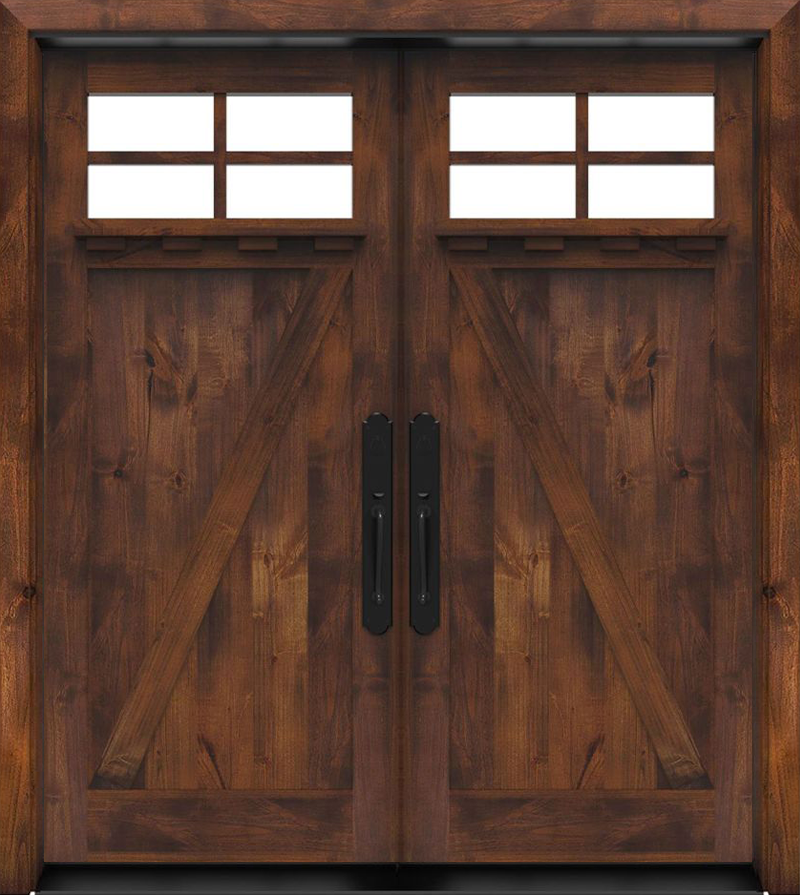
The Skyline Double Front Door With Shelf combines four-lite upper windows with diagonal lower-board accents. Across the pair, those diagonals create a large-scale pattern. It is a more rustic interpretation than a plain panel design, particularly in a knotty or textured wood finish.
9. Hobble Creek Double Front Door With Shelf
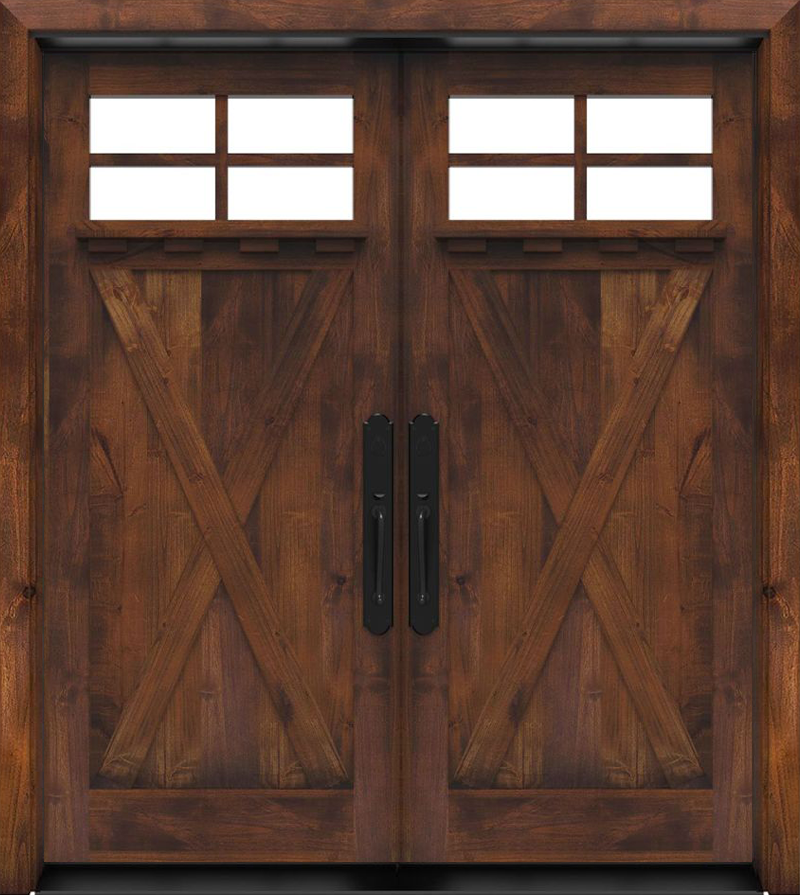
The Hobble Creek Double Front Door With Shelf makes the lower pattern more emphatic with an X on each leaf. Keep the surrounding trim comparatively quiet if the door is intended to be the focal point. The repeated crosses are a design choice, not a requirement of Craftsman architecture.
10. Rocky Point Double Front Door With Shelf
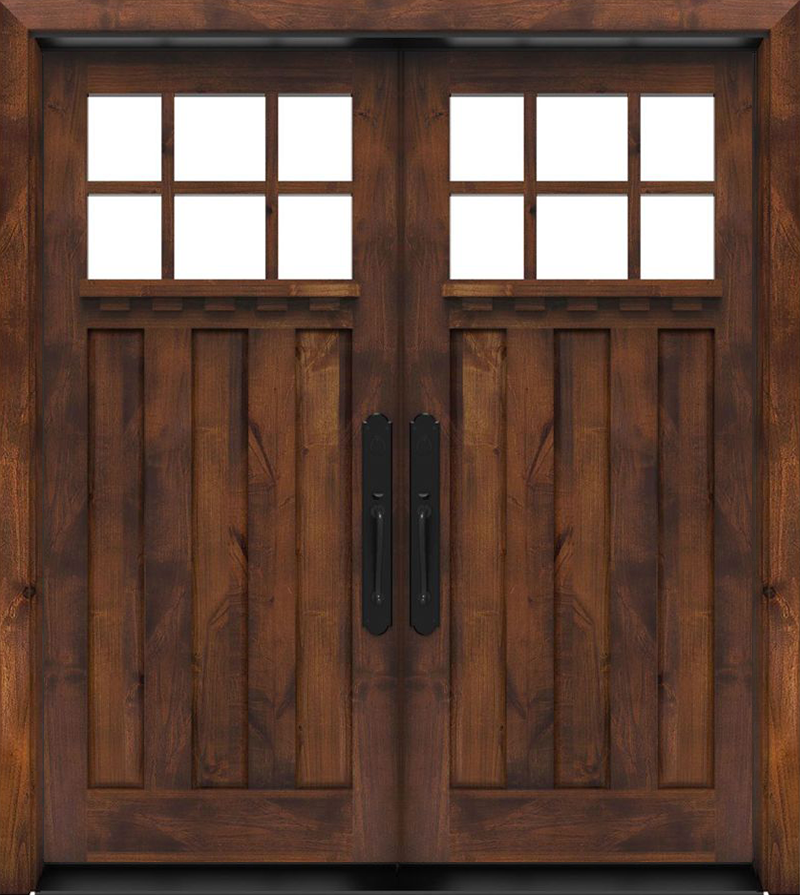
The Rocky Point Double Front Door With Shelf uses six-lite glazing over two narrow lower panels on each leaf. Compared with the Apprentice, the additional panel divisions create more vertical rhythm across the lower half. Compare the full pair at the intended width rather than judging a single cropped leaf.
Resolve these details before ordering
Glass and privacy: clear, textured and frosted options create different sightlines. Check a physical sample under light from both sides. Insulated glass describes a multi-pane assembly; it does not, by itself, establish privacy or impact resistance.
Shelf clearance: measure the space available in front of the door, including the handle and any secondary door. The dentil-shelf guide explains the detail without treating it as structural support.
Slab or prehung: list the jamb, hinges, threshold, weatherstripping, lock preparation and handle set that the quote includes. Product photography can show accessories that are not part of every configuration.
Exterior exposure: confirm the selected construction, finish and installation requirements for your site. Wood species alone does not establish the performance of an exterior door, and no wood door should be assumed incapable of movement.
Use the product links to compare current options, then request the final elevation and dimensions for the exact configuration. The photos show design examples; finish, glass and supplied components depend on the order.
Updated .