



Start with the current exterior barn door hardware specifications. The ideas below describe possible applications; each still needs a suitable panel, attachment detail and operating plan.
Compare eleven outdoor applications
| Project | Why consider it | The detail to resolve |
|---|---|---|
| 1. Outdoor entryway | A sliding panel can suit a broad wall beside the opening. | Weather sealing, required exit use, lock function and clear passage. |
| 2. Garage | A side or storage opening may benefit from lateral movement. | Do not substitute a decorative track for a designed vehicle-door system. |
| 3. Barn | A wide opening can give access to equipment or stored materials. | Panel weight, wind loads and suitable structural attachment. |
| 4. Garden retreat or she shed | The door can become a visible part of the building’s design. | Whether the room is conditioned and how the enclosure manages weather. |
| 5. Work shed | A clear opening can help move tools or materials. | Useful opening width, secure storage and unobstructed track travel. |
| 6. Window shutters | Sliding panels can shade or cover a window. | Shutter-rated hardware and restraints; no assumed storm-protection rating. |
| 7. Child’s playhouse | An adult-operated storage panel can repeat the main building’s style. | Pinch, entrapment, climbing and supervision risks. |
| 8. Clubhouse | A sliding opening can connect indoor and outdoor gathering areas. | Occupancy, access and required exit hardware. |
| 9. Greenhouse | Lateral movement may suit a narrow working aisle. | Humidity, corrosion, ventilation controls and the greenhouse frame. |
| 10. Pool house | A broad opening can connect a storage or changing area to a patio. | Pool-barrier rules, privacy and corrosion exposure. |
| 11. Three-season porch | A sliding panel can adjust how the porch opens to the garden. | Screens, insects, wind restraint and the intended weather protection. |
Keep the panel, hardware and mounting detail together
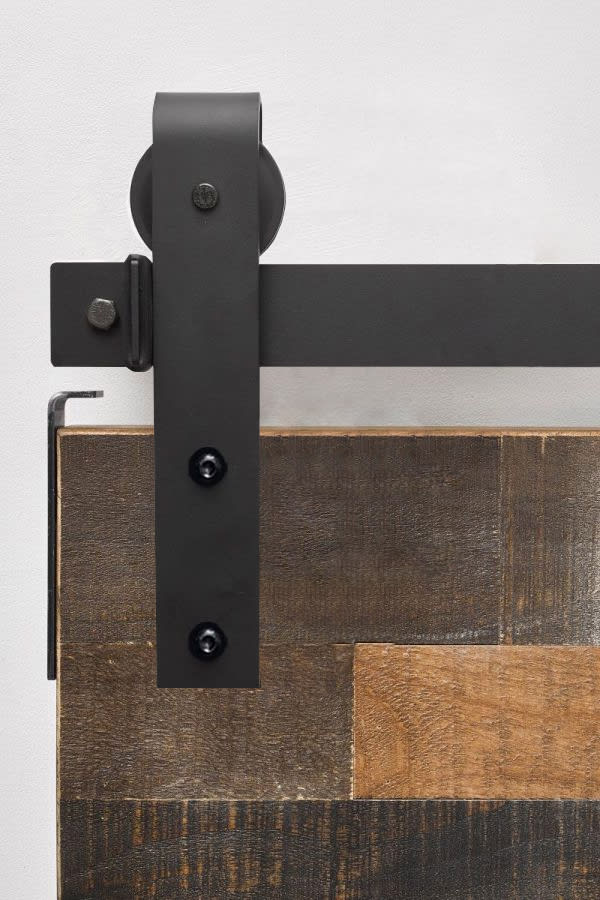
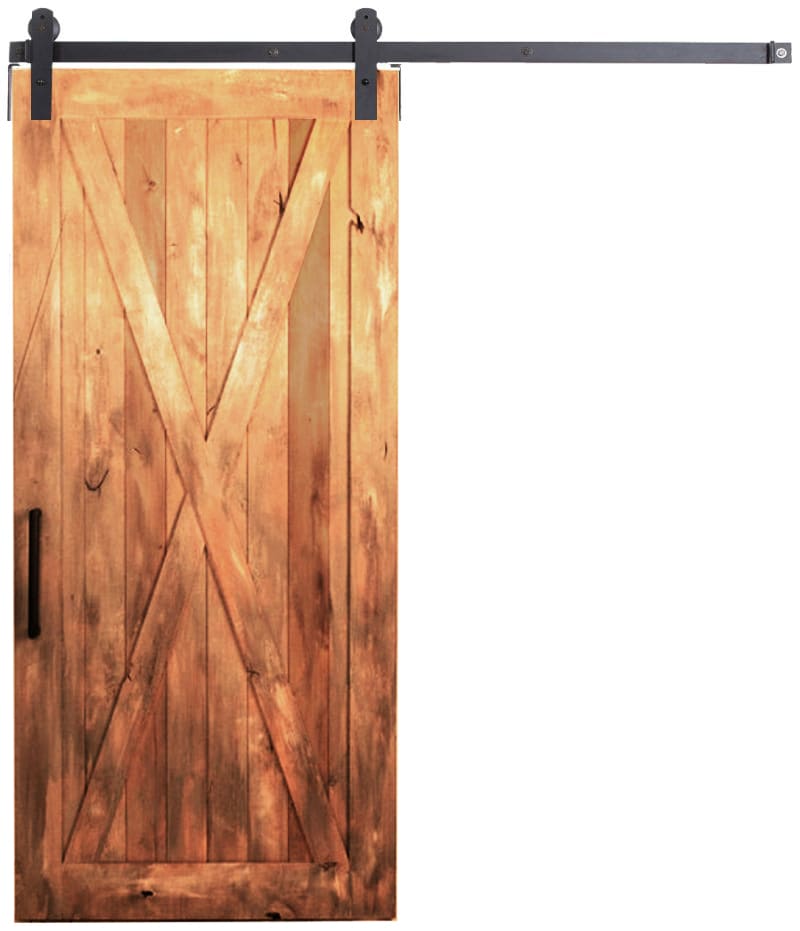
Compare outdoor-rated barn doors alongside the hardware. Record the panel’s finished weight, thickness and size. Confirm which guides, stops, anti-jump parts, spacers and fasteners are included in the chosen kit. The wall or header must carry the installed loads; a siding board is not automatically a suitable support.
Use the outdoor-rated hanger instructions with the exact kit. Discuss large or wind-exposed panels with the project team rather than applying an indoor installation detail outside.
Sheds, barns and garages need usable travel space
The panel needs a place to park when the opening is clear. Include corners, lights, downspouts, stored materials and changes in ground level along that route. A wide panel may provide a wide opening only when the track and surrounding wall allow it to move far enough.
Choose compatible barn door handles and pulls and a suitable lock or latch for the required function. A decorative latch is not proof of theft resistance. Compare barn door lock options by their stated use and release method, including access from inside.
An occupied room needs more than an outdoor-rated wheel
A garden office, clubhouse or enclosed porch may need different weather, access and thermal performance from a tool shed. Review the complete opening: perimeter gaps, sill or ground connection, flashing, seals and drainage. Do not assume that attaching a sweep will turn any sliding panel into a tested exterior door assembly.
The exterior barn door sealing guide can help organize the questions. For a conditioned room, also review how thermally broken doors work when comparing metal entry systems.
Treat shutters, playhouses and pool access as special cases
For shutters, compare the intended movement with bi-parting shutter designs, then confirm outdoor suitability for the selected product. Working shutters need restraints; their decorative appearance does not establish a hurricane or impact rating.
For a child’s play area, do not adapt a heavy adult door and assume smaller dimensions make it child-safe. Have the designer address fingers at moving edges, entrapment, climbing and whether a child could become locked inside. An open playhouse entrance may be the better choice.
A pool-house opening that forms part of a pool barrier has a separate safety role. Have the local requirements and the complete barrier design checked before selecting a sliding door. Outdoor hardware is not a pool-barrier certification.
Reference: CPSC pool-barrier guidance.
Plan maintenance around the actual finish
Use the door and hardware makers’ care instructions. Keep the track and guide path clear of grit, leaves, snow and ice. Inspect fasteners, guides, stops, corrosion and damaged coating, especially after severe weather. Investigate changes in movement rather than forcing a binding panel.
Do not apply vinegar, glass cleaner or cooking oil as a universal treatment. The appropriate cleaner and any lubricant depend on the coating, bearings and hardware instructions. Sealed bearings should not be treated as an invitation to add oil.
For adjustment questions, identify the exact system before using the barn door roller adjustment guide. If the mounting structure or panel has moved, resolve that cause before changing the roller setting.
Send a complete project description
- Opening dimensions and the clear wall space beside it.
- Door size, thickness, finished weight and material.
- Indoor/outdoor exposure, including coastal or pool conditions.
- Photos of the supporting wall, header and ground.
- The required lock, weather protection, access and exit functions.
- The selected hardware model and current installation drawing.
Planning a client project?
Specifying an outdoor sliding door for a client? Include the exposure and supporting structure in the quote request. Rustica’s contractor discount program explains professional eligibility and how to apply.