

Colonial and Colonial Revival are not interchangeable dates
“Colonial” covers several regional architectural traditions rather than one universal house shape. Colonial Revival is a later interpretation: the National Park Service describes its use of Georgian and Federal references, prominent entrances, sidelights, fanlights and classical details.
That distinction matters when choosing a door. A new house drawing on traditional forms allows different choices from a restoration. If the building has historic status, establish the applicable review requirements and examine surviving doors, photographs and drawings before ordering.
Read the six-panel layout closely
Compare the small upper panels with the taller middle panels and the lower pair. Notice the width of the surrounding stiles and rails, the depth of the profiles and whether the panels are raised or recessed. Two six-panel doors can have noticeably different proportions.
Also compare the frame and casing, hardware position and finish. A strongly figured wood and visible sliding track produce a different effect from painted panels in a traditional hinged frame.
Seven ways to use the interior panel design
These current Rustica configurations share the Colonial panel language but solve different room layouts. The operating mechanism is a separate decision from historical appearance.
| Rustica option | Where the open door goes | Plan before ordering |
|---|---|---|
| 6 Panel Colonial Interior Door | Swings beside the opening. | Swing clearance and frame preparation. |
| 6 Panel Colonial Barn Door | Parks against one wall. | Clear wall travel and track attachment. |
| Six Panel Colonial Double Barn Door | Each leaf parks beside the opening. | Parking and support on both sides. |
| 6 Panel Colonial Corner Barn Door | Leaves travel along intersecting walls. | Corner meeting detail and two travel paths. |
| 6 Panel Colonial Single Pocket Door | Enters one prepared wall pocket. | Pocket cavity, services and edge pull. |
| 6 Panel Colonial Double Converging Pocket Doors | Leaves enter pockets on opposite sides. | Two pockets and center meeting alignment. |
| 6 Panel Colonial Bypassing Pocket Doors | Leaves overlap in a specified pocket arrangement. | Required wall depth and remaining clear passage. |
6 Panel Colonial Interior Door
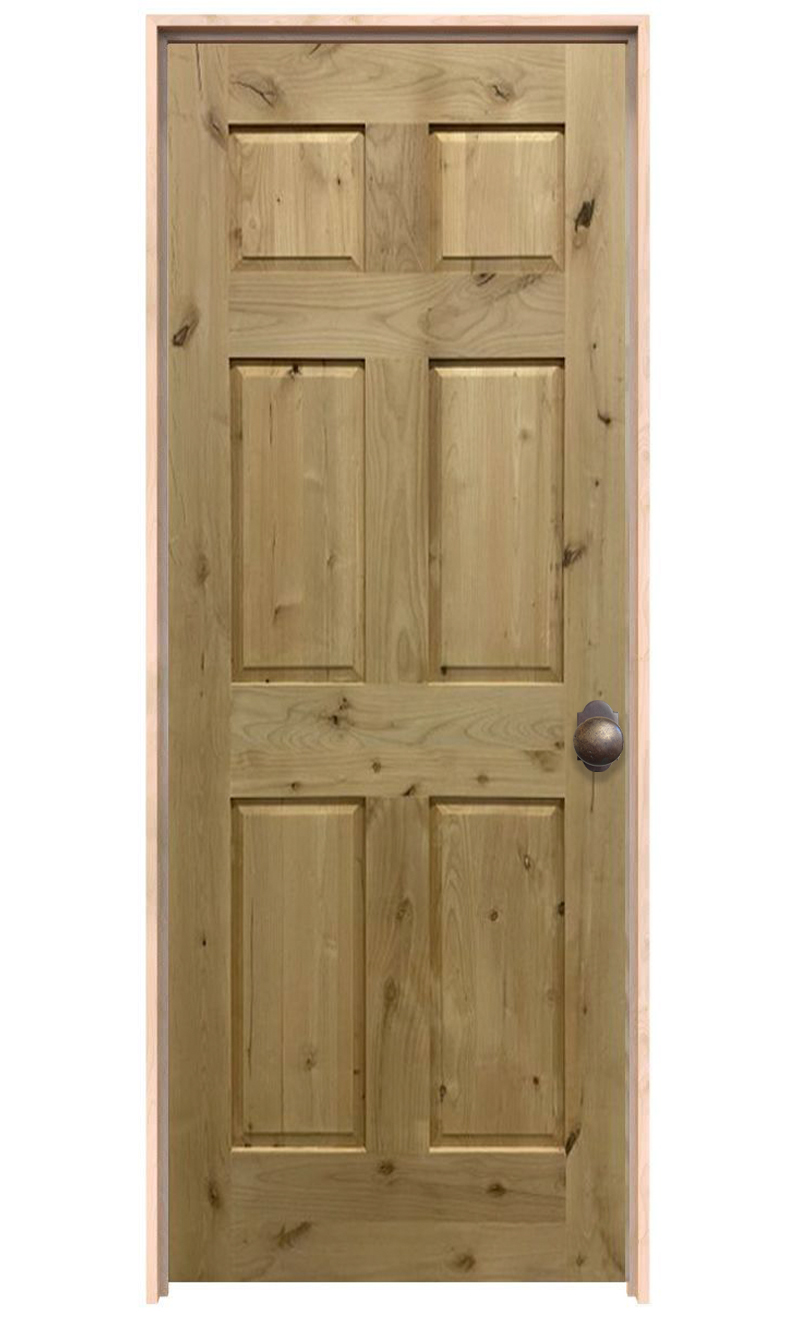
The hinged version keeps the panel design within a conventional framed opening. Compare its molding and rail heights with nearby doors if it will be seen from the same hallway.
6 Panel Colonial Barn Door
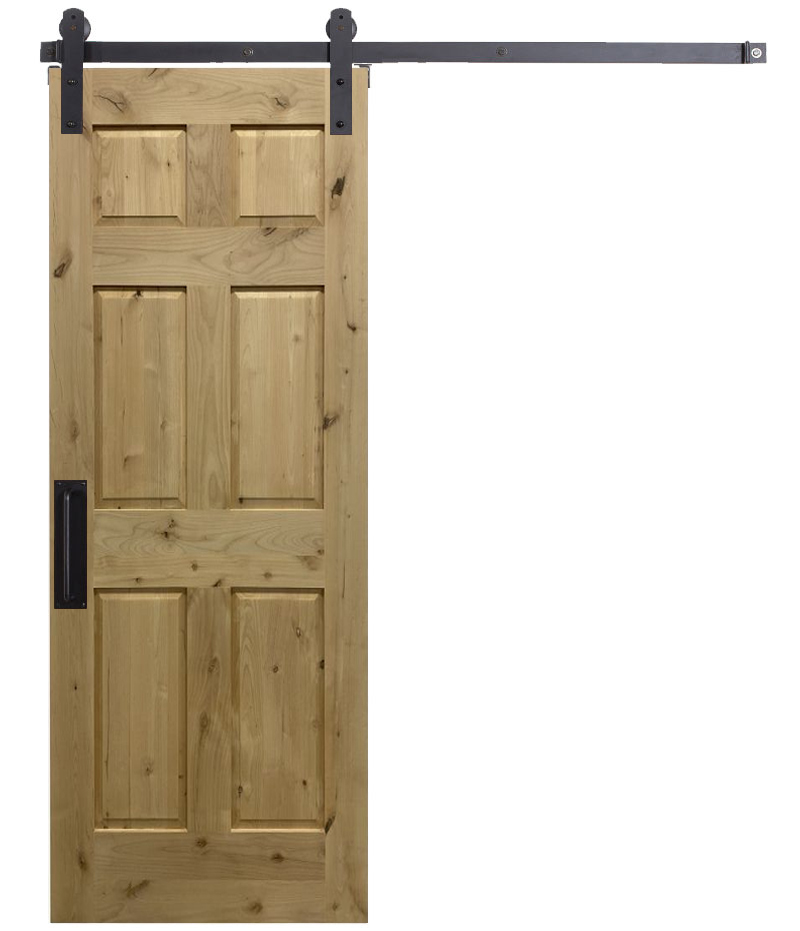
The barn-door version makes the track part of the room’s appearance. It can carry a traditional panel pattern into a contemporary sliding layout, provided there is enough clear wall for the open leaf.
Five exterior designs to compare
These doors offer different balances of wood and glass. They are design options to assess against your façade, not a claim that every example is an accurate reproduction for every Colonial house.
Riverstone Front Door
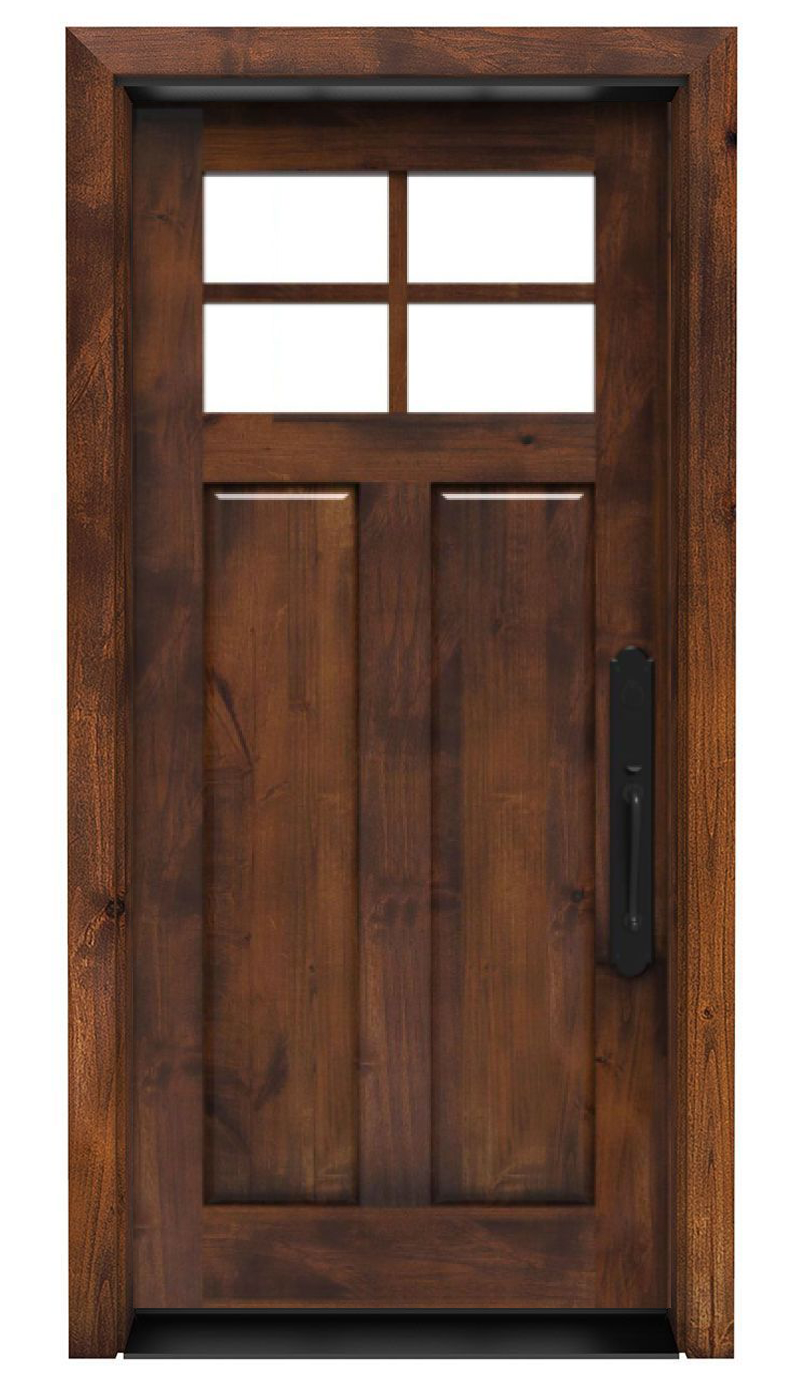
Riverstone places a compact four-part glazed area above two tall wood panels. It keeps most of the face opaque while introducing light near the top of the entry.
Lake House Front Door

Lake House expands the glazed area into a nine-part grid above two lower panels. Compare the grille spacing with adjacent windows so the entrance and façade have a deliberate relationship.
Ranch Hand Front Door
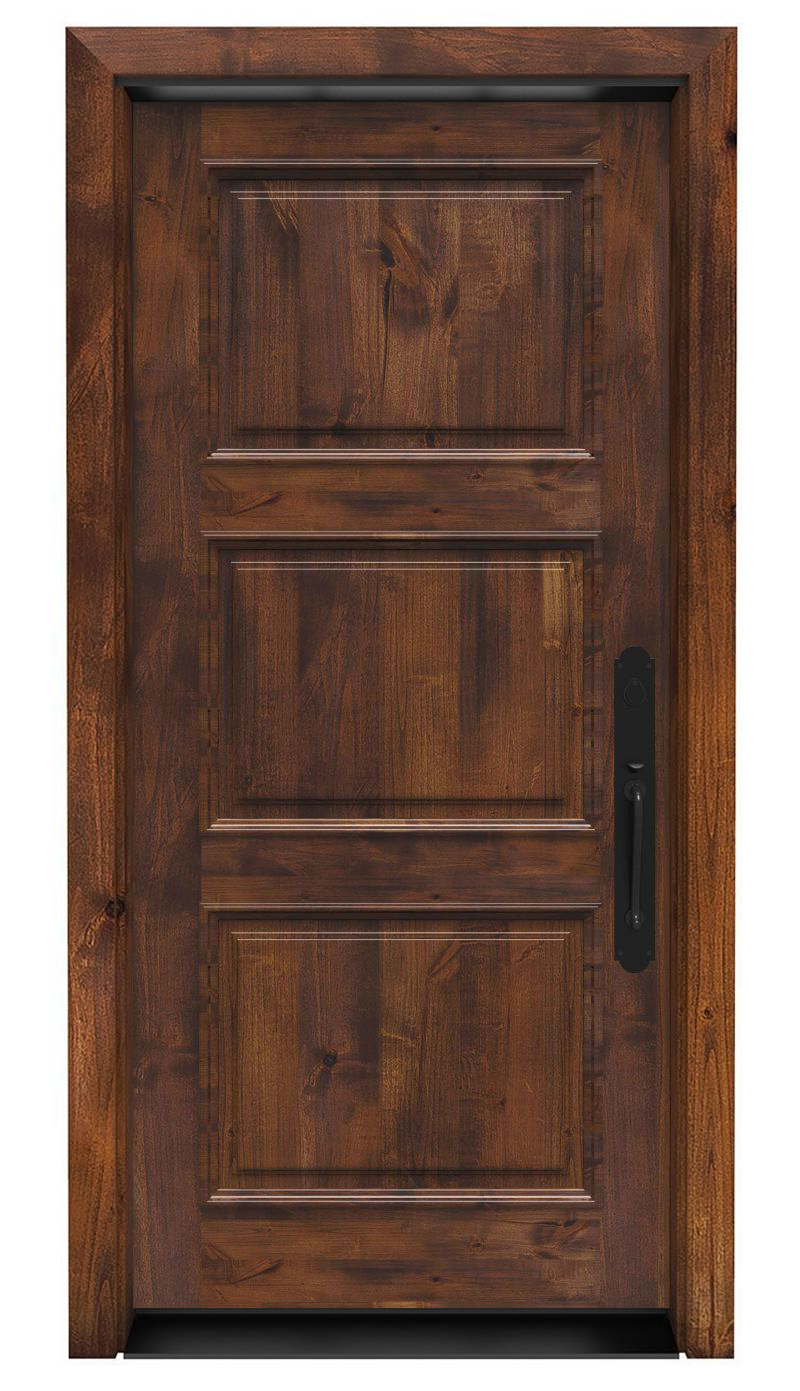
Ranch Hand uses three stacked panels without a glazed opening in the pictured design. It offers a quieter, more opaque alternative when the surrounding entry already contains sidelights or other detail.
Rustic Ranch Double Front Door
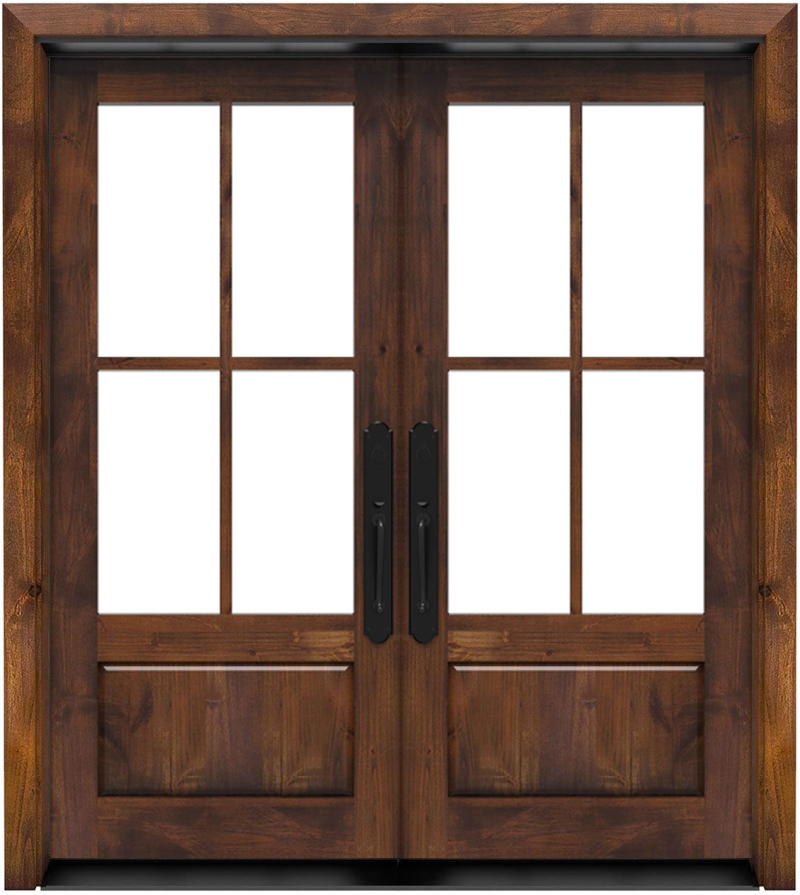
Rustic Ranch uses four large glazed divisions above a lower wood panel on each leaf. The broader divisions create a simpler rhythm than a denser small-pane grid.
Boat House Double Front Door
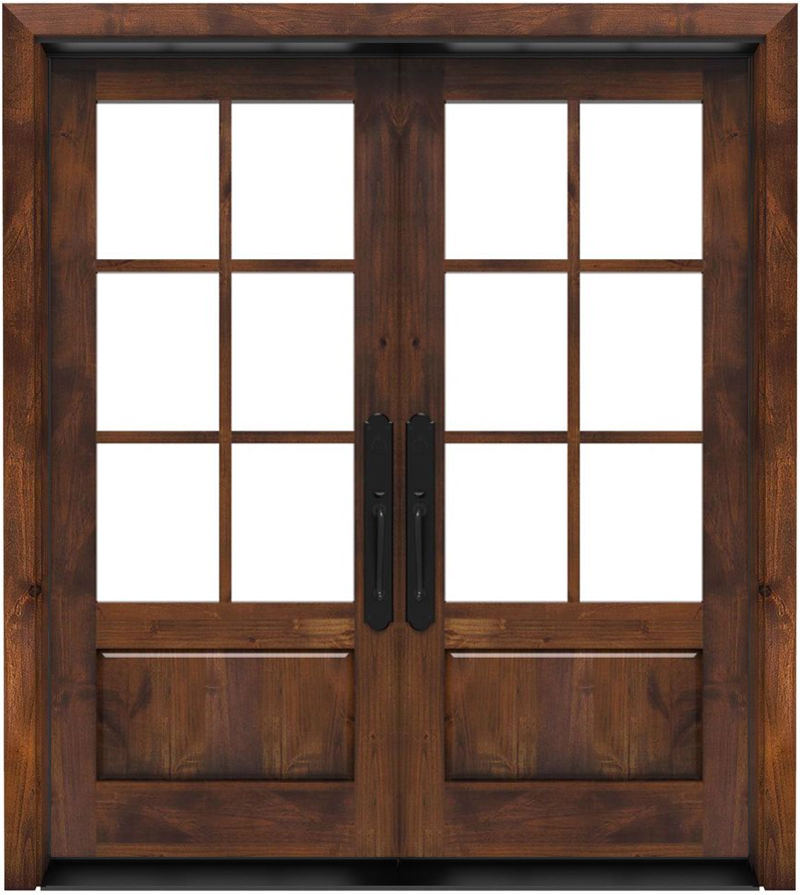
Boat House places six glazed divisions above the lower panel on each leaf. At the same opening size, that extra horizontal division changes the visual scale, so compare an elevation alongside the nearby windows.
Finish the entry as a complete composition
Consider the door together with sidelights, transom, trim and porch. Match important alignment lines rather than adding every traditional detail to one entrance. A sample finish viewed outdoors will be more informative than a screen swatch.
For exterior use, verify the assembly, exposure, finish care, sill, seals and installation. No wood species or historic-looking profile establishes that a door cannot warp or weather. Request the required performance information for the actual configuration.
Reference: National Park Service: Colonial Revival architecture.
Updated .