Most orders over $500 qualify. Free shipping applies to Barn Door Hardware, Barn Doors, and Pocket Doors over $500.
Note: Front doors, interior doors, shower doors, slab doors, any oversized door (wider than 3ft or taller than 7ft), and any special order doors have shipping costs calculated at checkout. Some barn door hardware track lengths do not qualify for free shipping.
The world's most trusted source for designer doors & hardware
Make room for more with custom pocket doors that slide into the wall. Explore wood, glass and metal designs for bathrooms, closets, pantries and home offices, from a single panel to double converging doors. Choose your style, then confirm the wall space, dimensions and compatible hardware for your project.
Eight distinctive designs selected for their light, detail and character. Find your look, then explore the available sizes, finishes and glass options.
A pocket door is a sliding door that retracts into a prepared cavity inside the wall. It frees the floor area a hinged door would sweep through and leaves the opening clear when retracted. It still needs space inside the wall for the panel, frame and hardware, so plan the entire system before choosing the door.
Single, Double & Bypassing Pocket Doors
Choose the operating arrangement around the width of the opening and the wall space available beside it. A wider doorway does not always need the same configuration as a smaller room entrance.
Compare how pocket doors open
Configuration
How it works
What to plan
Single pocket door
One panel retracts into a pocket on one side.
One unobstructed wall cavity sized for the panel and frame.
Double converging doors
Two panels meet in the middle and retract into opposite pockets.
Pocket space on both sides, aligned tracks and a coordinated meeting point.
Stacked / bypassing doors
Multiple panels travel on separate tracks into a compatible pocket system.
System-specific pocket depth, overlap, guides and usable opening width.
Corner / multi-door systems
Specialized hardware coordinates multiple panels or intersecting openings.
A complete layout and framing plan matched to the selected hardware.
A pocket door disappears into the wall; a barn door slides across the wall surface. A pocket can free up the visible wall beside the opening, but needs a suitable cavity. A barn door needs clear surface space for its travel. Compare sliding barn doors if a wall pocket is impractical.
Wood, Glass & Modern Pocket Door Styles
Wood pocket doors
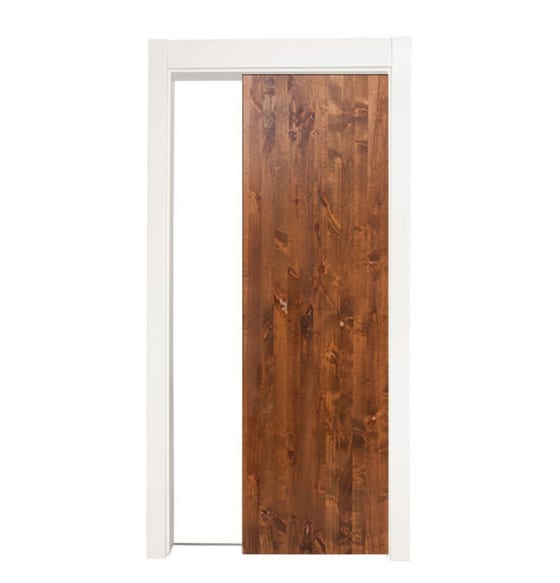
Wood adds grain and warmth, with panel designs suited to rustic, traditional and contemporary interiors. The Bayside has a classic framed design, while the Modern Slab uses hardwood pieces in a distinctive layout. Compare the available species, finish and texture options rather than assuming every design has the same construction.
Glass and French-style pocket doors
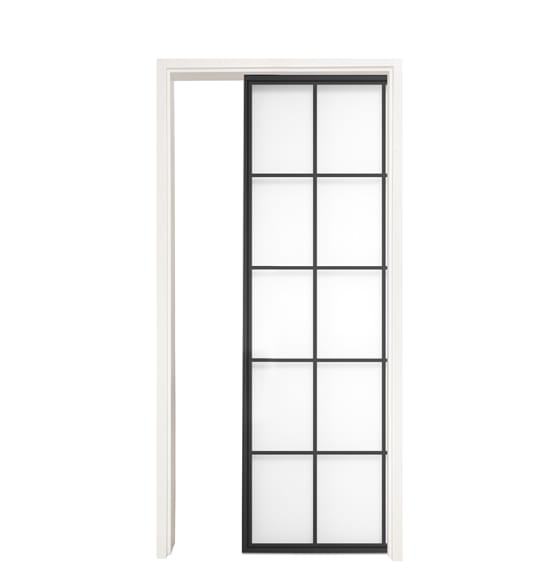
Glass shares light between adjoining rooms. The Mountain French Full uses a steel frame and full-height glass grid. The Farmhouse French Full offers a wood-and-glass alternative. If you want a similar look with a hinged operation, compare French doors.
Privacy glass, mirrors and decorative detail
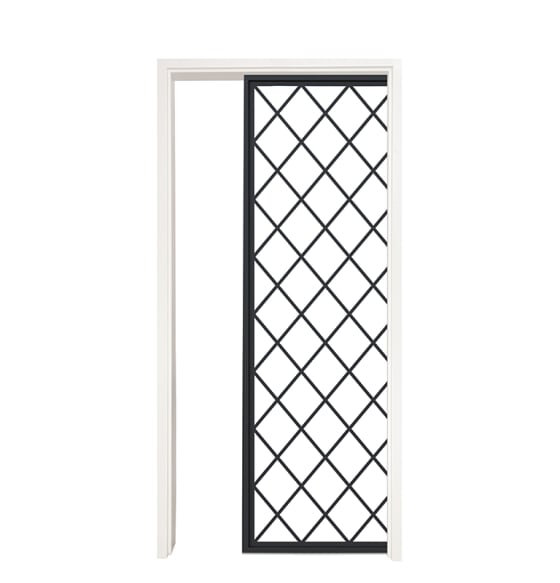
If you are considering frosted glass pocket doors, check the actual privacy-glass choices offered for the selected model. Textured or obscured glass can soften visibility; clear glass keeps the view open. The Ponder Mirror adds a full-length reflective surface. For decorative metalwork, compare the Casita and diamond-grid Chateaux.
Pocket Doors for Bathrooms, Closets, Pantries & Offices
Bathroom pocket doors
A pocket door can remove a swing conflict with a vanity or another door. Plan for visual privacy, a compatible privacy lock with appropriate emergency access, and a pull that remains usable when the door is open. Review finish suitability for the room's humidity. Plumbing in the proposed pocket wall may make the layout impractical.
Closet, laundry and pantry pocket doors
Pocket closet doors can improve access where a swinging panel would compete with storage. For pantries and laundry rooms, check appliance clearance, shelving and the location of switches. Do not place shelf fasteners or other fixtures into the panel's travel path inside the pocket.
Home offices and connected living rooms
Glass pocket doors let an office borrow light, while wood panels create a more enclosed appearance. Double doors can open a wider passage between living spaces. Consider how much visual and acoustic separation you need: the material or glass pattern alone does not establish sound isolation.
Pocket Door Sizes, Wall Thickness & Rough Openings
There is no single rough-opening formula or wall thickness that fits every pocket door. The required dimensions depend on the panel, track, pocket frame and whether the system uses one or multiple doors. Use the selected system's specifications for the construction opening.
Set the passage size. Identify the clear opening you need and distinguish that from panel width and the full framed rough opening.
Check wall length. The wall must accommodate the passage plus the pocket in the direction the panel travels. Double converging doors need pockets on both sides.
Confirm wall and panel thickness. Match the framing system to the finished wall and the door's thickness, weight and any applied details.
Review hidden obstructions. Have the installer check for wiring, plumbing, ducts and structural framing in the proposed pocket area.
Approve the system dimensions. Confirm track length, header clearance, finished floor height, guides and pulls before ordering or framing.
Selected products, including the Bayside, offer frame options for different wall framing. Confirm the specific door-and-frame combination rather than assuming all doors fit a standard wall. Read the door sizing guide for measurement terminology and contact Rustica about custom widths or heights.
Pocket Door Hardware, Frames & Installation
A complete pocket-door installation typically needs a compatible track, rollers or hangers, frame, guides, stops, pulls and any selected latch or lock. Package contents vary by product and configuration. Verify what is supplied with the door and what must be ordered separately.
Flush pulls, edge pulls and locks
Hardware must let the panel travel into the pocket without collision. A projecting hinged-door knob is generally unsuitable. Confirm the pull depth, panel preparation and how you will retrieve a fully retracted door. Lock choices and preparation depend on the panel and its meeting edge.
Soft-close hardware and door weight
If you want soft-close operation, check availability and compatibility with the selected track and panel weight. A heavy glass, metal or oversized wood panel needs appropriately rated hardware and support. Do not choose rollers or a frame by appearance alone.
New installation versus replacement
Installing a new pocket may involve opening the wall, framing, relocating services and repairing finishes. Replacing a panel in a sound existing pocket may require less work, but still needs compatible dimensions and hardware. Have a qualified installer assess structural changes and hidden services before work begins.
Follow the instructions for the exact system. Check smooth travel, level, clearances and latching before closing the wall. Installation time depends on the project; a complete wall conversion should not be planned from a blanket promise of a few hours.
How Much Do Custom Pocket Doors Cost?
Door size, material, glass, finish and the number of panels affect price. Track, frame, soft-close options, pulls and locks can also change the total. Open a product for current pricing and review the selected package before comparing quotes.
Budget installation separately, including wall work, utility relocation where needed, trim and finish repairs. A replacement slab and a new double-pocket system are different projects. Review production timing, shipping information and warranty terms before scheduling the work.
Pocket Door Questions
Can a pocket door go in an existing wall?
Often it can, if the wall has enough unobstructed space and can be modified for the required framing. Have the installer assess structure, wiring, plumbing and other services before committing to the location.
Do pocket doors need a thicker wall?
It depends on the panel and frame system. Some systems are designed for common wall framing; thick panels or multi-panel systems may need a deeper pocket. Follow the exact manufacturer's dimensions for the chosen combination.
Can pocket doors lock?
Yes, with compatible pocket-door locking hardware. Verify the panel preparation, latch arrangement and clearance within the pocket. For a bathroom, confirm privacy-lock operation and appropriate emergency access.
Are pocket doors good for bathrooms?
They can work well where a hinged door would obstruct fixtures or circulation. Check the wall cavity, privacy, lock, finish and pull access. Plumbing in the pocket area can change what is feasible.
Can I use any door slab as a pocket door?
Not automatically. The slab must meet the track and frame requirements for weight, thickness, dimensions and hardware preparation. Raised details, handles or an incompatible top edge can prevent proper travel or attachment.
Are glass pocket doors available with privacy glass?
Selected models have different glass choices. Review the available patterns and samples for your desired level of visual privacy. Glass type alone does not establish acoustic performance.
Can I order custom-size or double pocket doors?
Selected designs offer custom dimensions and double configurations. Confirm the complete opening, available wall pockets and compatible hardware. A converging pair needs two coordinated panels and pockets.
How do I keep pocket doors sliding smoothly?
Keep the accessible track and guides clean, follow the hardware maintenance instructions, and investigate rubbing or dragging promptly. Check alignment and rollers rather than forcing the panel. Plan access to serviceable hardware during installation.