Hidden Barn Door Hardware

Let the door surface lead the design. Compare hardware that sits behind the panel with a system concealed inside its top, and choose the construction your door can accommodate.

Hang in there! Loading the best brands and products to your fingertips.

Choose with confidence

Hidden Barn Door Hardware Buying Guide

Hidden barn door hardware reduces the visibility of the sliding mechanism. No Show uses rear-mounted rollers, while Covert places moving components within the top of the door. These approaches require different preparation and should be compared as complete systems.

Choose the viewing effect

Consider the front, side and open-door views of the installation.

Confirm panel preparation

Concealed components need suitable attachment or machining locations.

Specify the opening layout

A single panel and a bi-parting pair require their own hardware configuration.

Compare Concealment Methods

Compare Concealment Methods
SystemWhere the mechanism sitsWhat to resolve
No ShowBehind the door faceRear attachment and wall clearance.
Bi-parting No ShowBehind two meeting panelsCoordinated center closing position.
CovertWithin the top of the panelCompatible door construction and preparation.

Decide What Should Disappear from View

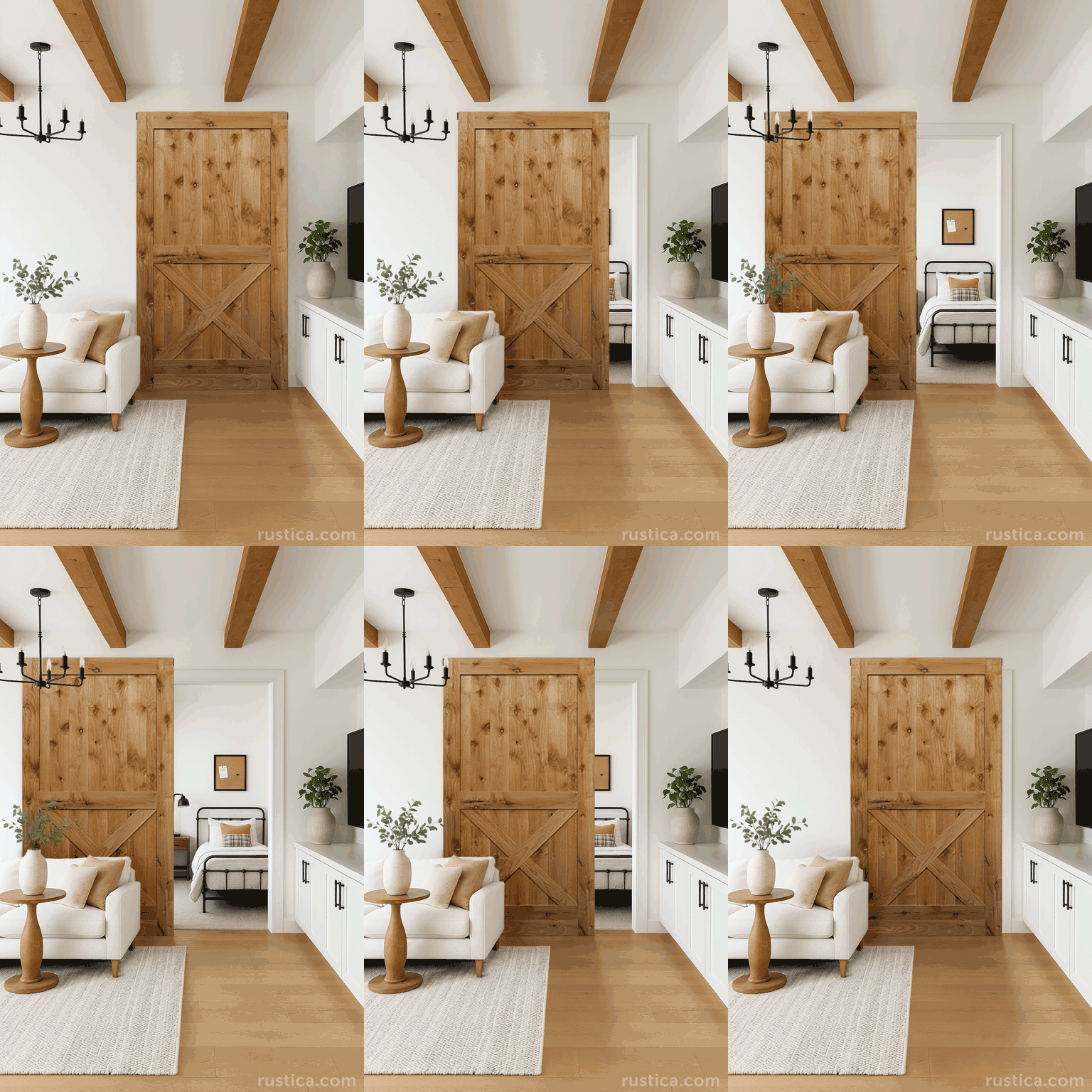
A clean front elevation does not describe every viewing angle. Look at the door from the side and while it is open, especially in a hallway where the back of the panel may be visible. Compare the complete installed arrangement, not just a cropped front photograph.

Match the door face to that restrained appearance. Modern geometric sliding doors use pattern and texture as the focal point when exposed hangers are minimized.

Resolve Machining Before Ordering the Door

Rear-mounted rollers need suitable fixing areas, and an internal glide system needs a door designed or prepared to receive it. Confirm minimum dimensions, construction and any machining requirements from the selected model’s current documentation.

Do not assume an existing hollow, glazed or metal-framed panel can accept concealed hardware. Ask for a compatibility review before changing the panel or drilling attachment points.

Check Clearance Even When Hardware Is Hidden

Concealment and headroom are separate decisions. The wall stand-off, door travel and handle projection still matter. Use the low-clearance guide when the space above the opening is the main constraint.

For paired panels, establish the meeting line and stop positions together. Review how both doors can be adjusted and serviced after installation.

Before You Order

  1. Select the concealment method

    Choose rear-mounted or internally concealed hardware.

  2. Approve panel compatibility

    Confirm the door’s dimensions, material and required preparation.

  3. Review the installed envelope

    Check wall clearance, handles, stops and access for adjustment.

Get help with your project

Hidden Barn Door Hardware: Common Questions

Does hidden hardware mean the door slides inside the wall?

No. These systems move the door along the wall surface. A door that disappears into a wall cavity uses a pocket-door arrangement.

Can hidden hardware be retrofitted to any door?

Compatibility depends on the panel construction and the specific system’s preparation requirements. Have those reviewed before modifying an existing door.