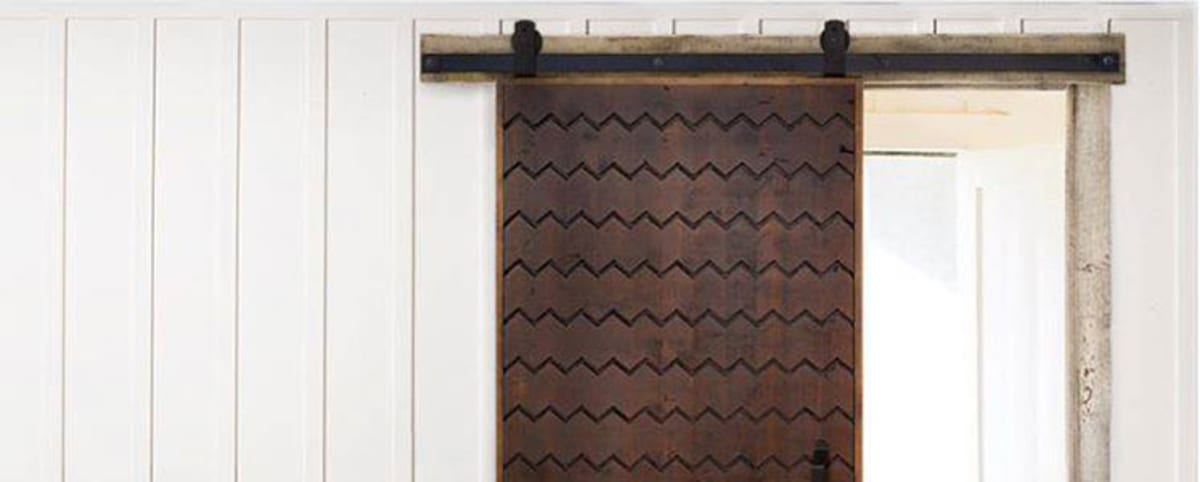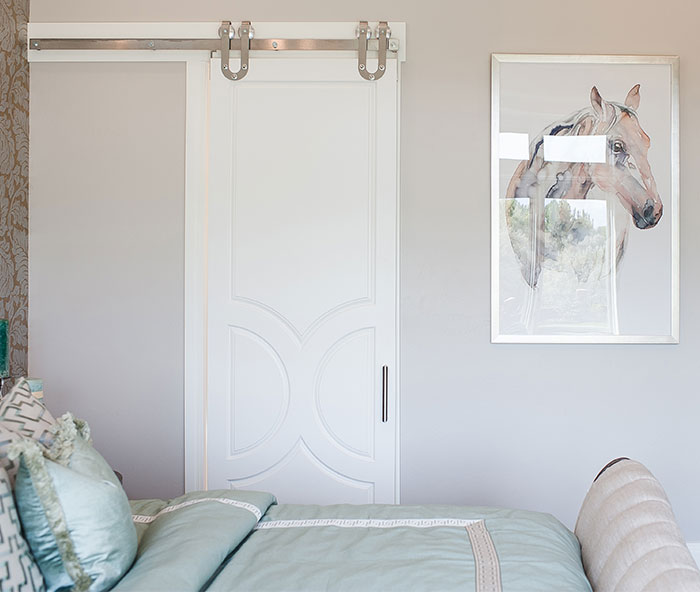
Barn doors are a beautiful addition to a new construction or a home improvement project. They add a touch of rustic nostalgia while also offering a modern style. If you’re considering adding a sliding barn door to your home, there’s an important installation aspect you need to know about: the barn door header.
Barn Door Header FAQs
- What is a barn door header board?
- Why are barn door header boards important?
- What materials are used for barn door header boards?
- How do you measure for a barn door header board?
- How do you install a barn door header board?
- How can a barn door header board affect the final look of your space?
- What are the most common mistakes when installing barn door header boards?
A visible mounting board may be needed when the required track fasteners do not align with adequate framing. Existing or planned structural backing can provide another approved attachment method.
7 Things to Know About Barn Door Headers
If you’re adding one onto an existing doorway, you’ll want to read through these seven things to know about barn door headers. This way, you’ll be fully prepared to install your new and beautiful barn door.
1. What is a barn door header board?
A barn door header board is a thick wooden plank installed just above the door opening. This board (also known as a ledger board) is screwed into the wall studs above the door frame and is slightly longer than the barn door track.
The track and barn door rollers are installed on this wooden plank—this is the barn door hardware that holds the sliding door and allows it to glide along its track.
The header is a solid piece of wood that anchors your barn door and distributes its weight to handle the weight of the door.
A barn door header protects your wall and adds structural stability while ensuring your barn door operates safely and smoothly. By distributing the door’s weight, it makes opening and closing effortless.
2. Why are barn door header boards important?
Header boards are important because they protect your doorframe and wall while providing structural stability for your barn door. For barn door installation, you must first mount the track and rollers where the barn door will hang. The barn door track should be mounted above the door opening, not directly to the doorframe. This requires mounting the track to the wall.
The barn door track needs to be mounted to something that can hold its weight: the wall studs. However, it’s unlikely that the wall studs will be in the exact place needed to secure the track. If the door track is mounted to the drywall, it could cause damage because it isn’t strong enough to hold the door’s weight. As such, the drywall could crack, the door track could rip free, and the door would be unsafe to use.
In order to add the structural strength needed to install the sliding barn door, you would need to open the drywall and install a plank within the wall space between the existing wall studs for the track to screw into. This is a labor-intensive project, which is why it’s much better to install a header board.
The header board screws directly into the wall studs and is strong enough to support and balance the barn door’s weight. This makes your barn door safe to use, and ensures your drywall is protected from damage.
If you’re building a new room or renovating, you can prepare the unfinished wall by adding blocking inside it. This eliminates the need for a barn door header board. For an existing finished wall, inspect the available backing and fastener layout before deciding whether a surface board is necessary.
3. What materials are used for barn door header boards?
The main purpose of a header board is to support your barn door’s weight. Considering this, you need a strong and durable wood plank that will hold your door’s weight for years to come. Use a straight, even piece of lumber, like a 1x4, for the header board to ensure stability and proper alignment.
Would you prefer to paint the wood to match your wall color or complement your sleek
modern barn door? Or maybe you’d rather stain it to highlight the charm of your rustic wooden barn door? You could even match the
support header board to the same wood species as your barn door for a seamless look.
Considering these questions will guide you in choosing the right wood for your header board. If you plan to paint it, opt for
wood species like poplar, white pine, or birch, which have light tones and subtle textures ideal for smooth finishes.
For strength and durability, oak, maple, cherry, and walnut are excellent options. Rustic red oak especially stands out for its toughness and rich character. These hardwoods are best suited for staining, as their unique hues and grain patterns shine through beautifully.
Lastly, it’s important to know which materials you shouldn’t use for your header board. Don’t use MDF, finger-jointed wood, or composite casings, as they aren’t strong enough to hold the barn door over time. These options lack the strength needed to support a barn door long-term, and their tendency to flex can lead to structural failure under the weight of the door.
4. How do you measure for a barn door header board?
In order to know how long your header board needs to be, you need to know the measurements of the door opening. Measure the width and height of your door opening, which will give you the dimensions for your barn door. Calculate panel overlap and track travel for the exact opening and hardware. Size the mounting board for the required track and framing attachment, following the system instructions. Do not apply one universal board length, height or thickness to standard, paired and bypass systems.
5. How do you install a barn door header board?
When you’re ready to install your header board, you’ll need:
- Wall stud finder
- Pencil
- Measuring tape
- Level
- Saw horses or work table
- Drill
- 3-inch wood screws
After getting your measurements for the header board, cut your board to the length you need. Then, mark above the door opening where the track center will be.
To mark the track center height, add 2 ⅛ inches to the overall height of your door and lightly draw a level line this distance from the floor. Using a stud finder, lightly mark the stud location on the wall a few inches above your center line.
Now place your header board on your saw horses or work table. On your header board, lightly draw a line two inches from the bottom of the header. Take your barn door track and center it on the line, two inches from either edge. With your pencil, mark the track hole centers on the header board. Drill quarter-inch pilot holes at each of these marks.
Next, draw a line one inch below the top of the header and another line one inch above the bottom of the header. These lines should run the length of the board. You should now have two level lines on your board.
Place your header board above the door opening, aligning it with your track center line on the wall and the board. Position the header so the track’s edge is located where you want the door to rest when closed. Make sure there is enough overlap between the door and opening when the door is closed.
Note: This project is easier to complete with two people. One person can hold the header board in place while the other person marks the screw hole locations.
On your header board, mark the center of each stud with a vertical line. This vertical line will cross over the two horizontal lines that are one inch from the bottom and top of the header. Take the header down from the wall and drill one-eighth inch holes where the lines intersect.
Place your header back on the wall and attach it to the wall studs with the three-inch wood screws. Now, your header board is ready for the barn door track. Watch our instructional animation video for a step-by-step guide to installing a header board.
6. How can a barn door header board affect the final look of your space?
There are a few ways to style your barn door header board to match or complement your interior design space. In rustic or
modern farmhouse homes, a natural wood barn door pairs perfectly with a stained header board that matches its finish.
For a sleek or minimalist-style home, you can paint the header board to match the wall trim or wall color. This will help the header board blend into the walls.
You might choose to make the header board a bold design feature on its own. For example, you could paint it the same color as your barn door, especially if the door is a bright or eye-catching shade. Alternatively, you can paint the header board a contrasting color to stand out from both the door and the wall.
7. What are the most common mistakes when installing barn door header boards?
To make sure your sliding door installation goes smoothly, you’ll want to avoid a few common mistakes when installing the header board. Common mistakes include incorrect measurements, insufficient header support, and improper installation.
You can make sure you have the right measurements for your door, door track, and header by measuring everything three times.
If you have insufficient header support, you can damage the wall and door. To prevent this, choose a solid piece of lumber for the header board, such as one of the durable wood species we listed above.
Lastly, the best way to avoid improper installation is to closely follow our installation instructions. Read every step thoroughly before you start, make sure you have all your tools ready. Don’t rush the process.
If you are uncomfortable assessing the wall or installing the assembly, use a qualified installer.
Why You Do Not Need a Barn Door Header:
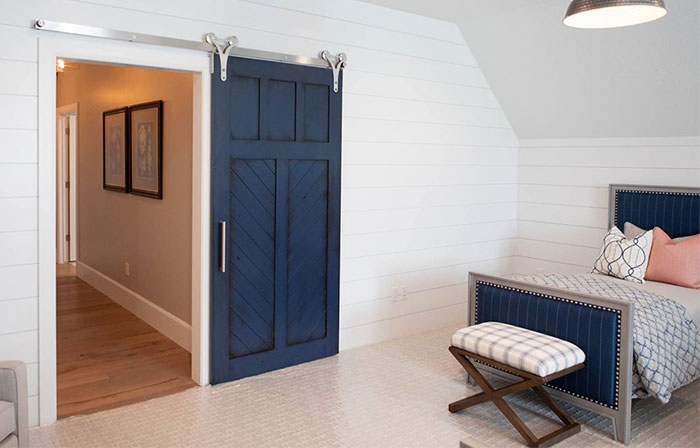
If you are building a new wall and plan on including a barn door, you have the advantage of adding solid wood blocking between the studs behind the drywall. The wood blocking replaces the need for a header and will be strong enough to hold your barn door. Then the barn door track would be installed directly to the wall. Without a visible board, the wall can have a simpler appearance. The concealed backing, fasteners and track must still support the complete assembly as specified. Confirm wall projection and guide placement before hanging the panel.