

Give texture a place to lead
Decide what you want to notice first: a timber door, stone fireplace, wood ceiling or substantial table. If several surfaces are already rough or heavily patterned, adding another distressed finish can make the room harder to read.
A plain wall beside a textured door helps the wood grain stand out. A smoother table can balance a stone fireplace. These pairings are more useful than applying a fixed percentage of rustic and modern elements.
| If the room has… | Try… | Why it helps |
|---|---|---|
| A strongly grained wood door | A quiet wall color and slim hardware | Keeps attention on the wood instead of adding competing patterns. |
| Rough stone or exposed brick | Simple upholstery and a smoother cabinet face | Adds visual rest and makes the room feel more comfortable. |
| Many dark metal details | A warmer wood tone or lighter textile | Softens the overall effect without introducing more ornament. |
| A mostly pale, minimal interior | One substantial natural texture | Adds depth without filling every surface with accessories. |
Choose wood by undertone as well as texture
Place samples beside the flooring and the largest existing furniture. Two woods do not need to match exactly, but their undertones should work together in the room. A heavily weathered gray finish can feel quite different from warm honey-colored timber even when both are described as rustic.
For an exterior or damp application, finish and exposure requirements come before the desired weathered look. Reclaimed appearance is a style choice; it does not establish a material’s performance or suitability.
Use doors to carry the material story
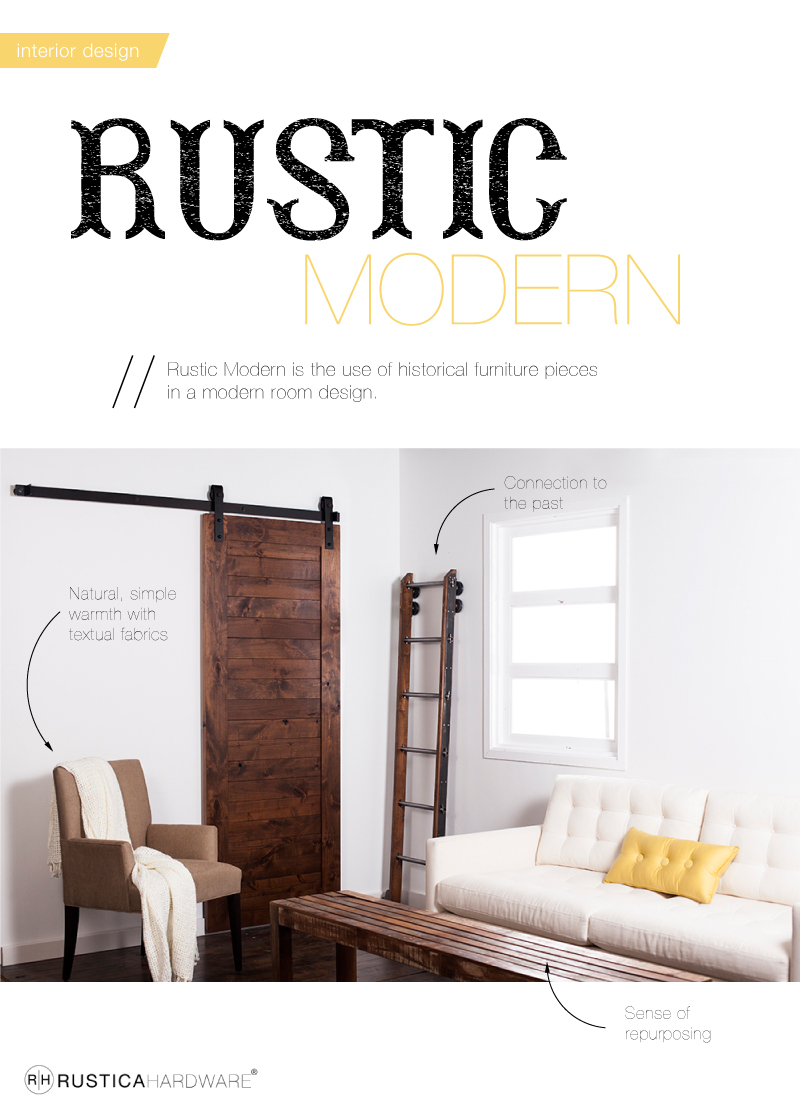
A wood barn door can introduce grain and texture on a large, visible surface. Choose the track profile and finish with the adjacent fixtures, and check the wall space needed to park the door before selecting a wide slab.
For a quieter result, consider a simpler hinged interior door with a restrained panel pattern. The room can still feel rustic through timber and textiles without an exposed sliding track.
Keep everyday surfaces comfortable
Texture is useful to look at, but hands, bare feet and cleaning routines experience it differently. Test the edge of a table, the grip of a handle and the fabric of a chair. Choose finishes that suit actual use, especially in kitchens, bathrooms and family spaces.
Large, simple pieces often make a stronger composition than many small rustic accessories. Leave a practical route around furniture and keep shelves from becoming a collection of objects added only to repeat the theme.
Let light reveal the materials
View samples under daylight and the lamps you plan to use. Side light can emphasize grain and rough stone; broad diffuse light can make the same finishes feel calmer. Keep window treatments, artwork and decorative lighting in proportion to the material feature you chose at the start.
Before buying the final pieces, photograph the room and remove one competing finish or accessory from the plan. If the main material reads more clearly, the simpler version may be the stronger design.
Rustic modern inspiration from the original guide
Updated .