


What to look for in the profile
The effect comes from three parts working together: the upper glazing or panel, the projecting ledge, and the rhythm of the small blocks below. A shallow shelf reads as a quiet accent; a deeper projection creates a stronger shadow. The right scale depends on the door’s rails, panels and glass arrangement.
The detail is associated with Craftsman doors, but a door’s overall proportions matter more than a single ornament. Compare the shelf with the trim and porch details around the entrance.
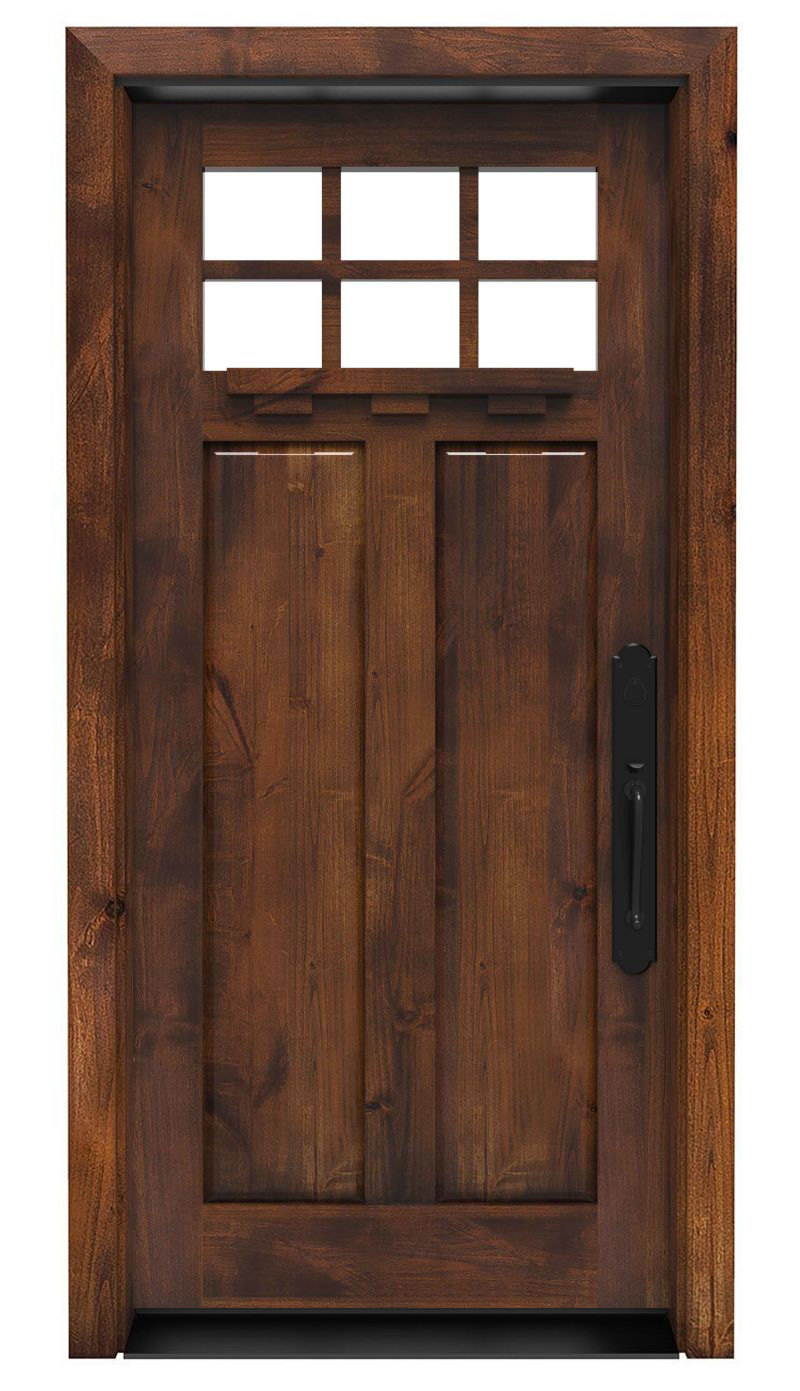
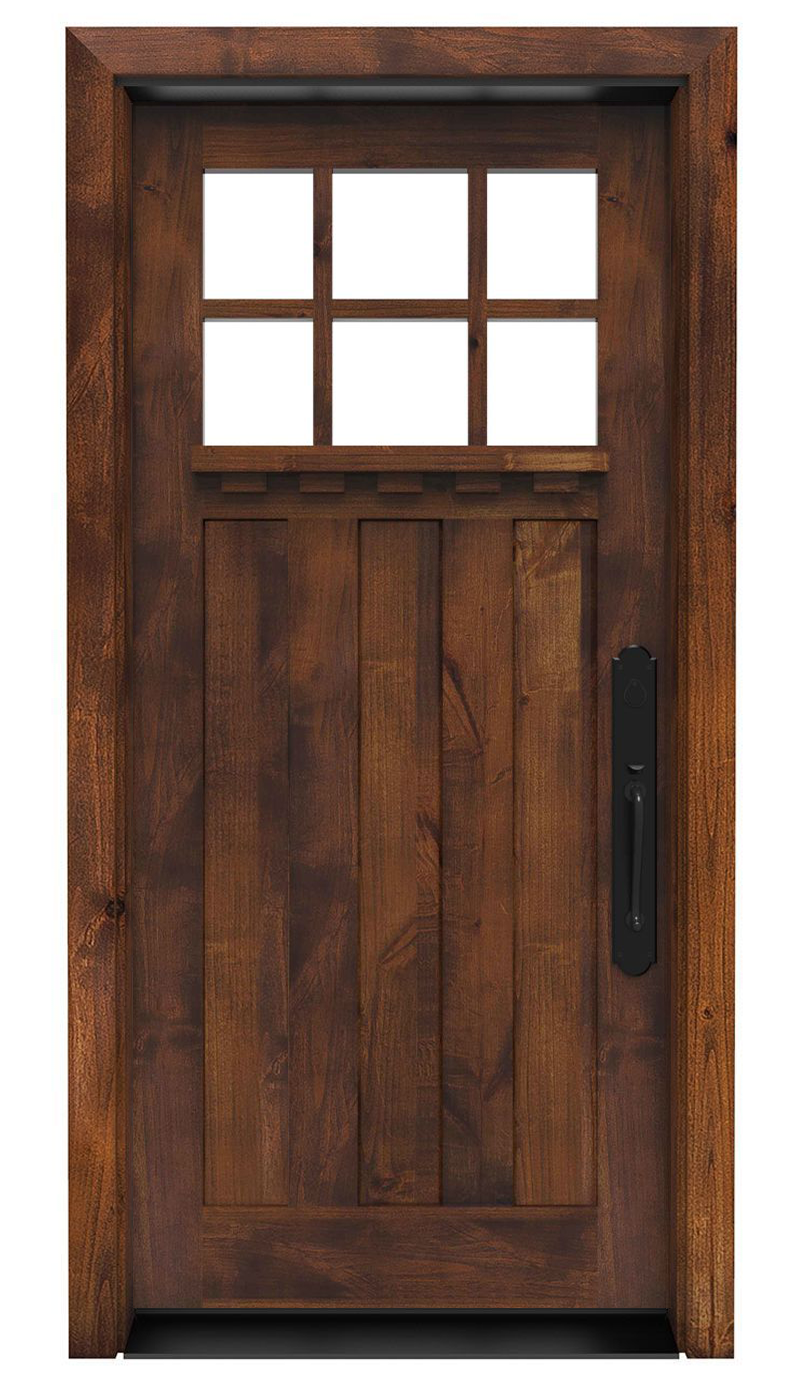
Check projection before adding an outer door
A shelf projects beyond the slab face. If you have a storm door, screen door or a tight entry recess, measure that projection along with the main handle. Check the space with both doors closed and throughout their swings.
Do the same for wreaths and seasonal decorations. An arrangement that looks fine from the street can rub the glass, contact the shelf or stop an outer door from latching.
| Approach | Advantage | Check first |
|---|---|---|
| Order a door designed with the shelf | Profile, finish and attachment can be coordinated with the door. | Confirm the selected configuration and projection. |
| Add an approved shelf to an existing door | May retain a serviceable door and frame. | Get an attachment detail approved for that door’s construction and finish. |
| Use a simpler rail or panel design | Keeps the entry flatter and easier to pair with an outer door. | View the full elevation so the door still fits the architecture. |
Can you attach a dentil shelf with glue?
There is no universal adhesive-only installation method. The shelf material, door skin, existing finish, weather exposure and temperature all affect the connection. Follow the door and accessory manufacturer’s attachment instructions, including surface preparation and cure time.
Do not substitute hot glue or a general-purpose adhesive based on appearance alone. Drilling can also damage a thin skin, glazing pocket, insulated core or warranty-covered finish. If there is no approved attachment detail, consult the door manufacturer before modifying the slab.
Keep water and dirt from collecting around the shelf
Include the shelf’s upper surface, underside and joints when inspecting the exterior finish. Clean gently using the finish manufacturer’s method; avoid forcing water into joints. Address peeling coating or an open joint before moisture has time to work into the door.
Use a suitable wreath hanger only if it clears the frame and weather seal. Check that it does not scratch the finish or hold the door open at the top. Keep decorations light and separate from the decorative shelf’s attachment.
Questions worth asking before you choose
Why is it called a dentil shelf?
“Dentil” refers to the small, tooth-like blocks repeated beneath the ledge. The complete door detail combines those blocks with the projecting shelf above.
Does a dentil shelf protect the door from rain?
Do not treat a decorative shelf as a substitute for an appropriate overhang, weather-resistant finish or correct entry flashing. Follow the door’s exposure requirements.
Updated September 19, 2026.