1.800.891.8312
Free Shipping Details
Most orders over $500 qualify. Free shipping applies to Barn Door Hardware, Barn Doors, and Pocket Doors over $500.
Note: Front doors, interior doors, shower doors, slab doors, any oversized door (wider than 3ft or taller than 7ft), and any special order doors have shipping costs calculated at checkout. Some barn door hardware track lengths do not qualify for free shipping.



What is a Cavity Slider?
Friday, June 5th, 2026
Author: Kate Allen - Rustica Founder and CEO
Share
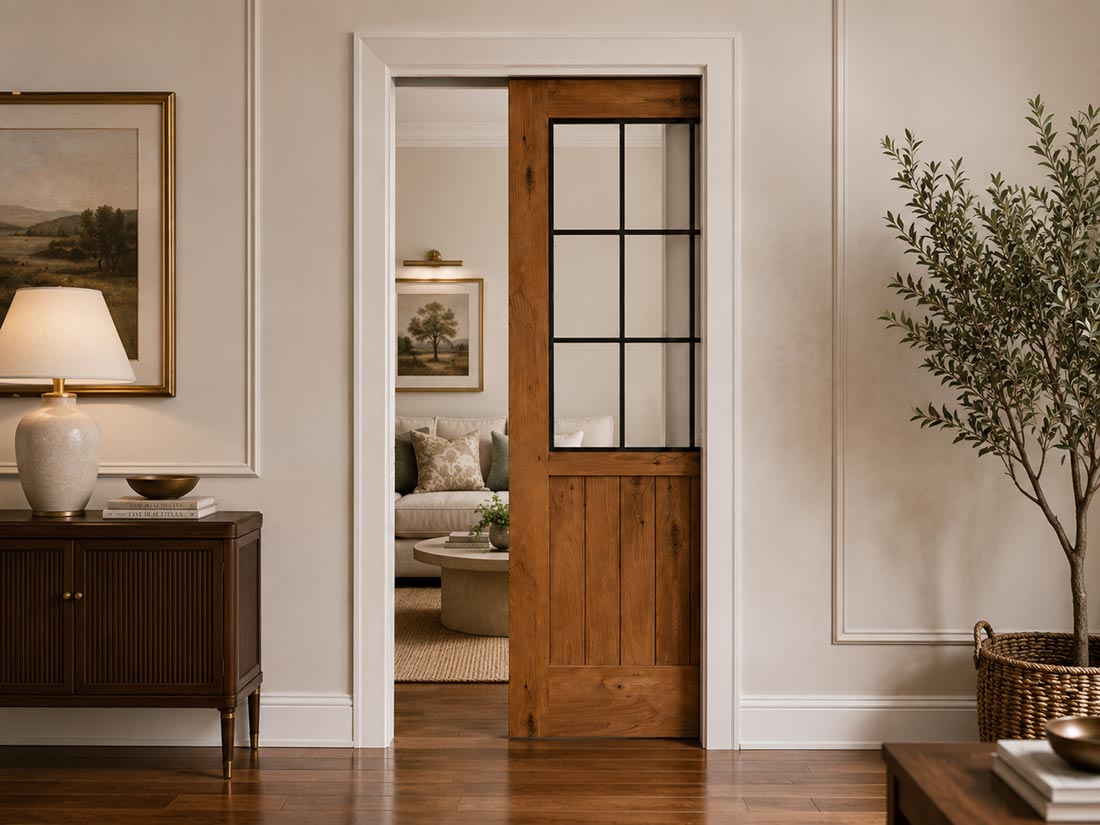
We’ve all seen movies where the super villain or James Bond-esque character hits a button and voila—a panel door slides and a magic, hidden room emerges revealing the hidden lair. No doubt about it: It’s an impressive entrance. One that you can recreate in your own house if you want. The sliding door system that makes this possible is called a cavity slider.
Cavity Slider Door FAQs:
What is a cavity slider?
How do cavity sliders work?
Why choose a cavity sliding door?
How much are cavity sliders?
How do you install a cavity slider?
Can you tile a cavity slider?
If you’re considering a cavity slider for your next home improvement project, you probably have a few questions about the installation process. Don’t worry, we have all the answers you need to determine if a cavity slider system is a good fit for your door.
Frequently Asked Questions about Cavity Sliders:
What is a Cavity Slider?
Cavity sliders, also known as pocket doors, use a sliding door frame that’s engineered to slide into and out of the internal cavity of a door track, rather than swing in or out of a doorframe like a conventional door.
They are typically used on interior doors, such as on a wardrobe door; as a sliding screen door or patio door instead of hinged screen doors; or even on a cupboard area or pantry. You can install single or double pocket doors, depending on your goal.
They have become popular amongst builders, designers, and homeowners looking to free up square footage in the house while enabling the homeowner to choose whether to have the area open or closed in a way where a door doesn’t impede the view.
How Do Cavity Sliders Work?
Cavity sliders work by creating and utilizing a hollow space in the wall cavity to house all aspects of the sliding door track hardware—everything from the pocket door rollers, sliding door track, and the door itself. The door system pulls in and out of the cavity on rollers to create a smooth, silent transition between having a closed and open space. Most of the time, these are put in low-traffic areas, but they can have locks added to be more heavy-duty if they are used in bathrooms, for example.
Why choose a cavity sliding door?
Usually, customers prefer installing a sliding door in areas where they are either limited on space, such as small apartment buildings or small bathrooms, or where the functionality and sleek modern design fit their interior better than a traditional hinged door. Another great way to use a pocket door is to close off an existing area of your house, so for example, to convert a foyer into an office space while still keeping the functionality of being able to close or open that room.
There is a wide variety of door options to choose from: heavy-duty barn doors, aluminum, or even glass doors. Door design boils down to personal preference and what will look best in the space you want to utilize, but all cavity sliding doors function the same.
How Much Are Cavity Sliders?
You might be asking yourself, “Are cavity sliders expensive?” The answer varies greatly based on the material and style you choose to go with the door.
The price of installation (if you’re not going the DIY route) also varies depending on your location. We recommend calling two to three different contractors to compare estimates for your project. It’s important to ask how many cavity sliders they’ve installed; their typical turnaround time, cost of labor, and any other questions you might have before signing on for the job, and also evaluate their customer reviews before you decide which company to go with.
If you do decide you feel confident doing the install yourself, you will save a significant chunk of money, but that also comes with its own challenges, so be sure you are familiar with and confident in your abilities before you begin.
How Do You Install a Cavity Slider?
There are a variety of cavity slider sizes, so if you’re looking for where to start with your install, it’s important to know all the measurements of the area you are wanting to install the pocket door kit and ensure you have the proper size door gear. Carefully check the measurements on your frame, the wall you are installing it into, the door panels you would like to use, and the sliding door hardware, such as locks and handles as well.
It's typically best to let the professionals create the cavity pocket and install the cavity door for you to maintain the structural integrity of your house and avoid creating major issues. If you do decide to go the do-it-yourself route, there are plenty of tutorials and how-to videos on YouTube. Don’t be afraid to ask your local contractors for tips for beginners or ask around and see if you have any handyman friends willing to help.
Can You Tile a Cavity Slider?
Cavity sliders have no problems when installed in tiled spaces (or even being tiled themselves), as long as the area you are installing it into has been carefully and correctly built or modified to protect the wall from any potential issues. Moisture is usually the main concern here, so be sure the wall space and the wall linings you install are waterproof and that you are factoring in extra space in the pocket door frame for any increase in width the tile will add to the overall measurements.
Troubleshooting Cavity Slider Installation
How Do You Install a Cavity Sliding Door in an Existing Wall?
If you are the DIY kind of guy or gal, it’s definitely possible to install your own pocket door. First, you will need to select your cavity sliders pocket door kit, the door, and any door hardware you want to use, like handles or door locks. From there, measure the wall you want to install the pocket door into and make sure that you have a little more than double the width of the door you chose. This will ensure that it has room to slide into the wall completely.
Next, you need to determine if the wall is load-bearing or if the wall is hollow before you start deconstruction. If it is load-bearing, you will need a new header and a way to temporarily support the structure while you do the installation. Also, check if there are any wires or plumbing in the way. You can gauge if there is any wiring in the way by using a cheap voltage sensor. Bear in mind that it is harder (but not impossible) to install a pocket door on a load-bearing wall. We highly recommend avoiding an install if you do find any plumbing or electrical barriers before starting the project. Usually, plumbing and electrical are more expensive to move or re-route so the wall should be left as-is.
Once you have your pocket door hardware and you’ve done your due diligence on the area of installation, it’s time to assemble your gear.
You will need:
Hardware kit
Gloves
Safety goggles
King studs and trimmers
Cripple studs
Screwdriver
Circular saw
Power drill
Level
Hammer
Now, it’s time to find some tutorials and get to work! The door kit will come with its own installation instructions. Installing a pocket door yourself will involve a lot of measurements, removing drywall, using power tools, adding new drywall, paint, and more, so be sure it is something you are confident and comfortable with doing before deciding to undertake it yourself.
How to Fix a Cavity Slider?
Ceiling cavity sliders can be a bit tricky to deal with if they become derailed or need an adjustment, which can happen over time. They can all be easily tweaked back into proper movement by following the steps outlined in the instruction manual that came with the pocket door hardware. This will help you raise and level any part of the door that may be hanging too low or high to get a nice, even glide with the door’s movement.
How to Remove Cavity Sliders?
If you are buying a home that has an existing pocket door, chances are you may have to eventually replace the old door if the hardware is old and worn. You will need to remove the trim and caulk from the door frame, remove the door itself, take down the old hardware and install your new hardware kit. Thankfully, removing pocket doors isn’t a common home maintenance project—they are built from quality materials and are meant to last for a long time, so you typically only have to remove or replace them if the parts are worn or if you are wanting to swap to a new door style.
Start Your Pocket Door Project Today
Pocket doors and cavity sliders are something we are seeing more and more of as the housing market grows. They are great at saving very valuable space within the home. This makes them ideal for spaces like a master bathroom or closet, pantry, laundry room, or any space you would like a nice, modern and clean way to close off or open up the space.




PRODUCTS
FEATURES
COMPANY
BUSINESS