

What the name brings to the design
The name evokes the discreet entrances associated with Prohibition-era bars. National Prohibition in the United States ran from 1920 to 1933, but it is inaccurate to describe the Eighteenth Amendment as a blanket ban on all alcohol consumption. Its restrictions addressed manufacture, sale and transportation, among other activities.
Today, “speakeasy” is also a design description. A small window in a plank door can suit a Spanish-influenced entry, a rustic house or an interior bar without being a reproduction of a documented historic door.
Three details to resolve on the window
View: check the opening’s height and the sightline for the people who will use it. A decorative grille and small glass area can limit what is visible outside.
Operation: confirm which parts move. A hinged interior cover over fixed glass does not create an opening for conversation or ventilation. Request a section or demonstration if the product photograph is unclear.
Privacy: inspect both faces and consider the glass, cover and lighting. A grille does not make clear glass private. An operable cover also needs a secure latch and appropriate clearance.
Two different expressions of the style
These Rustica designs illustrate how the same small-window idea changes with the silhouette and surrounding detail. Confirm the final window construction and options on your order.
Stronghold Front Door
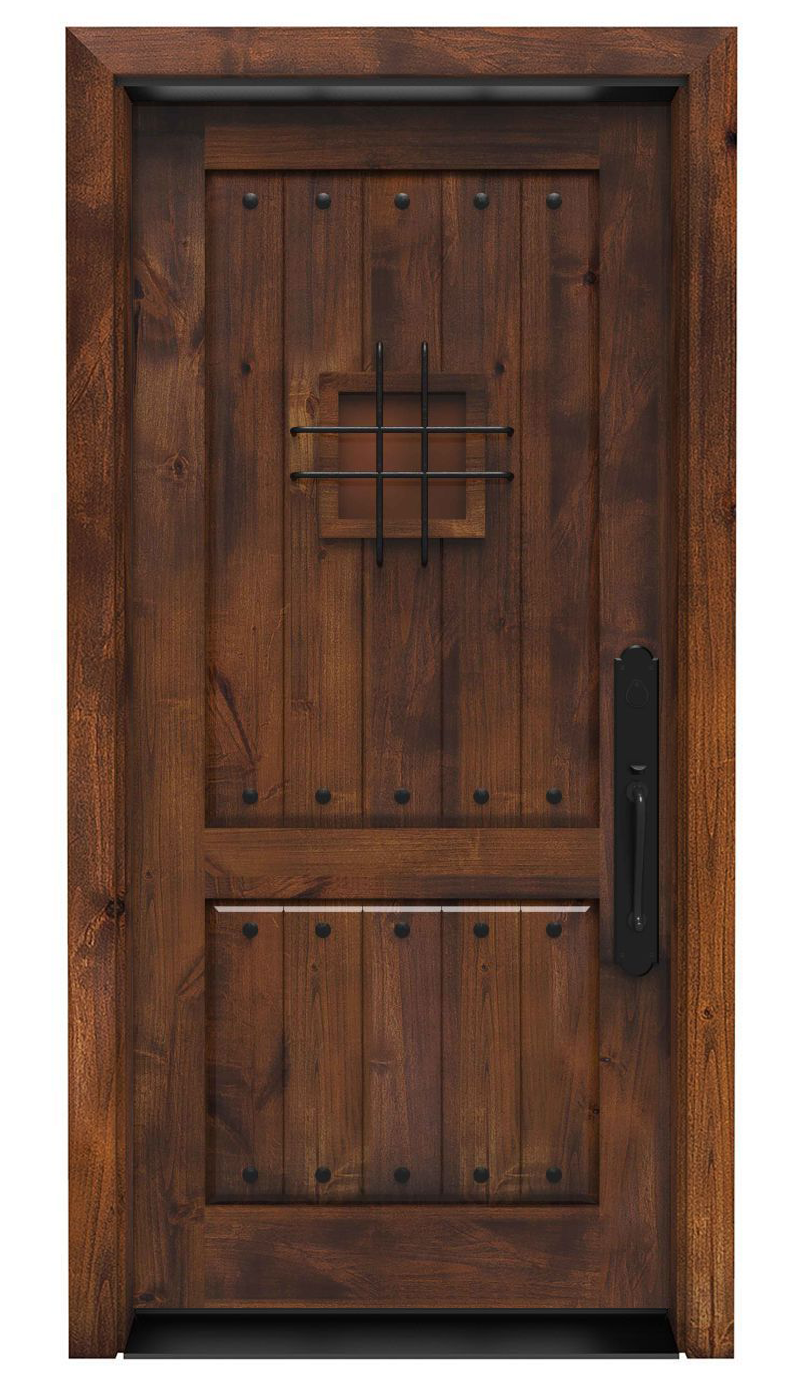
The Stronghold combines a rectangular frame, plank-like vertical panels, decorative clavos and a gridded viewing window. The repeated metal accents make it the more visually detailed of these two choices; pair it with restrained surrounding trim if you want the door to remain the focus.
Locust Front Door
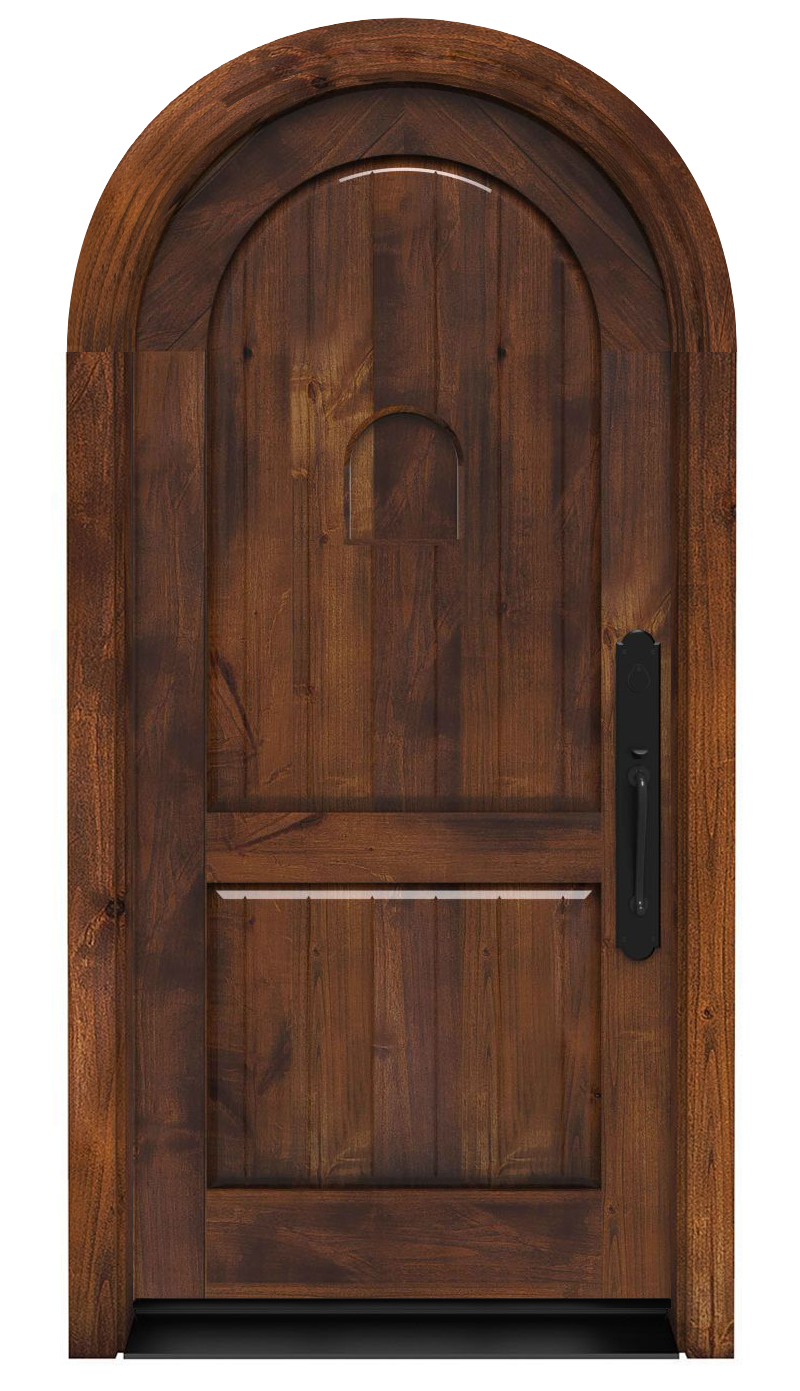
The Locust uses an arched top and a small arched speakeasy detail, giving the entry a softer outline. The door and frame shape need to be planned together; matching an existing arch requires more information than overall height and width.
Do not infer security from the grille
A small window can let you check part of the view without opening the main leaf. That convenience does not establish a forced-entry rating. Evaluate the lock, strike attachment, frame, hinges and glazing as a complete entry security arrangement.
Decorative nail heads and ironwork are appearance details unless their structural or protective function is documented. Likewise, solid wood construction does not mean a door is maintenance-free or suitable for every exposure.
Exterior entry or interior feature?
For a front entry, coordinate the sill, perimeter seals, glass assembly, finish and installation with the site’s weather exposure. Include the window detail in that discussion; the leaf’s large surface is not the only place where performance matters.
For an interior bar or wine room, the style can help establish the room’s character. A cooled wine room also needs its own thermal and moisture-control design, so a decorative door choice should follow that specification.
Bring these items to the design review
Provide photographs of the opening from both sides, the frame dimensions, a wall section if available and the desired swing. Note who needs to reach the viewing cover, the proposed lock preparation and the exterior exposure. Review an elevation showing the window height and all visible hardware before approving the order.
Reference: National Archives: the scope of Prohibition.
Updated September 19, 2026.