1.800.891.8312
Free Shipping Details
Most orders over $500 qualify. Free shipping applies to Barn Door Hardware, Barn Doors, and Pocket Doors over $500.
Note: Front doors, interior doors, shower doors, any oversized door (wider than 3ft and taller than 7ft) and any special order doors have shipping costs calculated at checkout. Some barn door hardware track lengths do not qualify for free shipping.


What Is a Rustica Thermally Broken Door?
Thursday, February 5th, 2026
Author: Kate Allen - Rustica Founder and CEO
Share
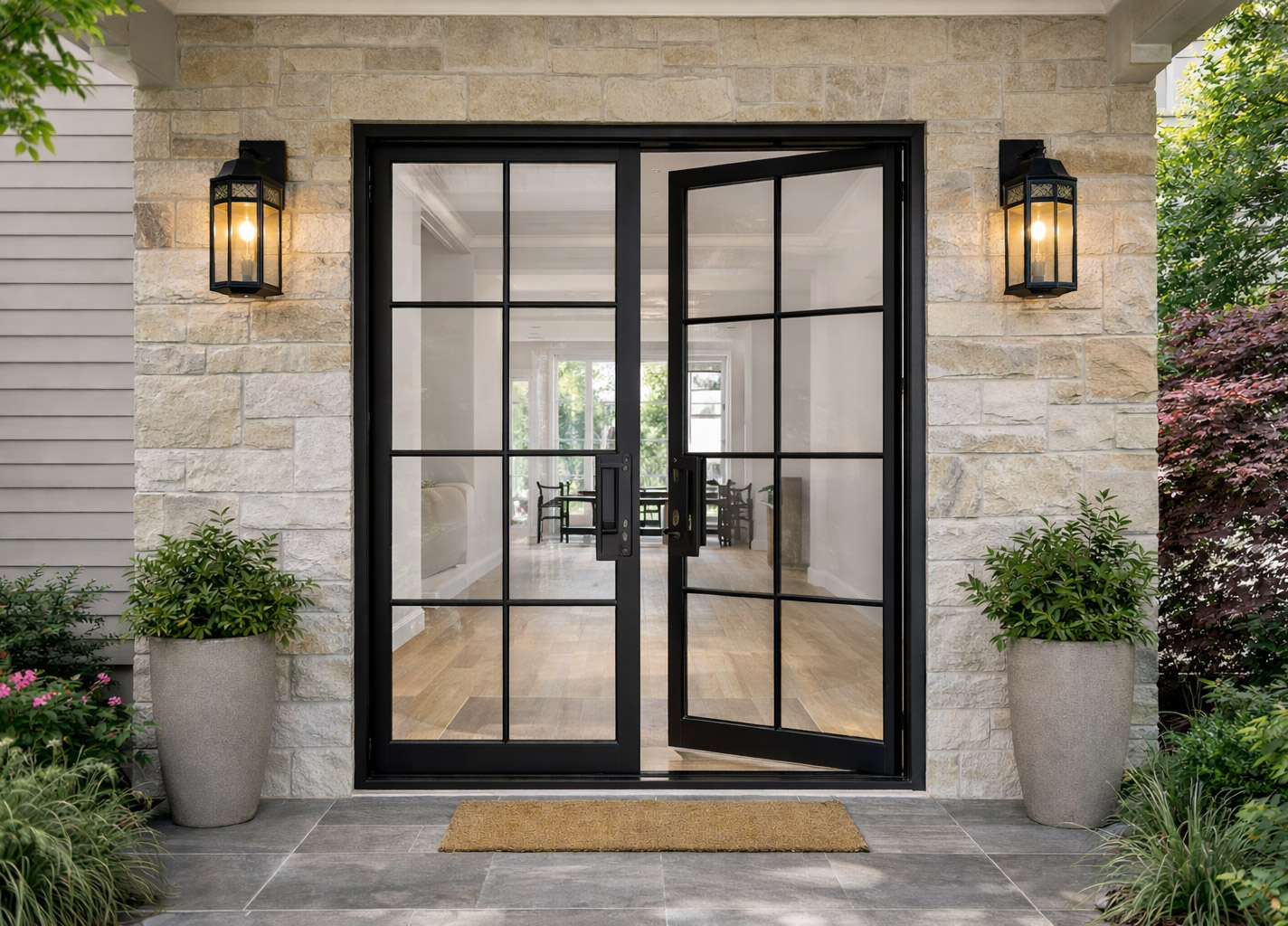 A Rustica thermally broken door is specially insulated to reduce heat transfer between the inside and outside of your home. It increases your heating and cooling efficiencies to keep your interior more comfortable year-round.
There are two main types of thermally broken doors:
Solid Wood Doors:
Wood is naturally a poor conductor of heat, which makes solid wood an inherently good insulator. A Rustica solid wood door provides natural thermal protection while showcasing the beauty and craftsmanship of wood.
Metal Doors with Thermal Breaks:
Metal conducts heat easily, so an uninsulated metal door can let heat or cold pass through quickly. A thermally broken metal door includes a layer of insulating material—called a thermal break—between the inside and outside layers, which dramatically reduces heat transfer.
Do You Really Need a Thermally Insulated Door?
It depends on your climate and comfort preferences.
If you live in a temperate area without extreme temperatures, the benefits of a thermally insulated door may be modest.
If your region experiences extreme heat or cold, a Rustica thermally insulated door can make a significant difference in energy efficiency and comfort.
Interior metal doors typically do not require thermal insulation, but for temperature controlled rooms (like wine rooms) you may want to consider it.
Why Rustica.com Customers Choose Thermally Insulated Doors
Thermally insulated doors improve comfort, reduce energy loss, and hold up better over time. Here’s what that means for everyday use.
| Benefit | Details |
| Energy Efficiency | Reduces heat loss in winter and heat gain in summer. Helps lower heating and cooling costs. |
| Comfort | Keeps indoor temperatures steady and removes cold drafts near doors. |
| Condensation Control | Lowers the chance of moisture forming on interior surfaces. |
| Noise Reduction | Adds sound control for busy homes or offices. |
| Durability | For metal doors, thermal breaks reduce warping and material fatigue caused by temperature swings. |
Energy Efficiency
• Reduces heat loss in winter and heat gain in summer
• Helps lower heating and cooling costs
Comfort
• Maintains more consistent indoor temperatures
• Eliminates cold drafts near doors
Condensation Prevention
• Reduces the risk of moisture forming on interior surfaces
• Helps protect trim, glass, and surrounding finishes from water damage
Noise Reduction
• Provides additional soundproofing for busy homes or offices
• Softens outside traffic and street noise for a quieter interior
Durability and Longevity
• For metal doors, thermal breaks help prevent warping or material fatigue caused by temperature swings
• Improves structural stability so the door keeps its shape over time
Thermally insulated doors improve how your home feels day to day. The insulated core slows temperature transfer through the door and frame, which keeps indoor spaces steadier through both hot summers and cold winters. With less energy escaping, your heating and cooling system runs less often, which helps cut monthly utility costs.
You also notice the difference right around the entry. Drafts feel weaker, rooms stay more comfortable, and outside noise softens before it reaches the interior. Warmer interior surfaces reduce moisture buildup, while thermal breaks in metal doors limit stress from expansion and contraction, so the door keeps its shape and performs reliably for years.
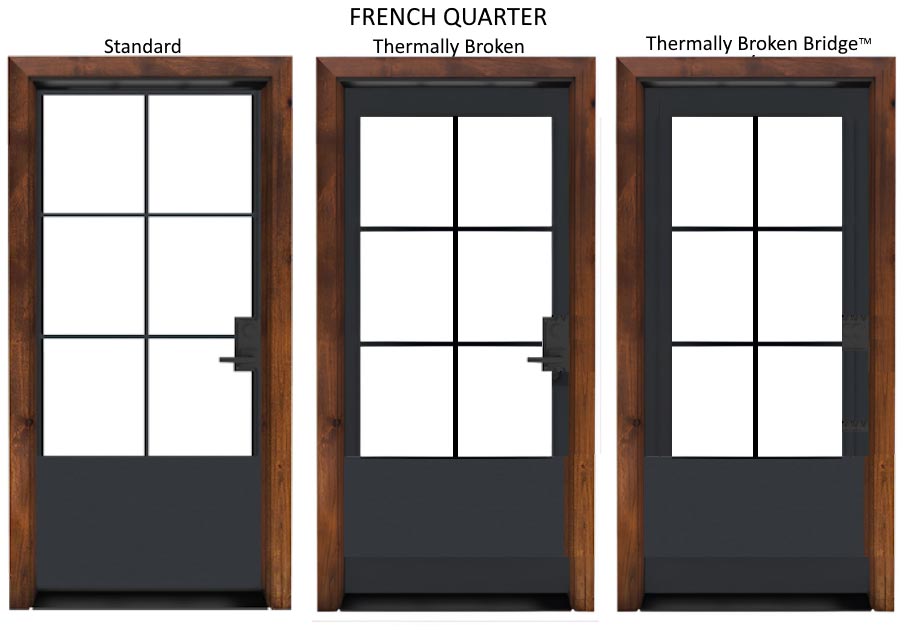
What is the difference between a “Standard Rustica Metal Door,” a Thermally Broken Rustica Metal Door, and a Thermally Broken Bridge?
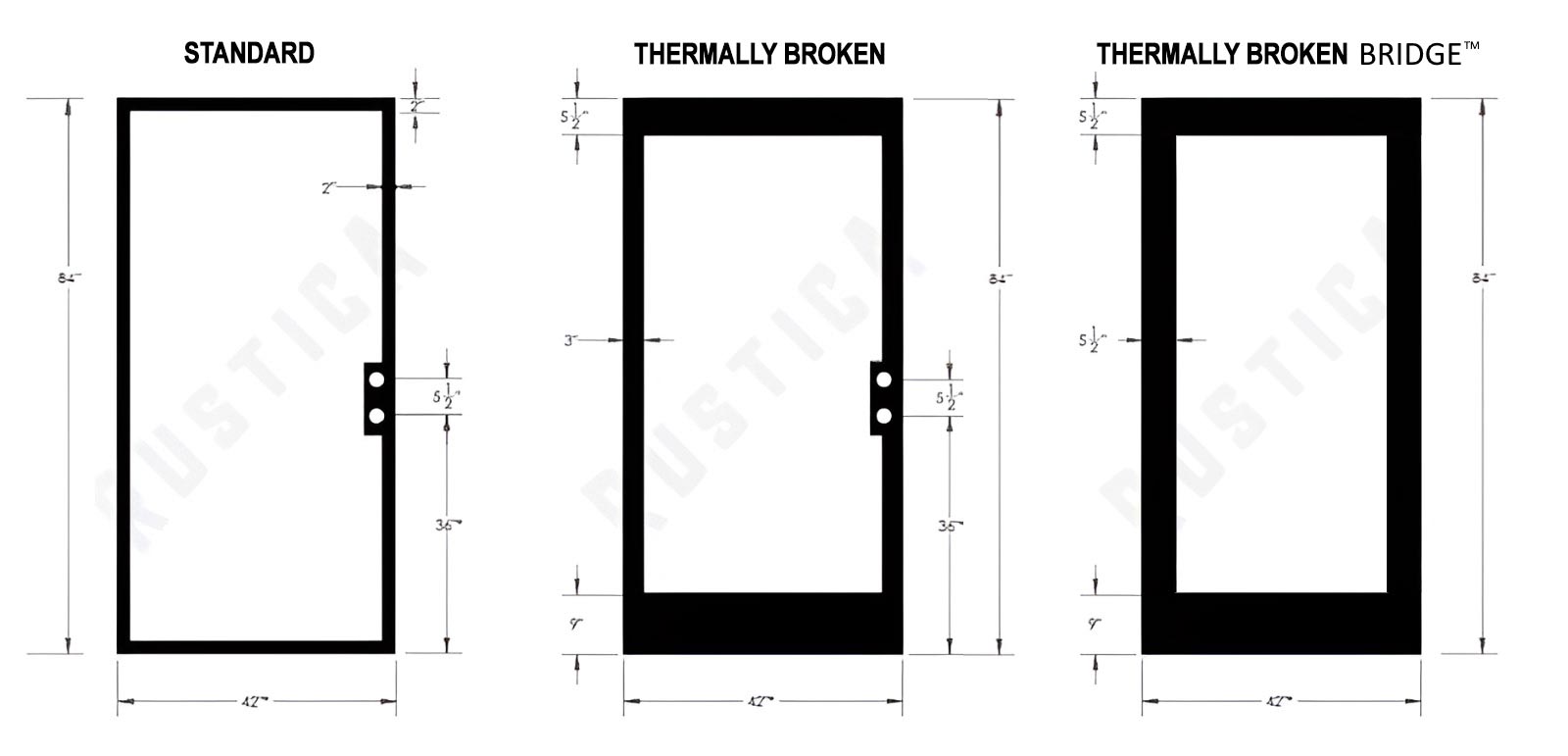
The frame on a thermally insulated door is wider than the non-thermal version.
Standard Metal Door
Total visible frame: ~2"
Some door styles show a kick plate. For the standard doors this kick plate is part of the grid overlay and not part of the frame.
Thermally Insulated Metal Door
9" - 21” bottom rail depending on the door style
5.5"-22” top rail depending on the door style
3" side stiles
Some door styles show a kick plate. For the thermally broken doors this kick plate is part of the frame which is why there is a range of the bottom rail/kickplate and top rail sizes.
Thermally Broken Bridge™ Metal Door
9" - 21” bottom rail depending on the door style
5.5"-22” top rail depending on the door style
5.5" side stiles
Some door styles show a kick plate. For the thermally broken doors this kick plate is part of the frame which is why there is a range of the bottom rail/kickplate and top rail sizes.
The frame on a thermally insulated door is wider than the non-thermal version.
Here is a simple drawing of the difference using the Presidential door. Please remember that on a thermally broken door the height of the bottom rail, to include the kick plate, varies with the door style as does the top rail. A few visual comparisons are provided below.
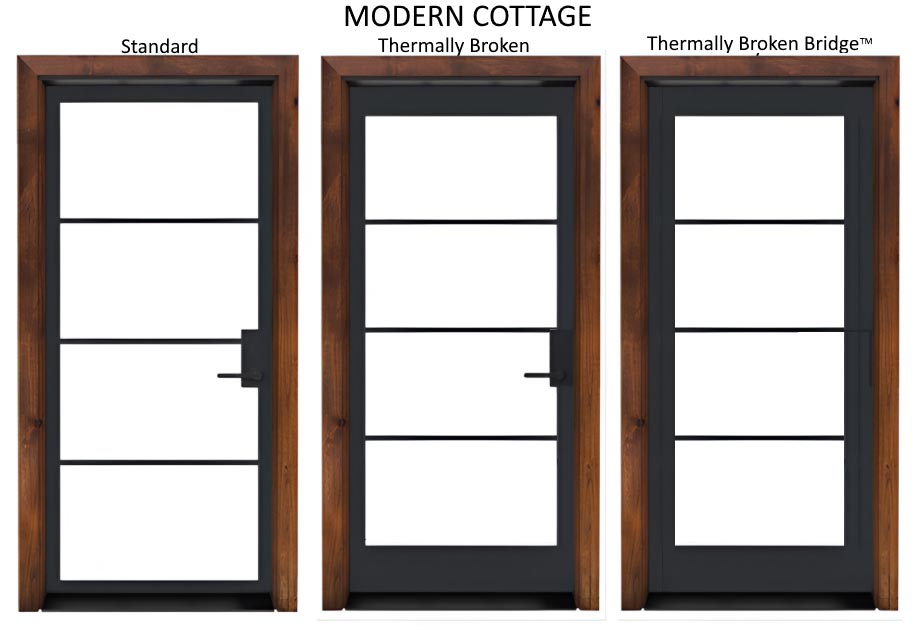
Here is a visual example of the difference between the standard and thermally broken doors for the Modern Cottage Exterior Doors and the French Quarter Doors. Notice that the metal grids will divide the glass evenly into the “lite” pattern of the desired style. If you have any questions as to how your door style will look, please contact us 800-891-8312.
Key Takeaways
A thermally insulated door goes beyond looks. It gives you everyday comfort, better energy efficiency, and practical performance you notice day after day.
Rustica thermally insulated doors combine performance and beauty. They are an excellent choice for anyone looking to enhance their home’s comfort, efficiency, and long-term value, especially in areas with extreme temperatures.




PRODUCTS
FEATURES
COMPANY
BUSINESS