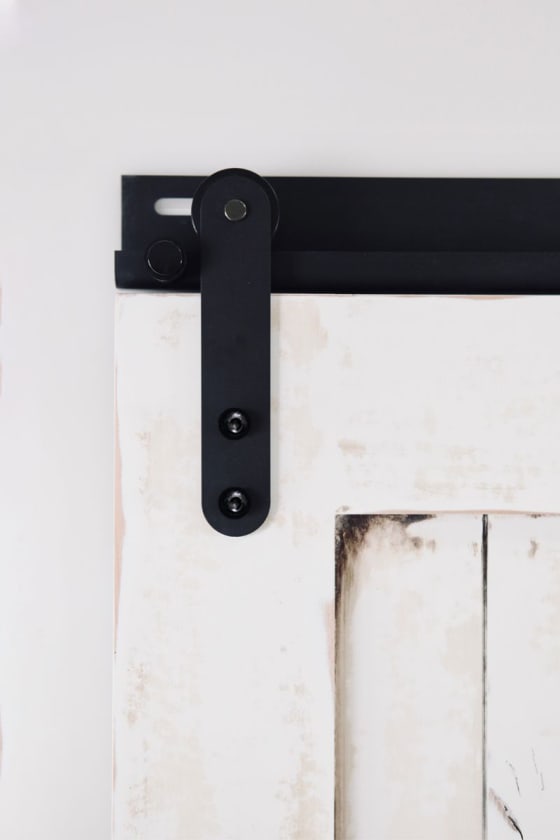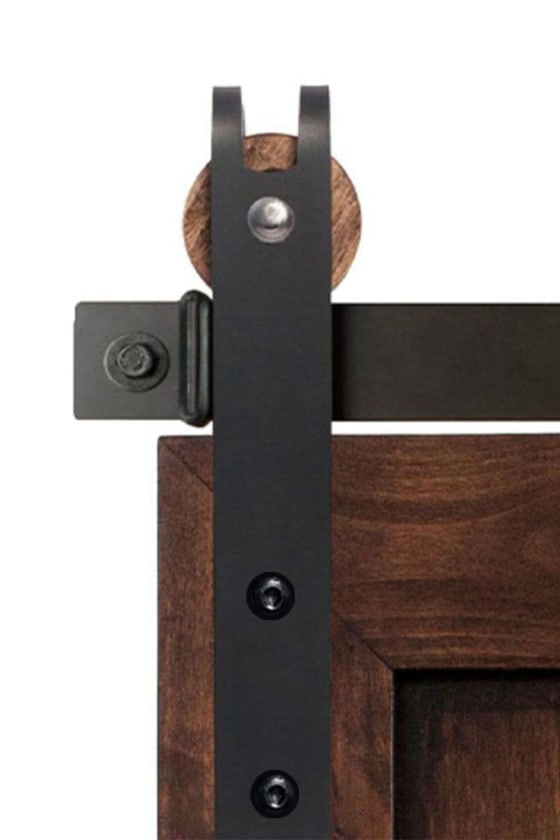
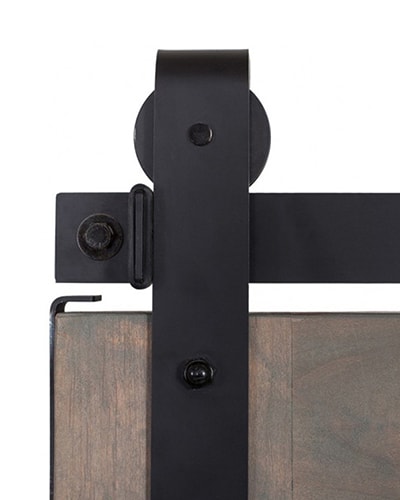
Barn Door Track Styles

The track establishes both the appearance and the mounting arrangement of a sliding door. Compare exposed flat bar, round tube and specialized track systems before choosing the matching hangers.

Hang in there! Loading the best brands and products to your fingertips.

Choose with confidence

Barn Door Track Styles Buying Guide

A barn door track is the rail that supports and guides the door’s rollers. Track profile, hanger design and mounting brackets form a compatible system; similar-looking parts are not necessarily interchangeable.

Find the mounting surface

Identify whether support will come from the wall, a header or the ceiling.

Choose a complete system

Pair the rail with compatible rollers, stops, guides and mounting components.

Measure the available envelope

Include height, wall stand-off and the full travel distance.

Choose a Track by Its Installation

Choose a Track by Its Installation
Track approachDesign emphasisPlanning question
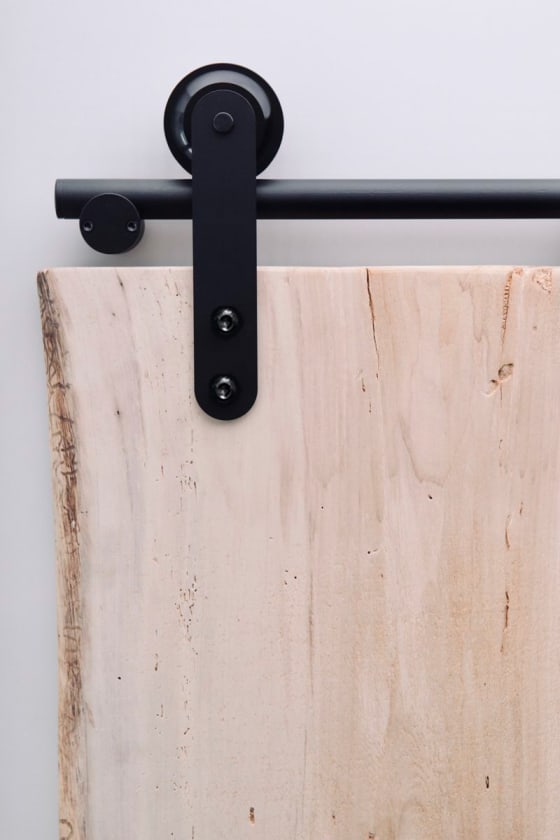
Flat or tube trackVisible rail profileWhich hangers are specified for this rail?
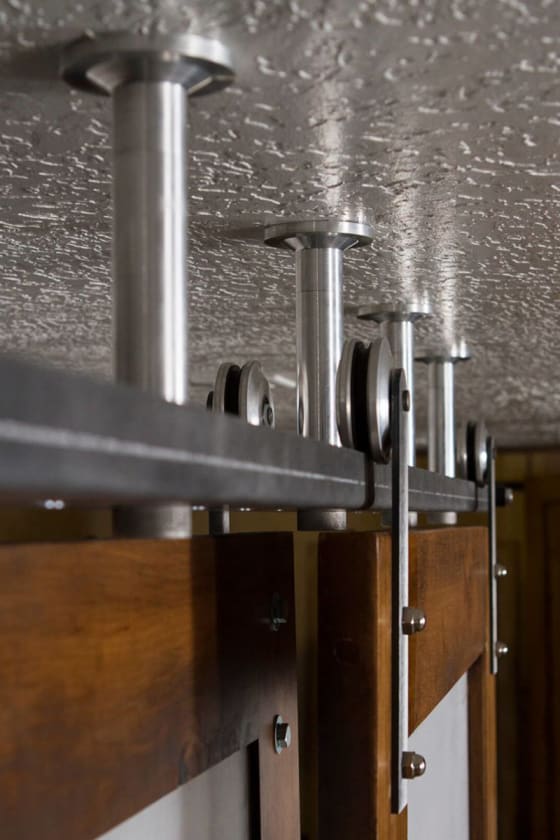
Ceiling mountOverhead supportWhere can the ceiling safely carry the assembly?
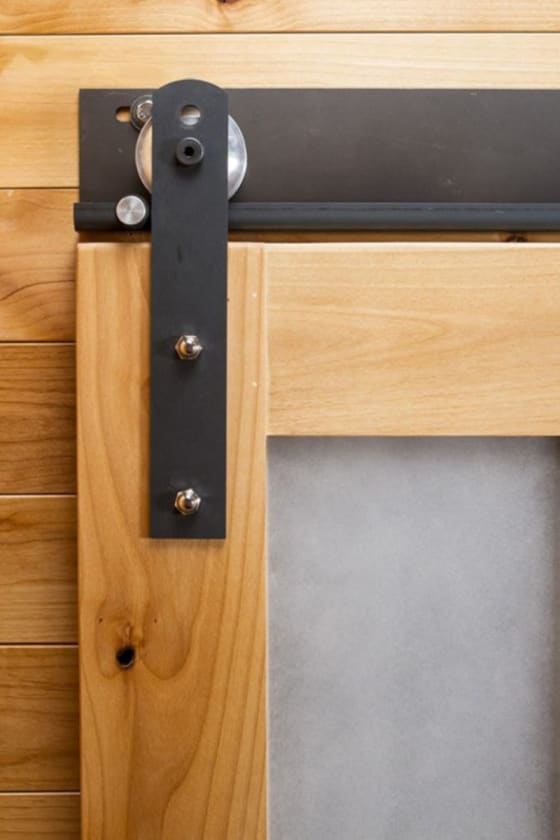
Low clearanceLimited upper spaceDoes the complete system fit the measured headroom?
Cabinet trackSmaller openingsDoes the system match the panel thickness and weight?

Start with the Structure Behind the Finish

Locate the support before selecting the visible rail. A decorative wall surface is not itself a mounting specification. Track fasteners and bracket spacing must transfer the configured door load into suitable structure, following the system instructions.

A ceiling-mounted arrangement changes where that support is needed. Account for ceiling construction and level adjustment rather than treating ceiling posts as an interchangeable substitute for wall brackets.

Match the Roller to the Rail

Flat bar and tube systems have different roller interfaces. Select compatible pieces as an assembly; changing the rail profile can require different hangers, stops and brackets. The broader hardware collection helps compare complete designs.

If the constraint is height above the opening, use the detailed low-clearance hardware guide to compare the exact installation drawings. A track’s visual slimness alone does not establish its required headroom.

Lay Out the Entire Travel Path

Draw the closed and fully open positions. Include the end stops, trim projections and the space occupied by the hangers. For a cabinet, repeat this exercise at cabinet scale rather than applying room-door proportions.

Record whether the order includes a complete kit or a track component. Replacement rails and accessories require a confirmed system match, especially when the original installation uses older parts.

Before You Order

  1. Identify the installation type

    Record wall, header or ceiling mounting and the intended panel arrangement.

  2. Measure the door and surroundings

    Gather weight, thickness, opening size and available travel space.

  3. Check the component list

    Confirm matching rollers, stops, guides, brackets and fasteners before ordering.

Get help with your project

Barn Door Track Styles: Common Questions

Can any barn door roller run on any track?

No. The roller shape and mounting geometry must match the track system. Use the manufacturer’s compatibility information for the specific parts.

Is ceiling mounting useful when wall space is limited?

It changes the mounting location, but the panel still needs a clear travel path. The ceiling also needs suitable structural support.