Metal Dutch Doors

Combine the character of a split door with metal framing and glass. Explore contemporary Dutch-door patterns, warm wood accents and paired designs, then choose the construction suited to your opening.

Choose with confidence

Metal Dutch Doors Buying Guide

A metal Dutch door has separately hinged upper and lower sections, with metal used in its frame, grid or facing. Some designs combine a glazed metal upper section with wood below. The split location, hinge arrangement and connecting latch determine how the two parts operate together and independently.

Choose the split proportion

A centered split and a taller lower panel create different views and interactions across the doorway.

Identify each material

Review which sections are wood, metal and glass so the finish and hardware choices suit the actual construction.

Match the intended location

Specify the door for its interior or exterior application rather than transferring one configuration to another.

Compare Metal Dutch Door Features

Compare Metal Dutch Door Features
FeatureWhat it changesWhat to check
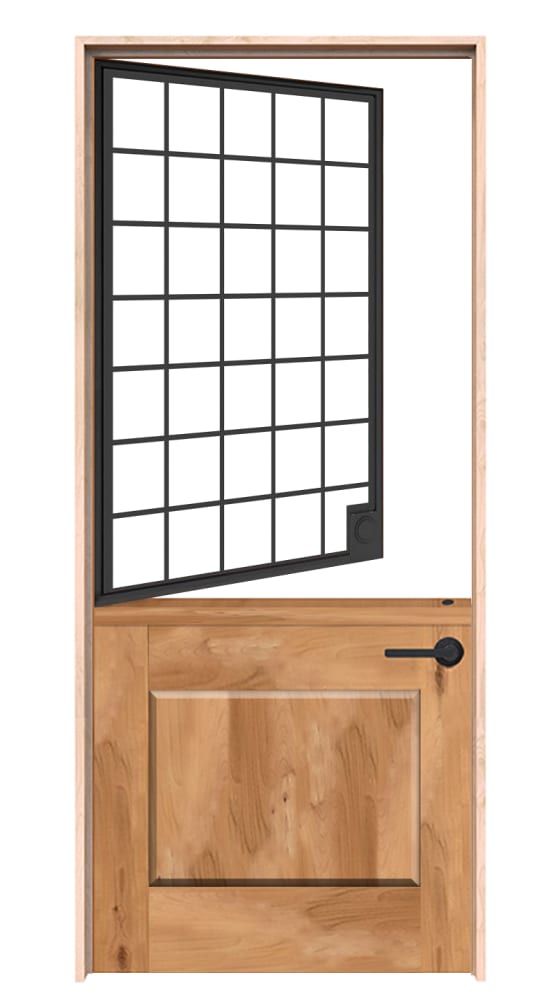
Glass and metal upper sectionThe view and light above the split.Glazing, grid detail and the upper leaf’s swing.
Wood lower section or accentsTexture and contrast below the glass.Wood finish and its relationship to the metal coating.
Raised split lineThe lower section occupies more of the opening.Whether the upper opening suits the way you plan to use the room.
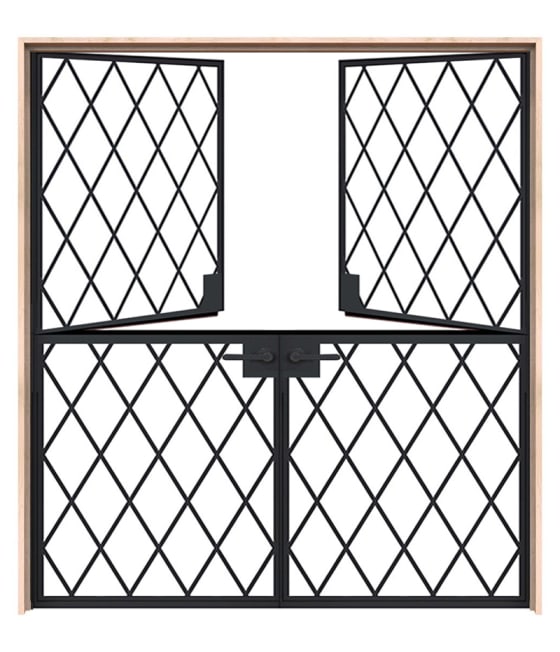
Double Dutch layoutTwo split leaves create a paired opening.Operation of all sections and the center meeting hardware.

Choose the Height of the Split for the Room

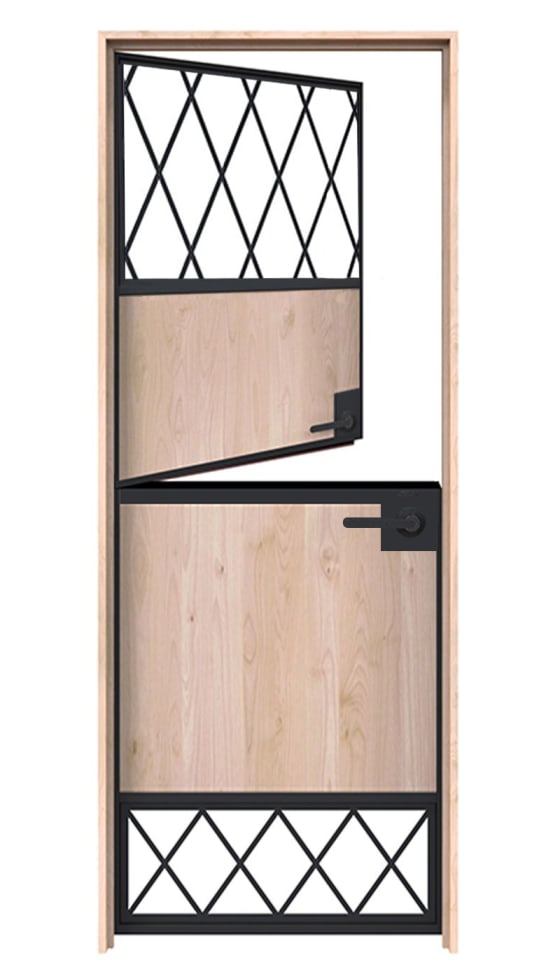
Imagine using the door with only its upper section open. The split determines the height of the remaining visual boundary and the opening above it. The Bridge’s taller bottom section feels different from a more evenly divided door, even at a similar overall height.

Consider sightlines, furniture and the path of the upper leaf. The two halves still need swing space. A split door changes how the opening can be used, but it does not remove the need to plan the movement of its panels.

Compare wood Dutch doors if a more continuous wood surface would suit the room better than a metal grid.

Use Wood and Metal as Deliberate Design Elements

Several designs in this collection combine materials. Port uses wood-strip detail below a metal grid, while the Utah Split places wood construction beneath a metal-framed top. Their finish selections should be coordinated as a pair of surfaces, rather than treating the entire door as one metal panel.

Compare samples against nearby floors, cabinetry and other door hardware. A dark frame can outline lighter wood or glass; a matching tone can make the materials feel more continuous. Natural wood variation and the selected metal finish contribute different kinds of detail.

Specify the Latches and Hinges Together

The upper and lower sections need a coordinated hinge layout and a means of connecting them for full-door operation. Confirm the split latch, handles and any privacy function for the selected design before hardware preparation is completed.

For paired Dutch doors, review the operating sequence of every section and how the center closes. Do not assume a latch intended for a conventional full-height door will suit the split or the metal-and-glass construction.

For an outdoor opening, begin with exterior metal Dutch doors and their location-specific configurations.

Keep the Application Matched to the Product

Interior separation and exterior exposure require different specifications. Review the named product and selected options for the intended location. An interior Dutch-door photograph or a metal grid alone is not evidence of an exterior-rated assembly.

When the project is an exterior opening, use the dedicated exterior metal Dutch collection to review those configurations, including the jamb, threshold, seals and glazing. Keep the material appearance you like, but confirm the full construction for that application.

Before You Order

  1. Choose the proportions

    Confirm overall dimensions, split location and the view through the upper section.

  2. Coordinate surfaces

    Select the available metal finish, wood treatment and glass with their actual positions in mind.

  3. Confirm operation and application

    Review each hinge, connecting latch, swing and the specification for the intended location.

Get help with your project

Metal Dutch Doors: Common Questions

Are metal Dutch doors entirely steel?

Some are mixed-material designs. A metal frame or grid may be combined with wood sections and glass, so review the construction of the selected model.

Can the two halves open together?

Dutch-door configurations use connecting hardware so the sections can operate together when secured. Confirm the exact latch arrangement and operating instructions for the chosen door.

Are matching double Dutch doors available?

The collection includes paired versions of several designs. Compare the double-door configuration and its meeting hardware rather than ordering two single doors and assuming they form a complete pair.