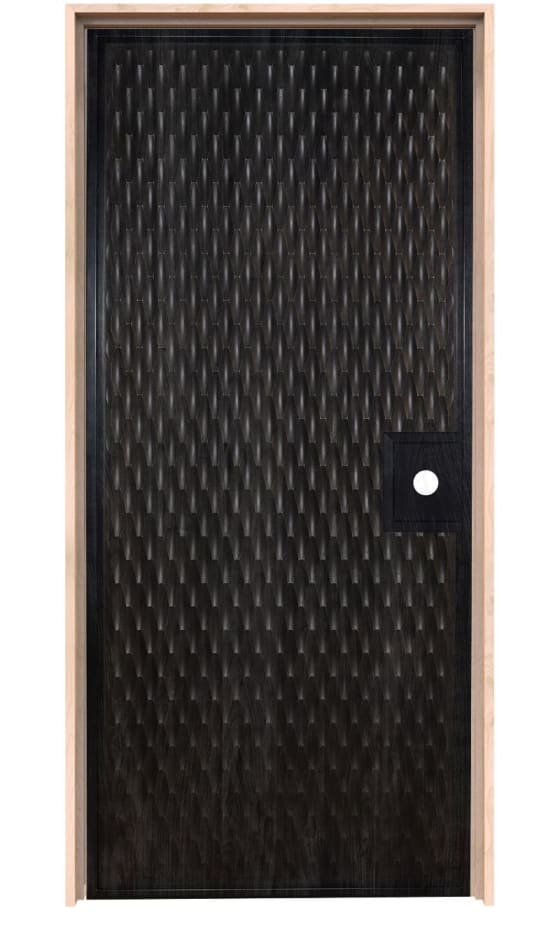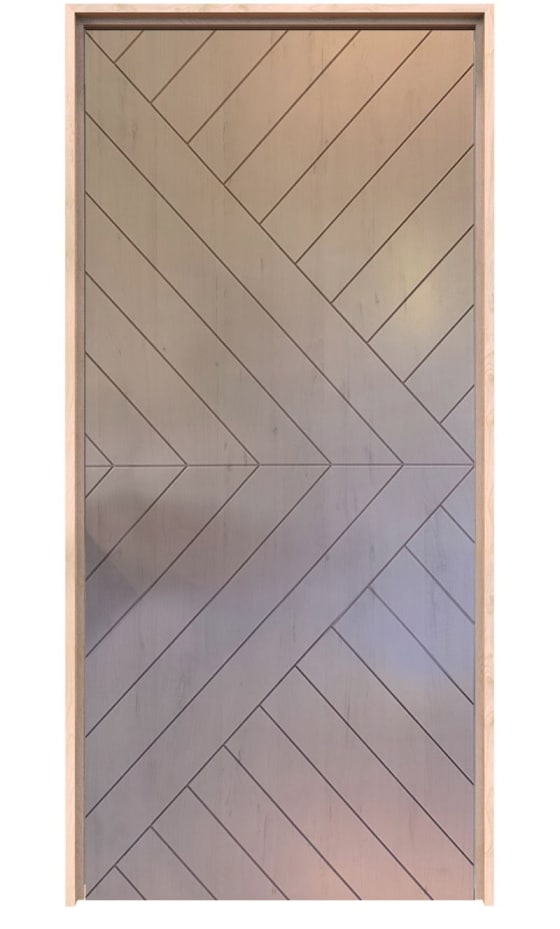
Grooved & Textured Interior Doors

Turn an interior door into a textured architectural surface. Flowing ridges, repeating angles and carved geometry create depth that changes as light moves across the room.

Choose with confidence

Grooved & Textured Interior Doors Buying Guide

A grooved interior door uses recessed lines or carved texture to give the panel depth. Pattern, material and finish work together: a shallow geometric line reads differently from a sculpted surface, and the reverse face may have its own specification.

Choose the pattern scale

View the design from the hallway as well as close to the door.

Check the material

Carved MDF, wood and framed constructions have different finish characteristics.

Review the reverse face

Confirm which surfaces carry the texture or pattern.

Compare Texture and Finish

Compare Texture and Finish
Design approachHow it readsReview in a sample
Flowing reliefSoft shadow and movementDepth under side lighting.
Geometric groovesSharper directional linesContrast between recess and face.
Stained woodPattern plus visible grainVariation within the carved surface.
Painted surfaceColor emphasizes the formCoverage and sheen in recessed areas.

Use Light to Evaluate the Texture

Side lighting makes recesses and ridges more pronounced than flat front lighting. Look at the proposed door location and identify windows or fixtures that will graze the surface. A detailed panel at the end of a hallway may read differently from the same design beside a bright window.

Keep nearby wall patterns in mind. A quiet wall can give a complex door space to stand out, while repeating strong geometry on both surfaces can make the opening feel busier.

Confirm the Actual Panel Construction

The collection includes different carved and framed designs. Read the material specification for the chosen model instead of assuming every texture is cut into the same wood. Check how the selected finish is represented in the product’s detail images.

For a panel that slides along the wall, compare modern geometric barn doors. That collection uses the texture within a different operating layout.

Coordinate Preparation with the Pattern

Locate handles and hinge preparation before ordering. Their position can interrupt a prominent line or occupy a thinner carved area, so use the model’s permitted preparation rather than choosing holes by appearance alone.

If you are reusing a jamb, the interior slab guide explains the measurements to gather. Confirm the pattern on both faces when the two adjoining rooms are equally visible.

Before You Order

  1. Review the design in context

    Compare the pattern with the room’s lighting and wall finishes.

  2. Select material and finish

    Check construction, samples and the reverse-face treatment.

  3. Approve hardware placement

    Resolve hanging format, hinge preparation and handle location.

Get help with your project

Grooved & Textured Interior Doors: Common Questions

Is every textured door solid wood?

No. Materials differ among the designs and can include MDF or framed constructions. Use the selected product’s current material specification.

Will the pattern be on both sides?

That is model-specific. Review the reverse-face description and images before ordering a door visible from two rooms.