

What makes a room feel steampunk?
Steampunk brings the visual language of machinery into an imaginative, Victorian-inspired setting. Think of a brass instrument beside a leather chair, a metal track against warm timber, or a map displayed like a treasured working document. The appeal comes from visible construction, contrasting textures and a sense that objects have a story.
Industrial interiors often emphasize a building’s structure. Steampunk adds a more theatrical layer: the imagined workshop, library or cabin of an inventor. You can borrow that character without turning every surface into a display.
Where the look comes from
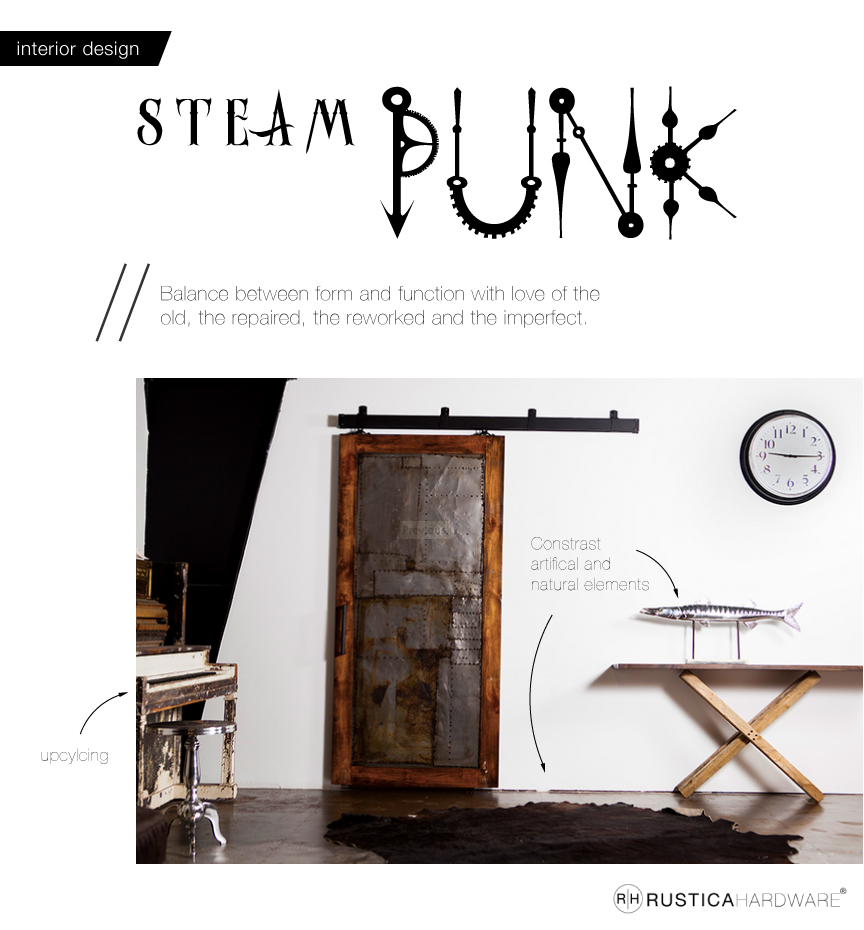
The style draws on Victorian mechanical invention and speculative fiction, including the imagined worlds of Jules Verne and H. G. Wells. Film, costume, art and interior design have each developed their own interpretations. It is more useful to understand those influences than to assign the style to one movie or place.
For a home, that history provides a vocabulary of materials and shapes: articulated arms, riveted plates, round instrument faces, richly grained wood and aged finishes. Choose the elements that suit the room’s purpose.

Steampunk in the kitchen
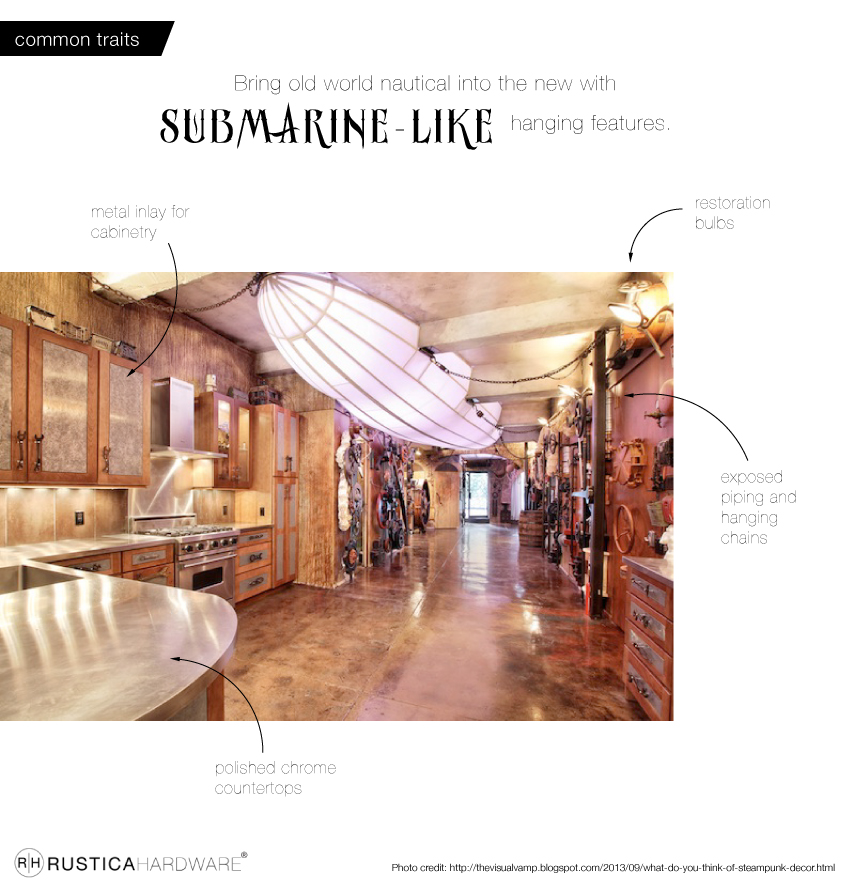
Start with one metal finish that works with your existing appliances and cabinet hardware. A warm brass pull can soften dark cabinetry; an iron pendant can give a plain ceiling more character. Keep countertops clear enough for food preparation and select surfaces that can handle the room’s cleaning routine.
If your kitchen already has polished stainless steel, it can be part of the palette. You do not need to wrap, paint or replace appliances to establish the look. Bring the warmer Victorian notes into lighting, seating or a freestanding cabinet instead.
A living room with depth and comfort
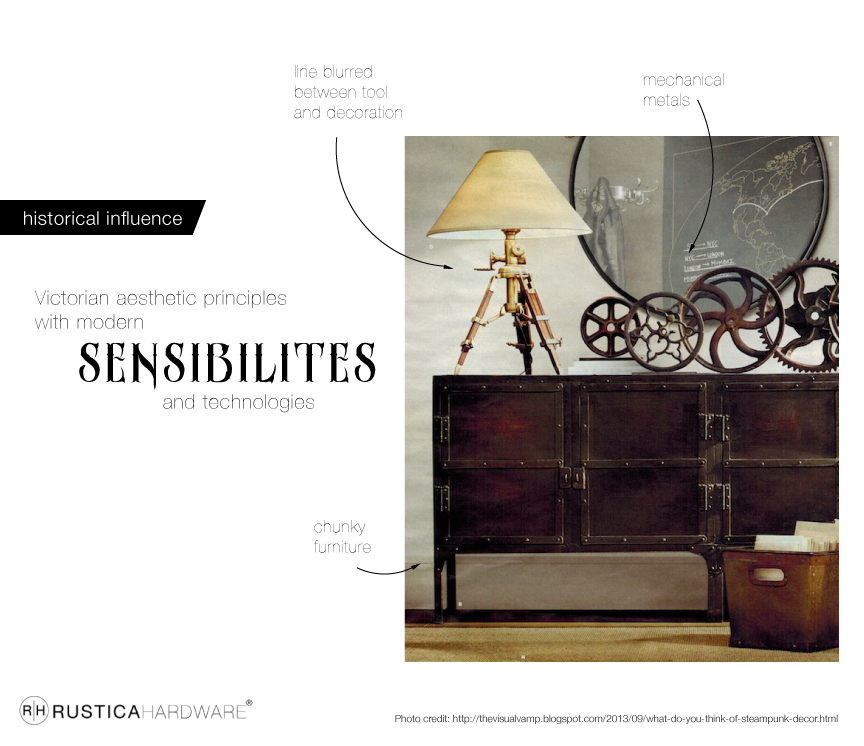
Set a leather or upholstered chair against timber, plaster or brick, then choose one object with a strong silhouette: an articulated lamp, a substantial clock or a metal-framed cabinet. A few objects at different heights read more clearly than a shelf crowded with small gears.
For lighting, choose a complete fixture approved for its intended use. Exposed-looking lamps and decorative mechanical details should still have proper electrical construction. Repeat a finish in the door hardware or a picture frame to connect the pieces.
A quieter interpretation for the bedroom
An iron bed, warm wood nightstand and one rich textile can carry the theme. If you like maps, globes or vintage luggage, choose a single piece that leaves bedside surfaces usable. Avoid placing heavy display objects over the bed or in a narrow route through the room.
Balance the darker finishes with a light wall or bedding so the room does not depend on bright overhead lighting to feel comfortable. Finish samples viewed beside the actual floor are more useful than trying to match every item from photographs.
Bathrooms: separate the look from the function
A round mirror, an aged metal finish or a porthole-inspired detail can suggest steampunk without altering working plumbing. Specify finishes suitable for damp conditions, and keep decorative pipework separate from any changes to plumbing or electrical systems.
For the doorway, compare a hinged door with a sliding design before committing to the aesthetic. Bathroom barn doors need deliberate privacy and clearance planning. If a metal face suits the room, explore metal door designs and confirm the intended interior application.
Choose a working focal point
A door, light fixture or substantial cabinet can establish the style more convincingly than many small decorative gears. If the room already has busy brickwork or patterned wallpaper, use a simpler door face and let the track or pull provide the mechanical detail.
| Element | Design move | What to check |
|---|---|---|
| Door and track | Pair a quiet wood face with visible barn door hardware. | Check wall parking space and the hardware weight rating before choosing a wheel profile. |
| Lighting | Choose a fixture with a clear mechanical silhouette. | Use a listed fixture and appropriate bulbs; decorative gears are not electrical supports. |
| Metal accents | Repeat one aged finish in a pull, lamp or frame. | Compare real samples. Patina, sheen and undertones matter more than the color name. |
| Soft furnishings | Use leather, velvet or a woven textile to soften metal and timber. | Leave seats, paths and work surfaces comfortable and uncluttered. |
For a lighter interpretation, borrow the exposed structure of industrial decor and keep most of the Victorian ornament in a single focal piece. A bathroom needs a separate decision about privacy: a sliding door’s appearance does not tell you how well it will contain sound.
Reference: Smithsonian National Museum of American History: steampunk and Victorian mechanical invention.
Updated .