


Match the symptom to the first check
| Symptom | Check first | Avoid jumping straight to |
|---|---|---|
| Uneven gap or sagging leaf | Hinge attachment, jamb alignment and frame support. | Planing the top or moving the latch. |
| Trim sits away from the wall | Wall plane, jamb depth and trim joints. | Pulling trim tight with extra nails. |
| Door swings by itself | Hinge-axis alignment, closer and air movement. | Bending a hinge pin. |
| Hinge screws will not tighten | Damaged threads, substrate and specified fasteners. | A longer screw without checking what is behind it. |
| Bottom edge drags | Loose hinges, frame alignment and floor height. | Cutting the leaf before checking its limits. |
1. Installing the frame without checking the whole opening
A door can show a neat gap near one hinge while the frame leans or twists elsewhere. Check both jambs for plumb and straightness, the head for level, and the unit for square. Compare the top and side gaps with the door instructions. Also look for a loose hinge or damaged attachment that lets the leaf drop.
Record where the rubbing occurs and whether the problem changes as the door opens. A gap that narrows at the upper latch corner may involve sagging, but that observation alone does not identify the repair. Support a heavy leaf before adjusting its attachment.
The parts of a door jamb guide can help you describe the area to an installer. If the framing is moving or damaged, have that condition assessed before adjusting the finish work.
2. Using trim to hide a frame or wall problem
Casing is finish material. It should not be used to pull an unsupported frame into position. Check whether the jamb depth matches the finished wall and whether the wall surface or trim itself is uneven. A gap at a miter and a gap behind the entire casing are different problems.
Resolve the fit before fastening. An appropriate jamb extension, scribed piece or carefully fitted trim joint may be needed. Do not assume that a back cut is the answer to every loose-looking joint. Keep exterior trim work consistent with the flashing and sealing detail.
3. Treating a drifting door by damaging its hinge pin
A leaf that moves on its own may have a hinge axis that is out of plumb. A closer, spring hinge or pressure difference between rooms can also move it. Check those conditions before deciding the frame is at fault.
Bending a hinge pin or wrapping it in tape adds improvised friction. It does not correct the alignment and can affect the hinge. Use the hardware maker’s adjustment method, and repair the frame or hinge attachment if that is the cause. A required closer should remain functional.
If the opening direction itself is the problem, review door swing and handing before moving hinges or ordering replacement parts.
4. Fastening into a damaged or unsuitable support
A screw that spins without tightening may have stripped its threads or lost sound material to grip. Check the hinge, screw type and underlying frame before filling a hole. Wood, metal and composite frames need different repair methods.
A glue-and-toothpick repair is not a universal detail for a heavy door or a rated assembly. Nor is a longer screw automatically suitable; length, thread engagement and hidden services matter. Obtain the door or hardware maker’s repair detail, or replace the damaged component when needed.
Manufacturer installation documents specify attachment points and fasteners for a reason. Keep those requirements with the door record so a later repair can be checked against the original system.
Reference: Example entry-door guide with separate fastening requirements.
5. Trimming a dragging door before checking the floor
First check whether the hinges are loose, the leaf has sagged or the frame is distorted. Then inspect the floor through the entire swing. A raised board, thick rug or newly added floor covering can create contact even when the closed-door gap looks adequate.
If trimming is still appropriate, confirm the material, permitted trimming allowance, required bottom clearance and refinishing instructions. Some engineered, glazed, metal or rated doors cannot be altered like a simple solid-wood leaf. Plan for floor finishes before installing the frame rather than discovering the conflict afterward.
Keep design and operation in the same plan
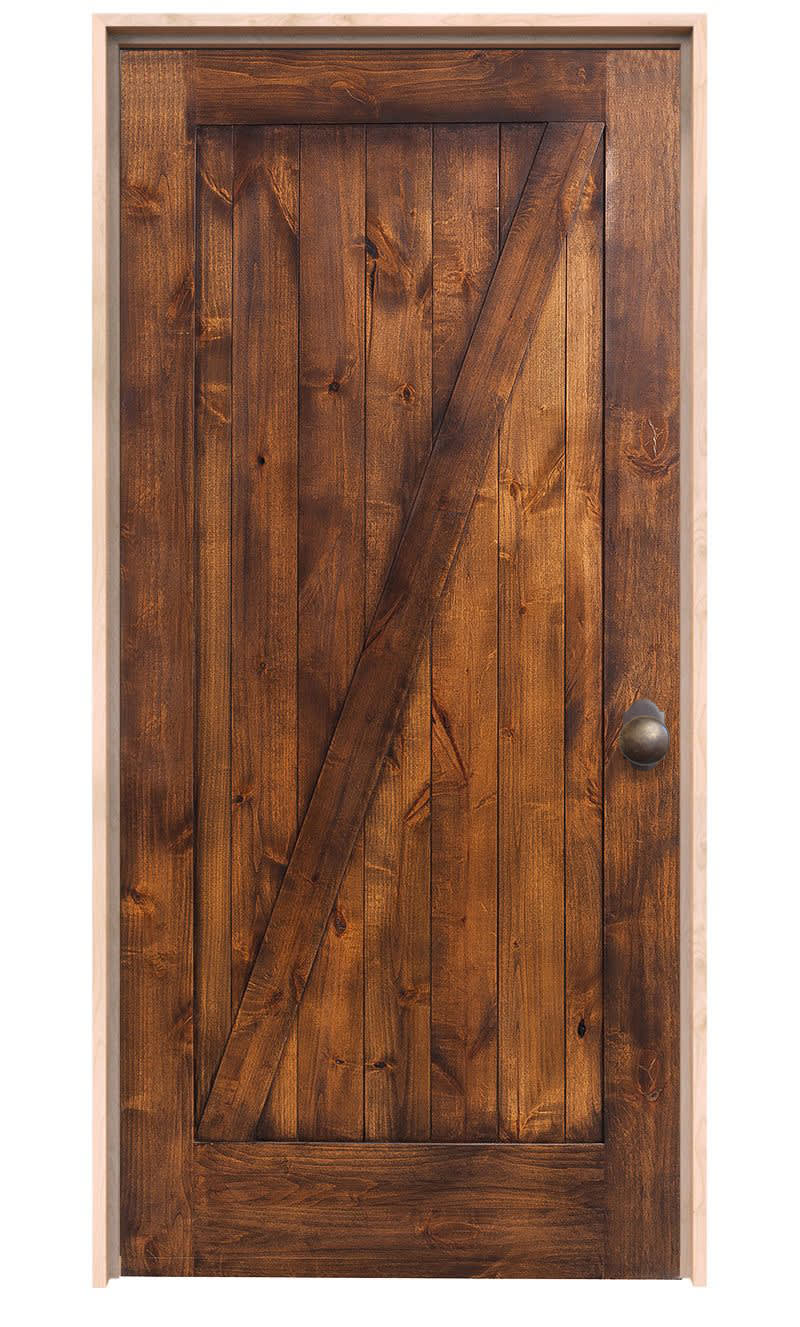
Compare hinged interior doors when replacing the assembly. A sliding barn door uses a different support and clearance system; switching movement is a layout decision, not a repair for a crooked frame.
Give the installer a useful problem description
- Door model, material and whether it is interior, exterior or rated.
- Photos of the closed door from both sides, plus the hinges and rubbing point.
- When the problem began and whether flooring or weather changed.
- Which gaps are uneven and whether the latch needs force.
- Any movement, cracking, water damage or loose attachment.
Stop forcing a binding door. If it is an essential exit, has damaged glass or needs a structural repair, arrange qualified help promptly. These checks concern ordinary hinged doors, not overhead garage-door springs or lifting systems.
Planning a client project?
Managing door installation for a client? Include the hardware and frame details in the same specification as the leaf. Rustica’s contractor discount program explains professional eligibility and how to apply.